
靶向MCL-1会使细胞代谢和白血病-基质相互作用失调,并使急性髓系白血病对BCL-2抑制重新敏感。
Targeting MCL-1 dysregulates cell metabolism and leukemia-stroma interactions and resensitizes acute myeloid leukemia to BCL-2 inhibition.
作者信息
Carter Bing Z, Mak Po Yee, Tao Wenjing, Warmoes Marc, Lorenzi Philip L, Mak Duncan, Ruvolo Vivian, Tan Lin, Cidado Justin, Drew Lisa, Andreeff Michael
机构信息
Section of Molecular Hematology and Therapy, Department of Leukemia, The University of Texas MD Anderson Cancer Center, Houston.
Department of Bioinformatics and Computational Biology, the University of Texas MD Anderson Cancer Center, Houston.
出版信息
Haematologica. 2022 Jan 1;107(1):58-76. doi: 10.3324/haematol.2020.260331.
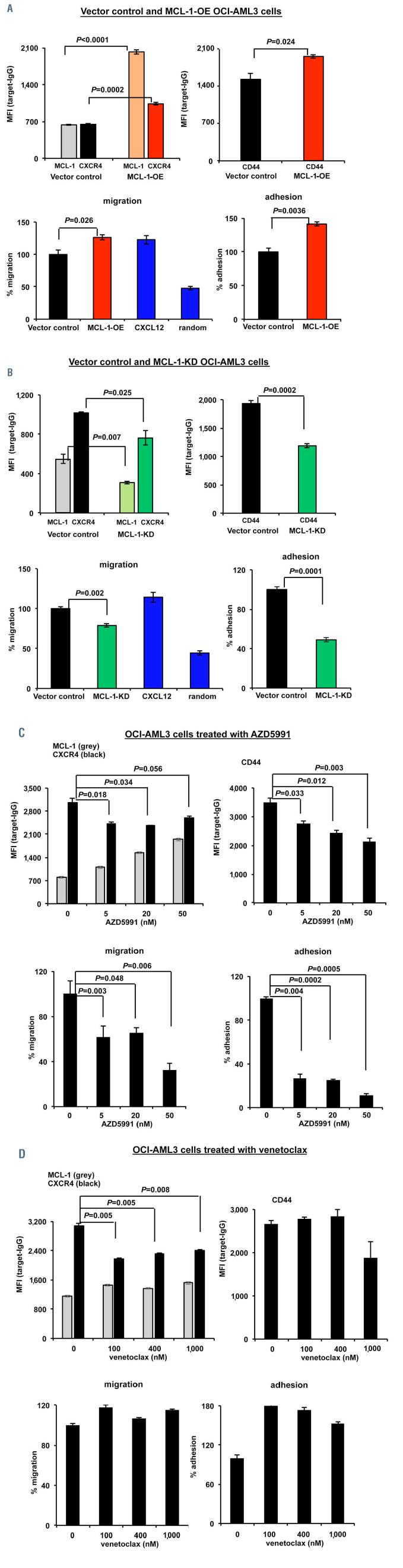
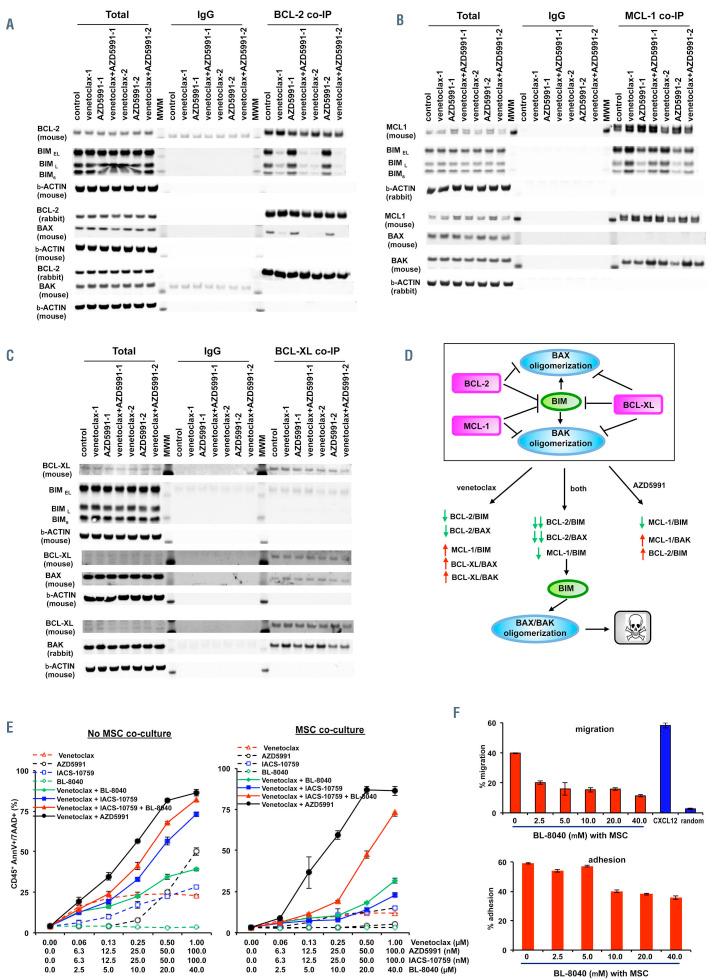
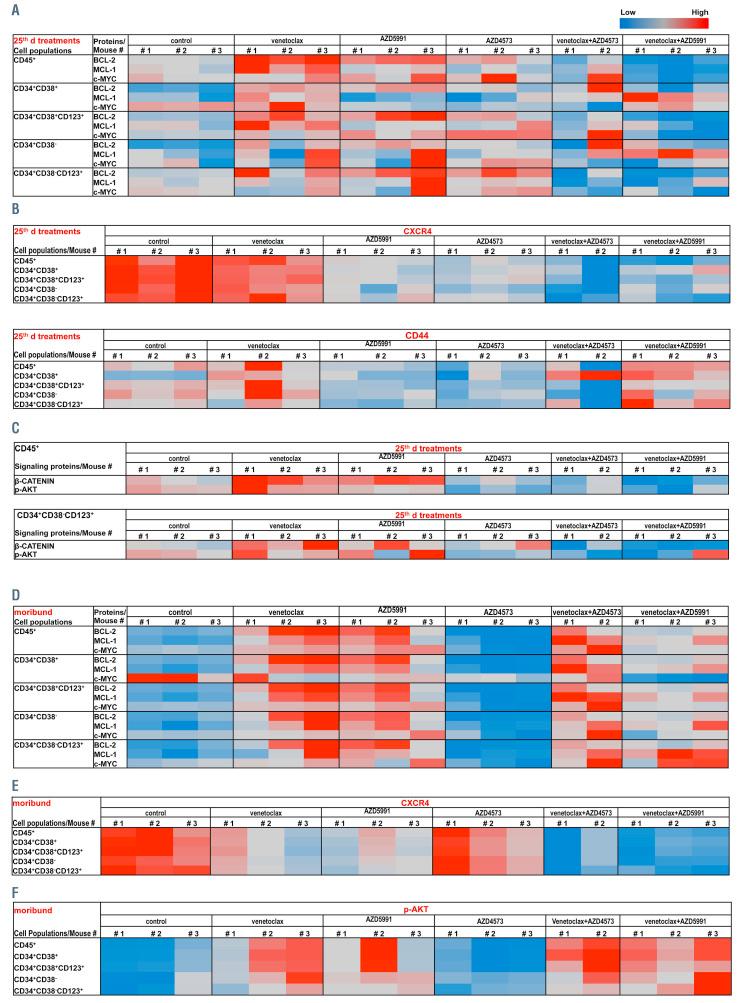
MCL-1 and BCL-2 are both frequently overexpressed in acute myeloid leukemia and critical for the survival of acute myeloid leukemia cells and acute myeloid leukemia stem cells. MCL-1 is a key factor in venetoclax resistance. Using genetic and pharmacological approaches, we discovered that MCL-1 regulates leukemia cell bioenergetics and carbohydrate metabolisms, including the TCA cycle, glycolysis and pentose phosphate pathway and modulates cell adhesion proteins and leukemia-stromal interactions. Inhibition of MCL-1 sensitizes to BCL-2 inhibition in acute myeloid leukemia cells and acute myeloid leukemia stem/progenitor cells, including those with intrinsic and acquired resistance to venetoclax through cooperative release of pro-apoptotic BIM, BAX, and BAK from binding to anti-apoptotic BCL-2 proteins and inhibition of cell metabolism and key stromal microenvironmental mechanisms. The combined inhibition of MCL-1 by MCL-1 inhibitor AZD5991 or CDK9 inhibitor AZD4573 and BCL-2 by venetoclax greatly extended survival of mice bearing patient-derived xenografts established from an acute myeloid leukemia patient who acquired resistance to venetoclax/decitabine. These results demonstrate that co-targeting MCL-1 and BCL-2 improves the efficacy of and overcomes preexisting and acquired resistance to BCL-2 inhibition. Activation of metabolomic pathways and leukemia-stroma interactions are newly discovered functions of MCL-1 in acute myeloid leukemia, which are independent from canonical regulation of apoptosis by MCL-1. Our data provide new mechanisms of synergy and rationale for co-targeting MCL-1 and BCL-2 clinically in patients with acute myeloid leukemia and potentially other cancers.
MCL-1和BCL-2在急性髓系白血病中均经常过度表达,对急性髓系白血病细胞和急性髓系白血病干细胞的存活至关重要。MCL-1是维奈托克耐药的关键因素。通过基因和药理学方法,我们发现MCL-1调节白血病细胞的生物能量学和碳水化合物代谢,包括三羧酸循环、糖酵解和磷酸戊糖途径,并调节细胞粘附蛋白和白血病-基质相互作用。抑制MCL-1可使急性髓系白血病细胞和急性髓系白血病干/祖细胞对BCL-2抑制敏感,包括那些对维奈托克具有内在和获得性耐药的细胞,这是通过促凋亡蛋白BIM、BAX和BAK从与抗凋亡BCL-2蛋白的结合中协同释放出来,并抑制细胞代谢和关键的基质微环境机制实现的。MCL-1抑制剂AZD5991或CDK9抑制剂AZD4573对MCL-1的联合抑制以及维奈托克对BCL-2的抑制极大地延长了携带从一名对维奈托克/地西他滨产生耐药性的急性髓系白血病患者建立的患者来源异种移植小鼠的生存期。这些结果表明,共同靶向MCL-1和BCL-2可提高疗效,并克服对BCL-2抑制的既往和获得性耐药。代谢组学途径的激活和白血病-基质相互作用是MCL-1在急性髓系白血病中新发现的功能,这些功能独立于MCL-1对细胞凋亡的经典调节。我们的数据为急性髓系白血病患者以及潜在的其他癌症患者在临床上共同靶向MCL-1和BCL-2提供了协同作用的新机制和理论依据。





 Zotero 插件