
过度连接的视觉皮层是否会破坏酒精使用障碍治疗后保持清醒的努力?
Does an Over-Connected Visual Cortex Undermine Efforts to Stay Sober After Treatment for Alcohol Use Disorder?
作者信息
Muller Angela M, Meyerhoff Dieter J
机构信息
Department of Radiology and Biomedical Imaging, University of California, San Francisco, San Francisco, CA, United States.
出版信息
Front Psychiatry. 2020 Dec 10;11:536706. doi: 10.3389/fpsyt.2020.536706. eCollection 2020.
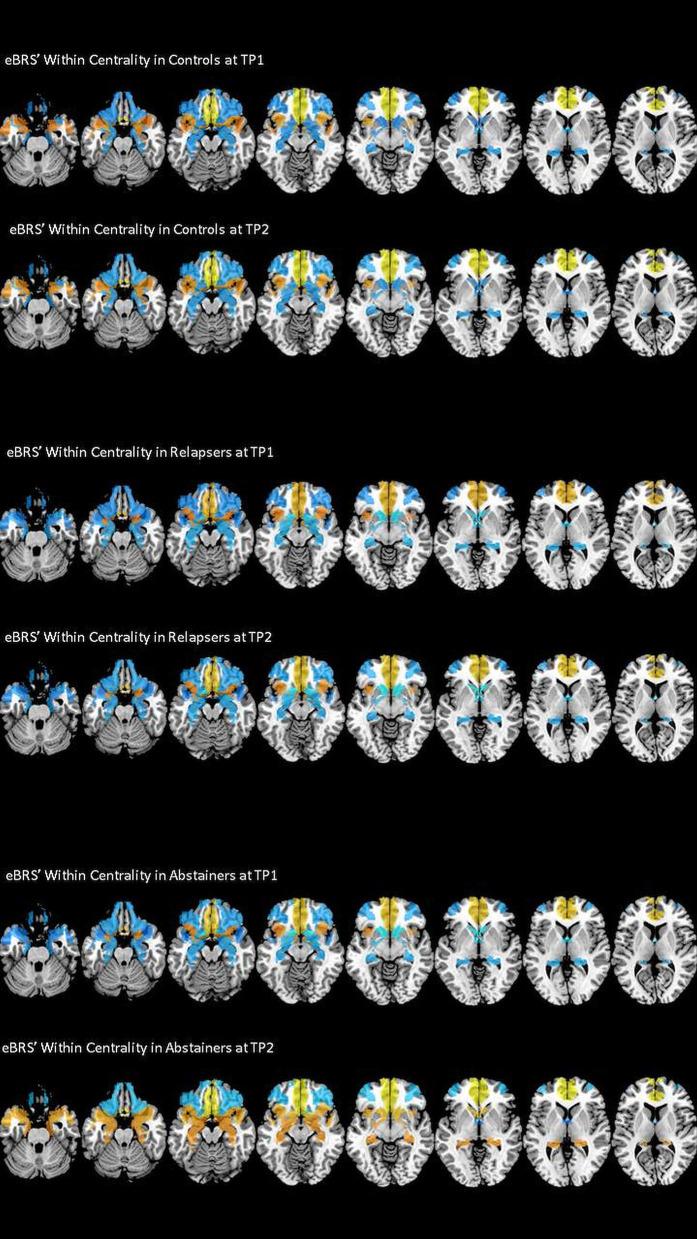
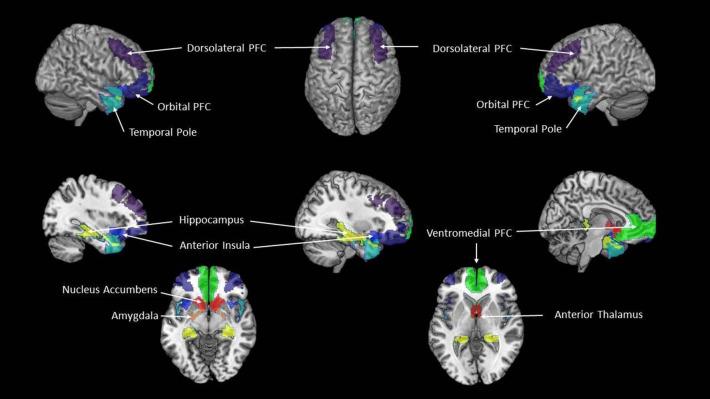
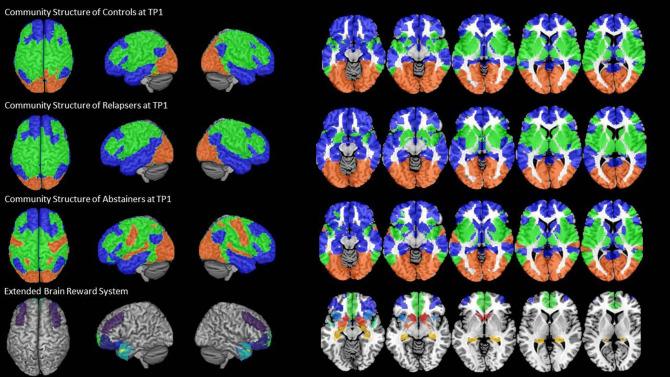
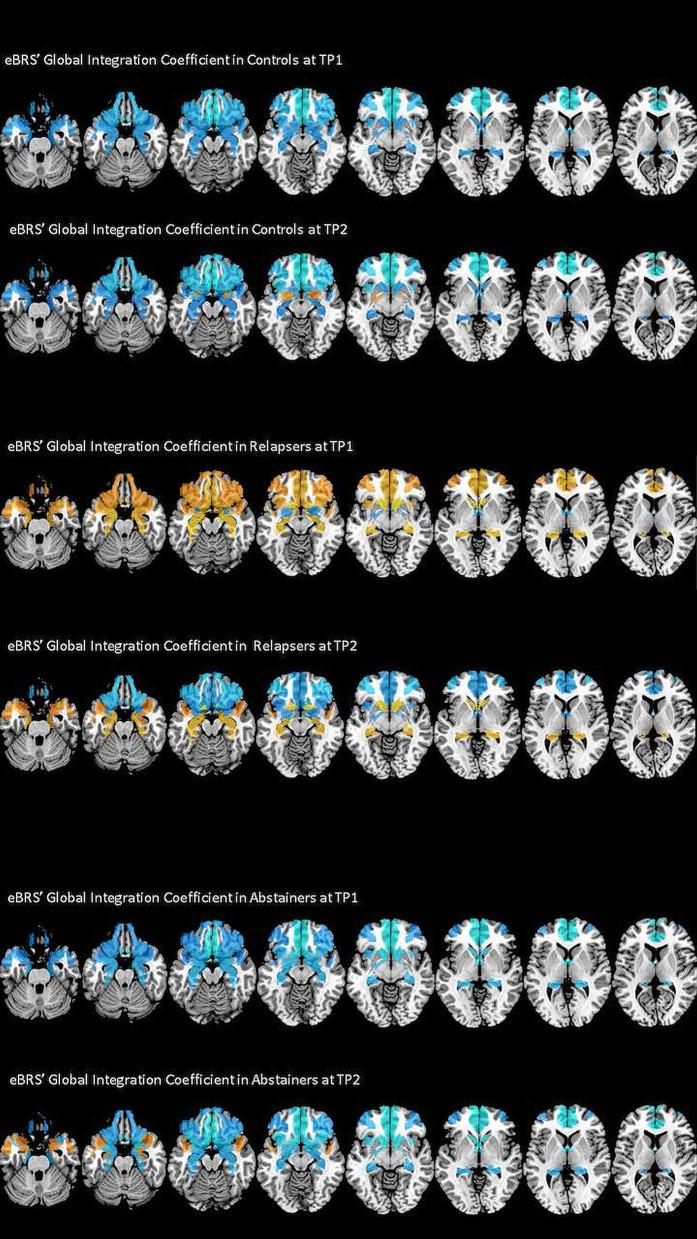
A fine-tuned interplay of highly synchronized activity within and between the brain's communities is a crucial feature of the brain's functional organization. We wanted to investigate in individuals with alcohol use disorder (AUD) the degree to which the interplay of the brain's community-architecture and the extended brain reward system (eBRS) is affected by drinking status (relapse or abstinence). We used Graph Theory Analysis of resting-state fMRI data from treatment seekers at 1 month of abstinence to model the brain's intrinsic community configuration and their follow-up data as abstainers or relapsers 3 months later to quantify the degree of global across-community interaction between the eBRS and the intrinsic communities at both timepoints. After 1 month of abstinence, the ventromedial PFC in particular showed a significantly higher global across-community interaction in the 22 future relapsers when compared to 30 light/non-drinking controls. These differences were no longer present 3 months later when the relapsers had resumed drinking. We found no significant differences between abstainers and controls at either timepoint. tests revealed that one eBRS region, the ventromedial PFC, showed a significant global across-community interaction with a community comprising the visual cortex in relapsers at baseline. In contrast, abstainers showed a significant negative association of the ventromedial PFC with the visual cortex. The increased across-community interaction of the ventromedial PFC and the visual cortex in relapsers at timepoint 1 may be an early indicator for treatment failure in a subgroup of AUD patients.
大脑各区域内部及之间高度同步活动的精确相互作用是大脑功能组织的关键特征。我们想要研究在酒精使用障碍(AUD)个体中,大脑群落结构与扩展脑奖赏系统(eBRS)之间的相互作用受饮酒状态(复发或戒酒)影响的程度。我们对戒酒1个月的寻求治疗者的静息态功能磁共振成像(fMRI)数据进行图论分析,以模拟大脑的内在群落结构,并在3个月后将他们作为戒酒者或复发者的随访数据用于量化两个时间点eBRS与内在群落之间全脑跨群落相互作用的程度。戒酒1个月后,与30名轻度饮酒/不饮酒的对照者相比,22名未来复发者的腹内侧前额叶皮质尤其显示出显著更高的全脑跨群落相互作用。3个月后复发者恢复饮酒时,这些差异不再存在。我们发现戒酒者与对照者在任何一个时间点均无显著差异。检验显示,一个eBRS区域,即腹内侧前额叶皮质,在基线时与复发者中一个包含视觉皮质的群落显示出显著的全脑跨群落相互作用。相比之下,戒酒者的腹内侧前额叶皮质与视觉皮质显示出显著的负相关。在时间点1复发者中腹内侧前额叶皮质与视觉皮质之间跨群落相互作用的增加可能是AUD患者亚组治疗失败的早期指标。
 Zotero 插件