
基于 GEO 和 TCGA 数据库的综合生物信息学分析鉴定胃食管结合部腺癌诊断和预后相关的生物标志物。
Identification of biomarkers associated with diagnosis and prognosis of gastroesophageal junction adenocarcinoma-a study based on integrated bioinformatics analysis in GEO and TCGA database.
机构信息
The First Clinical Medical School of Lanzhou University.
Department of Gastroenterology.
出版信息
Medicine (Baltimore). 2020 Dec 18;99(51):e23605. doi: 10.1097/MD.0000000000023605.
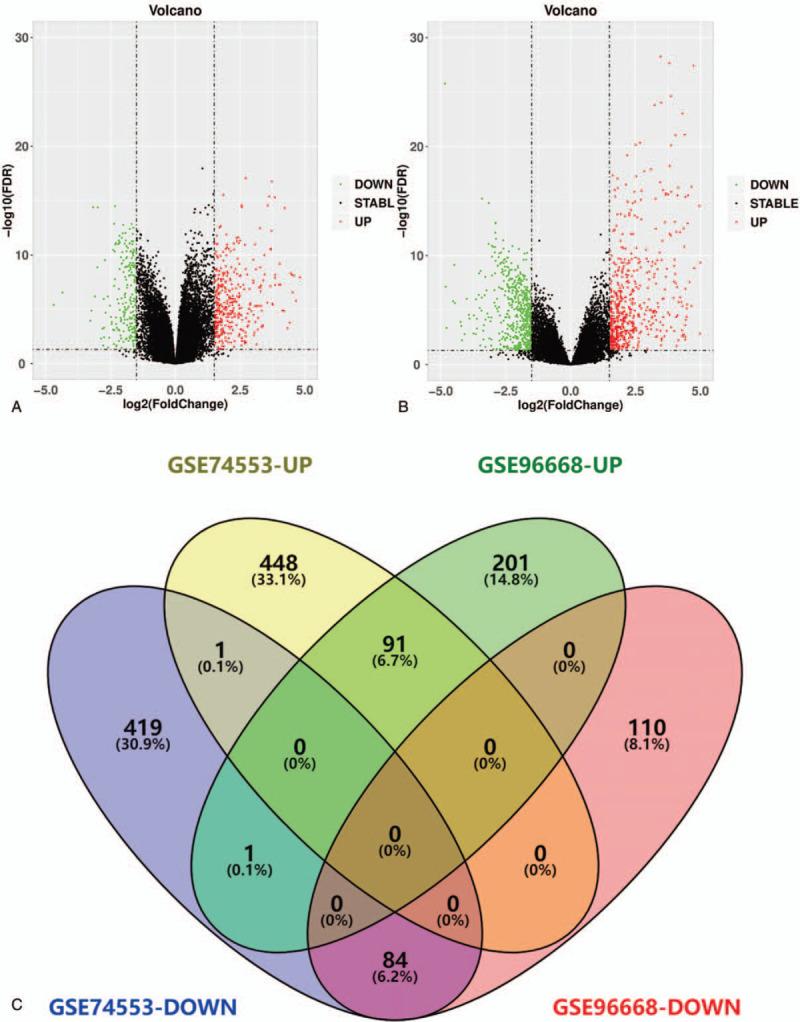
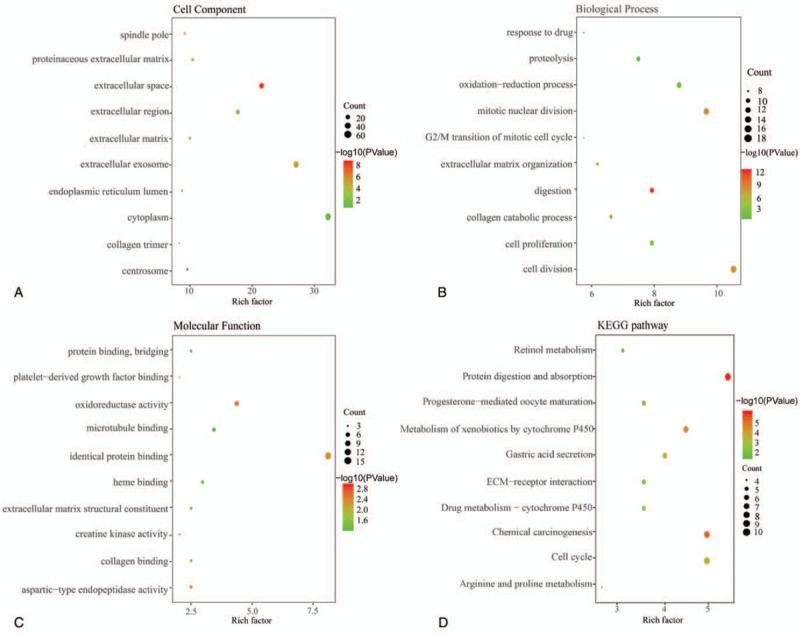
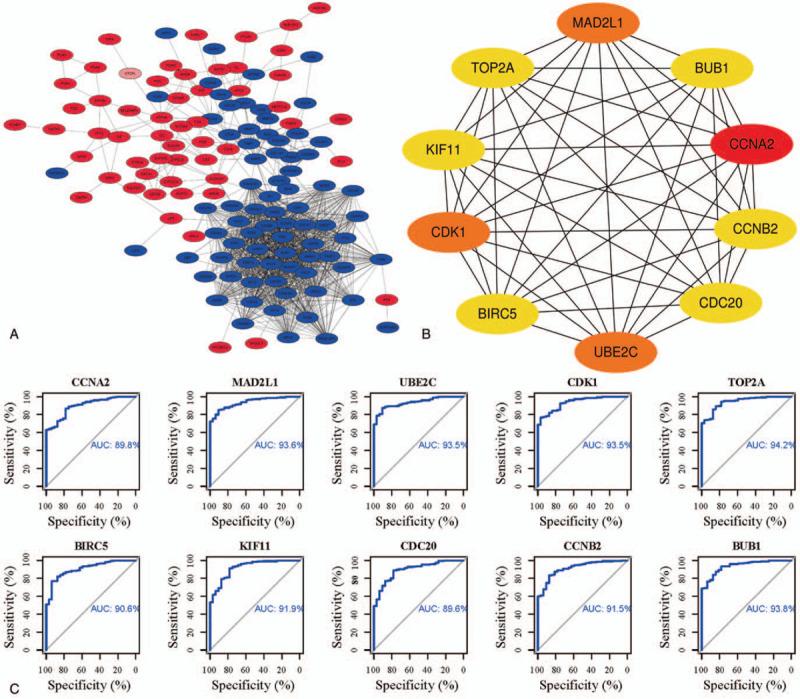
Gastroesophageal junction adenocarcinoma (GEJAC) is a malignant tumor with high mortality. Its incidence has increased sharply all over the world in recent years. The study aims to search for potential biomarkers for the diagnosis and prognosis of GEJAC based on the Gene Expression Omnibus database (GEO) database and The Cancer Genome Atlas (TCGA) database.Microarray dataset (GSE96668 and GSE74553) of GEJAC was downloaded from the GEO. After screening overlapping differentially expressed genes (DEGs) by GEO2R and Wayne map, functional enrichment analysis of the DEGs was performed by the DAVID database. Then, a protein-protein interaction (PPI) network was constructed, and the hub gene was identified by using STRING and Cytoscape, as well as the diagnostic value of hub genes was evaluated by the receiver operating characteristic (ROC) curves. Finally, the gene transcriptome profiles of gastric cancer named TCGA-STAD were downloaded from TCGA database to screen the potential prognostic genes and construct the prognostic risk model using Cox proportional hazards regression. Meanwhile, the Kaplan-Meier curve and time-dependent ROC curve were adopted to test the prognostic value of the prognostic gene signature.In this study, we identified 10 hub genes that might have high diagnostic value for GEJAC, and inferred that they might be involved in the occurrence and development of GEJAC. Moreover, we conducted a survival prediction model consisting of 6 genes and proved that they have value to some extent in predicting prognosis for GEJAC patients.
胃食管结合部腺癌(GEJAC)是一种死亡率较高的恶性肿瘤。近年来,其在全球范围内的发病率急剧上升。本研究旨在基于基因表达综合数据库(GEO)数据库和癌症基因组图谱(TCGA)数据库,寻找用于 GEJAC 诊断和预后的潜在生物标志物。从 GEO 下载 GEJAC 的微阵列数据集(GSE96668 和 GSE74553)。通过 GEO2R 和 Wayne 图筛选重叠差异表达基因(DEGs)后,使用 DAVID 数据库对 DEGs 进行功能富集分析。然后,构建蛋白质-蛋白质相互作用(PPI)网络,使用 STRING 和 Cytoscape 识别枢纽基因,并通过受试者工作特征(ROC)曲线评估枢纽基因的诊断价值。最后,从 TCGA 数据库下载名为 TCGA-STAD 的胃癌基因转录组图谱,筛选潜在的预后基因,并使用 Cox 比例风险回归构建预后风险模型。同时,采用 Kaplan-Meier 曲线和时间依赖性 ROC 曲线检验预后基因特征的预后价值。在本研究中,我们确定了 10 个可能对 GEJAC 具有高诊断价值的枢纽基因,并推断它们可能参与了 GEJAC 的发生和发展。此外,我们构建了一个由 6 个基因组成的生存预测模型,并证明它们在一定程度上对预测 GEJAC 患者的预后具有价值。

 Zotero 插件