
基于网络药理学分析,薄荷精油吸入通过靶向IL-6/JAK2/STAT3通路改善PM10暴露诱导的哮喘
Inhalation of Essential Oil from Mentha piperita Ameliorates PM10-Exposed Asthma by Targeting IL-6/JAK2/STAT3 Pathway Based on a Network Pharmacological Analysis.
作者信息
Kim Mi Hye, Park Sang Jun, Yang Woong Mo
机构信息
Department of Convergence Korean Medical Science, College of Korean Medicine, Kyung Hee University, 26 Kyungheedae-ro, Dongdaemun-gu, Seoul 02447, Korea.
出版信息
Pharmaceuticals (Basel). 2020 Dec 22;14(1):2. doi: 10.3390/ph14010002.
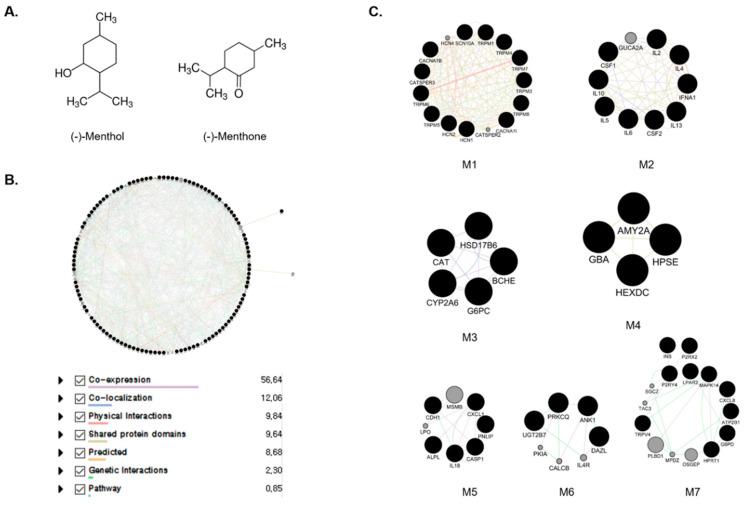
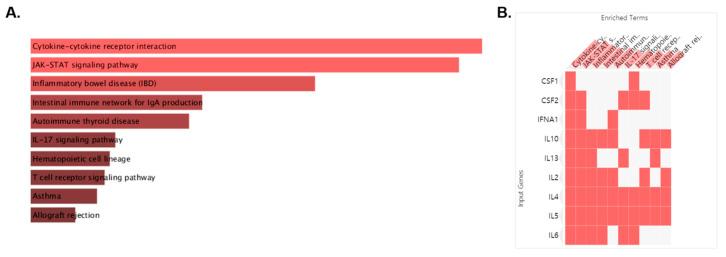
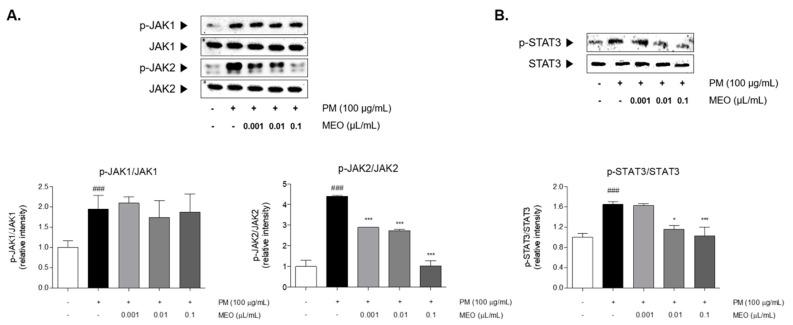
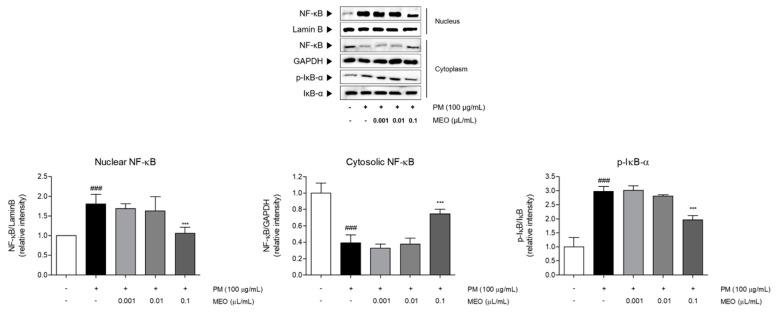
Fine particulate matter (PM) exposure exhibits a crucial risk factor to exacerbate airway epithelial remodeling, fibrosis, and pulmonary destruction in asthma. Based on the use of essential oils from aromatic plants on pain relief and anti-inflammatory properties, we investigated the inhibitory effects of essential oil derived from the Mentha species (MEO) against asthma exposed to PM10. The MEO (0.1 / %) was aerosolized by a nebulizer to ovalbumin and PM10-induced asthmatic mice. Histological changes were confirmed in the lung tissues. To define the mode of action of the MEO on asthma, a protein-protein interaction network was constructed using menthol and menthone as the major components of the MEO. Cytokine expression and the JAK2/STAT3 signaling pathway were analyzed in lung epithelial A549 cells co-treated with MEO and PM10. Inhalation of MEO by nebulization inhibited respiratory epithelium hyperplasia, collagen deposition, and goblet cell activation in asthmatic mice. Through a network pharmacological analysis, cytokine-cytokine receptor interaction and JAK/STAT was expected to be underlying mechanisms of MEO on asthma. Treatment with MEO significantly reduced the IL-6 levels with a decrease in pro-inflammatory and T helper 2-specific cytokines. PM10-induced phosphorylation of JAK2 and STAT3 was significantly decreased by MEO. Collectively, MEO may have an inhibitory effect on asthma under the condition of PM10 exposure through the IL-6/JAK2/STAT3 signaling pathway.
暴露于细颗粒物(PM)是加重哮喘患者气道上皮重塑、纤维化和肺组织破坏的关键风险因素。基于芳香植物精油的止痛和抗炎特性,我们研究了薄荷属植物精油(MEO)对暴露于PM10环境下的哮喘的抑制作用。将MEO(0.1/%)通过雾化器雾化后作用于卵清蛋白和PM10诱导的哮喘小鼠。对肺组织的组织学变化进行了确认。为了确定MEO对哮喘的作用模式,以薄荷醇和薄荷酮作为MEO的主要成分构建了蛋白质-蛋白质相互作用网络。分析了在与MEO和PM10共同处理的肺上皮A549细胞中细胞因子的表达及JAK2/STAT3信号通路。雾化吸入MEO可抑制哮喘小鼠的呼吸道上皮增生、胶原蛋白沉积和杯状细胞活化。通过网络药理学分析,细胞因子-细胞因子受体相互作用和JAK/STAT有望成为MEO治疗哮喘的潜在机制。MEO治疗可显著降低IL-6水平,同时促炎细胞因子和辅助性T细胞2特异性细胞因子水平也降低。MEO可显著降低PM10诱导的JAK2和STAT3磷酸化水平。总体而言,MEO可能通过IL-6/JAK2/STAT3信号通路对PM10暴露条件下的哮喘具有抑制作用。



 Zotero 插件