
肺鳞状细胞癌中顺铂相关基因突变的筛查与鉴定
Screening and Identifying Cisplatin-Related Gene Mutations in Lung Squamous Cell Carcinoma.
作者信息
Li Xiaohua, Wang Yuntao, Hu Sheng, Bai Yifeng
机构信息
Department of Respiratory and Critical Care Medicine, Sixth People's Hospital of Chengdu, Chengdu 610051, Sichuan, People's Republic of China.
Department of Oncology, Sichuan Provincial People's Hospital, University of Electronic Science and Technology of China, Chengdu 611731, People's Republic of China.
出版信息
Pharmgenomics Pers Med. 2020 Dec 18;13:757-766. doi: 10.2147/PGPM.S264545. eCollection 2020.
INTRODUCTION
Platinum-based chemotherapy is the cornerstone of treatment for patients with LUSC, but cisplatin resistance greatly restricts its clinical application. Therefore, it is particularly important to screen the predominant LUSC population using biomarkers.
METHODS
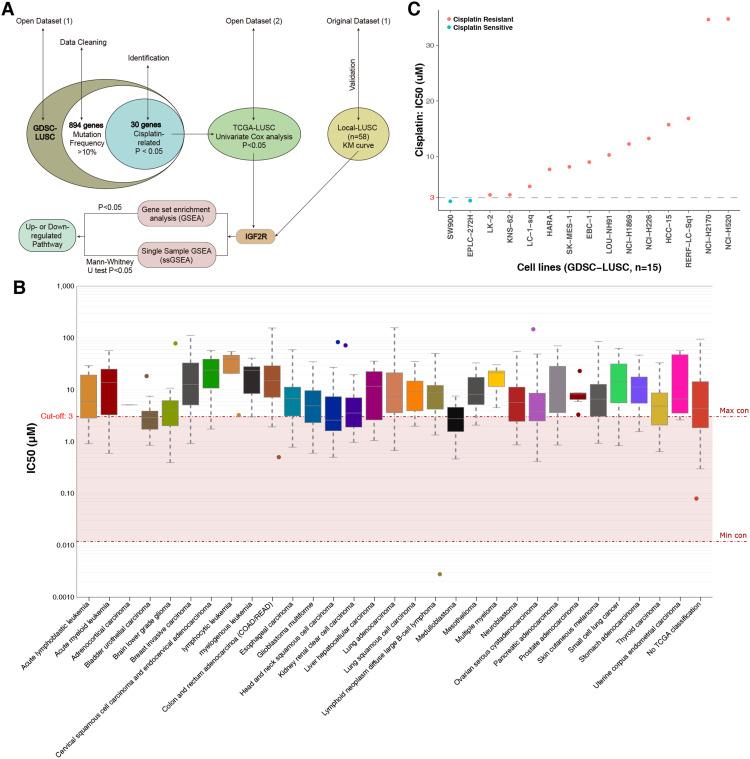
Data for 15 LUSC cell lines were downloaded from the Genomics of Drug Sensitivity in Cancer (GDSC) Project database to screen for mutations related to cisplatin susceptibility. We conducted whole-exome sequencing (WES) of tumors from 58 LUSC patients from Sichuan Provincial People's Hospital of University of Electronic Science and Technology. Subsequently, the clinical prognostic value of these mutations was verified by using The Cancer Genome Atlas (TCGA)-LUSC cohort and our cohort (n=58).
RESULTS
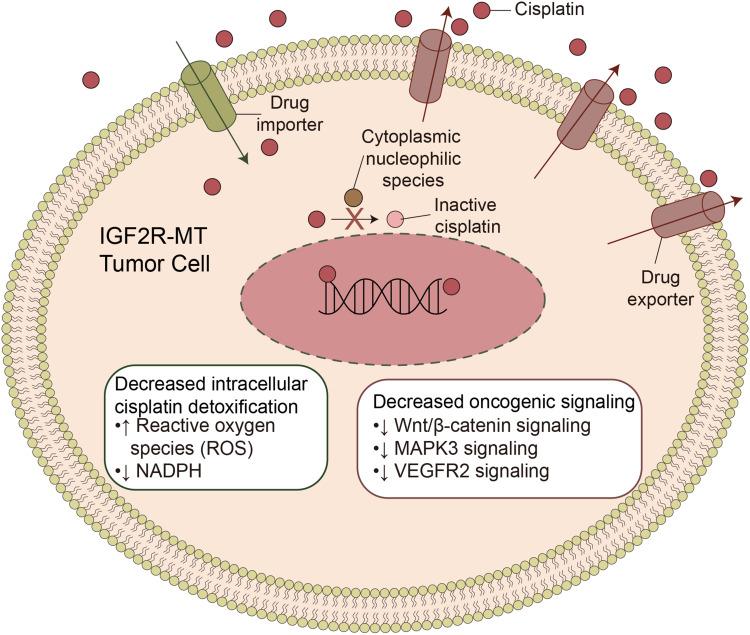
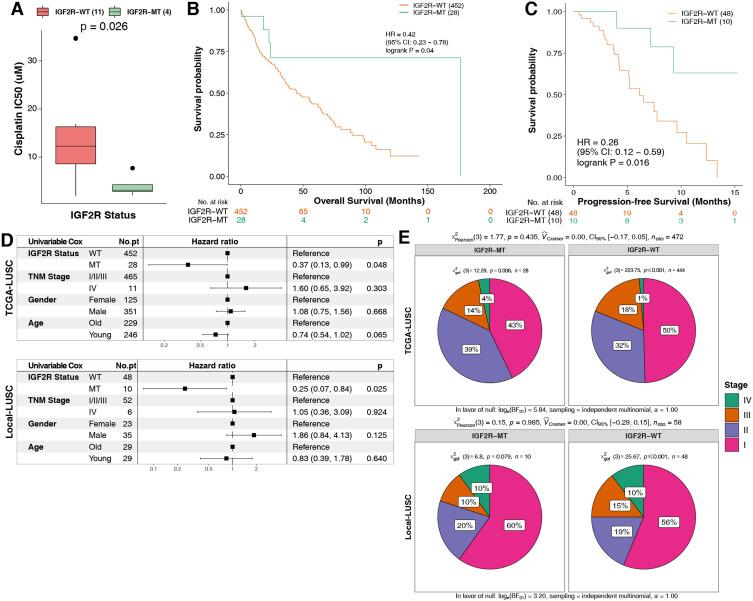
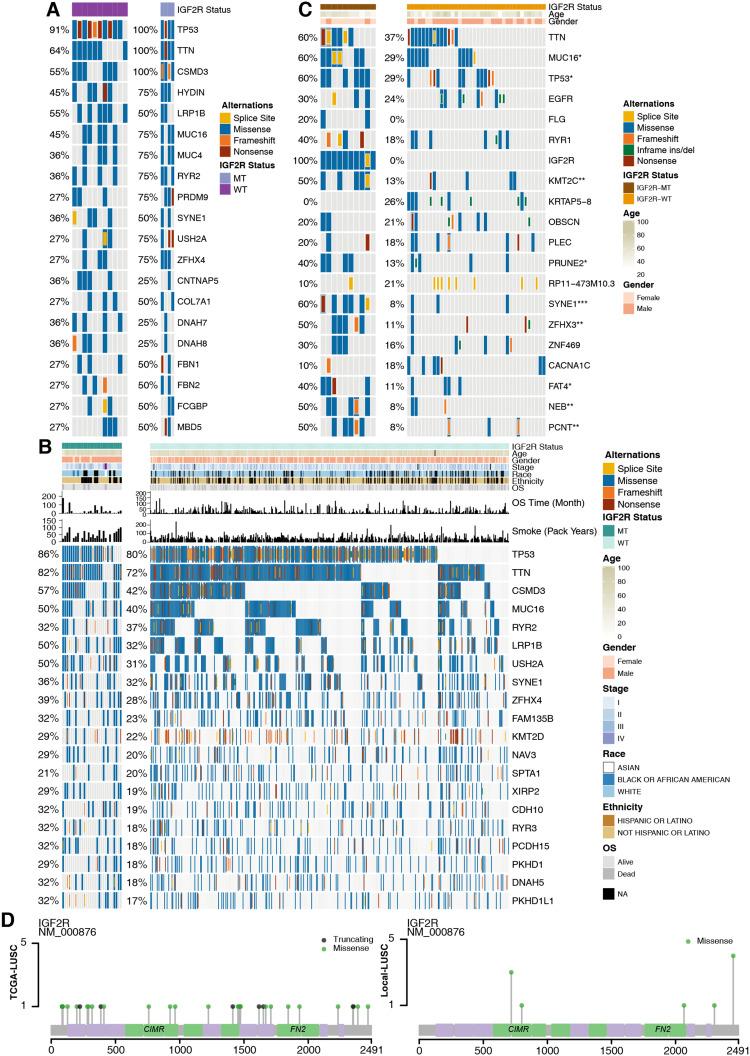
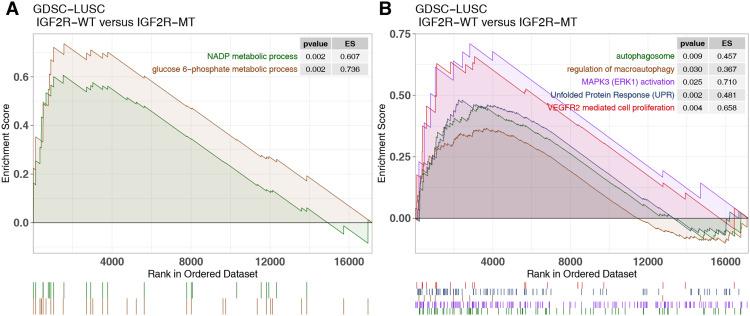
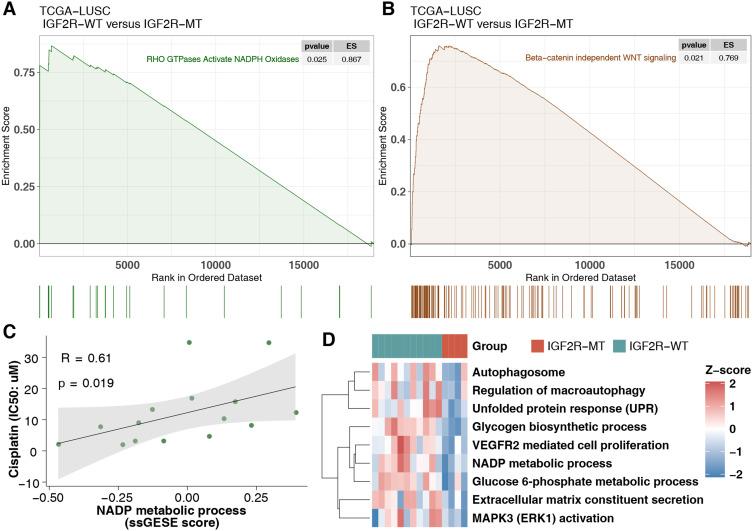
Based on the cisplatin sensitivity data of GDSC-LUSC and survival analysis of TCGA-LUSC and Local-LUSC cohorts, we found that only mutation of IGF2R was associated with cisplatin sensitivity, better overall survival [OS; P=0.04, HR (95% CI): 0.42 (0.23-0.78)] and progression-free survival [PFS; P =0.016, HR (95% CI): 0.26 (0.12-0.59)]. However, there were no significant differences in the frequencies of gene mutations between the IGF2R-mutant (IGF2R-MT) and IGF2R-wild-type (IGF2R-WT) groups. Gene set enrichment analysis (GSEA) and single-sample GSEA (ssGSEA) indicated enhanced intracellular detoxification and decreased abnormal signaling activity to reverse cisplatin tolerance in the IGF2R-MT group.
CONCLUSION
The results suggest that IGF2R mutations are a potential biomarker for screening LUSC patients suitable for cisplatin treatment.
引言
铂类化疗是肺鳞癌患者治疗的基石,但顺铂耐药极大地限制了其临床应用。因此,利用生物标志物筛选主要的肺鳞癌人群尤为重要。
方法
从癌症药物敏感性基因组学(GDSC)项目数据库下载15个肺鳞癌细胞系的数据,以筛选与顺铂敏感性相关的突变。我们对来自电子科技大学附属四川省人民医院的58例肺鳞癌患者的肿瘤进行了全外显子测序(WES)。随后,利用癌症基因组图谱(TCGA)-肺鳞癌队列和我们的队列(n = 58)验证了这些突变的临床预后价值。
结果
基于GDSC-肺鳞癌的顺铂敏感性数据以及TCGA-肺鳞癌和本地肺鳞癌队列的生存分析,我们发现只有IGF2R突变与顺铂敏感性、更好的总生存期[OS;P = 0.04,HR(95%CI):0.42(0.23 - 0.78)]和无进展生存期[PFS;P = 0.016,HR(95%CI):0.26(0.12 - 0.59)]相关。然而,IGF2R突变(IGF2R-MT)组和IGF2R野生型(IGF2R-WT)组之间的基因突变频率没有显著差异。基因集富集分析(GSEA)和单样本GSEA(ssGSEA)表明,IGF2R-MT组细胞内解毒增强,异常信号活性降低,从而逆转了顺铂耐受性。
结论
结果表明,IGF2R突变是筛选适合顺铂治疗的肺鳞癌患者的潜在生物标志物。
 Zotero 插件