
缺氧诱导因子翻译后修饰在调节其定位、稳定性和活性中的作用。
The Role of Hypoxia-Inducible Factor Post-Translational Modifications in Regulating Its Localisation, Stability, and Activity.
机构信息
Department of Molecular Physiology and Cell Signalling, Institute of Systems, Molecular and Integrative Biology, University of Liverpool, Liverpool L697ZB, UK.
Department of Biochemistry and System Biology, Institute of Systems, Molecular and Integrative Biology, University of Liverpool, Liverpool L697ZB, UK.
出版信息
Int J Mol Sci. 2020 Dec 29;22(1):268. doi: 10.3390/ijms22010268.
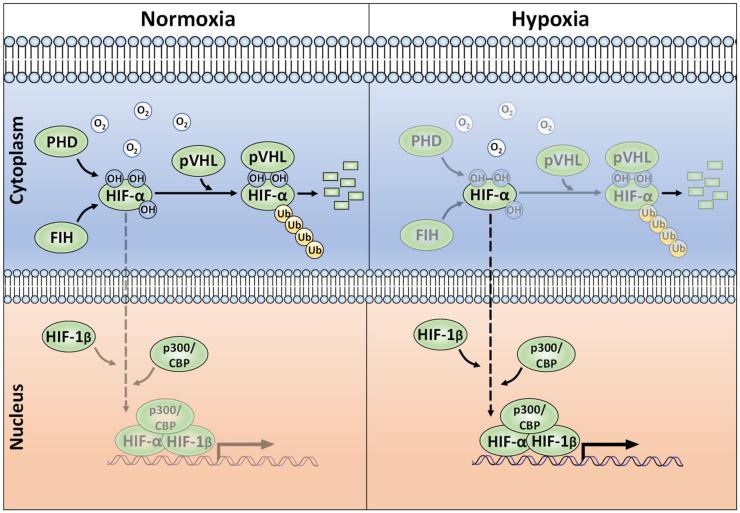
The hypoxia signalling pathway enables adaptation of cells to decreased oxygen availability. When oxygen becomes limiting, the central transcription factors of the pathway, hypoxia-inducible factors (HIFs), are stabilised and activated to induce the expression of hypoxia-regulated genes, thereby maintaining cellular homeostasis. Whilst hydroxylation has been thoroughly described as the major and canonical modification of the HIF-α subunits, regulating both HIF stability and activity, a range of other post-translational modifications decorating the entire protein play also a crucial role in altering HIF localisation, stability, and activity. These modifications, their conservation throughout evolution, and their effects on HIF-dependent signalling are discussed in this review.
缺氧信号通路使细胞能够适应氧气供应减少。当氧气变得有限时,该通路的核心转录因子缺氧诱导因子(HIFs)被稳定并激活,以诱导缺氧调节基因的表达,从而维持细胞内稳态。虽然羟化作用已被彻底描述为 HIF-α亚基的主要和典型修饰,调节 HIF 的稳定性和活性,但一系列其他翻译后修饰也可以调节整个蛋白质的结构,从而在改变 HIF 的定位、稳定性和活性方面发挥关键作用。本文综述了这些修饰、它们在进化过程中的保守性以及它们对 HIF 依赖性信号转导的影响。



 Zotero 插件