
计算机模拟评估有潜力的抗 COVID-19 药物候选物作为潜在的 SARS-CoV-2 主要蛋白酶抑制剂。
In Silico Evaluation of Prospective Anti-COVID-19 Drug Candidates as Potential SARS-CoV-2 Main Protease Inhibitors.
机构信息
Computational Chemistry Laboratory, Chemistry Department, Faculty of Science, Minia University, Minia, 61519, Egypt.
Department of Medical Laboratories, College of Applied Medical Sciences, Qassim University, Buraydah, Saudi Arabia.
出版信息
Protein J. 2021 Jun;40(3):296-309. doi: 10.1007/s10930-020-09945-6. Epub 2021 Jan 2.
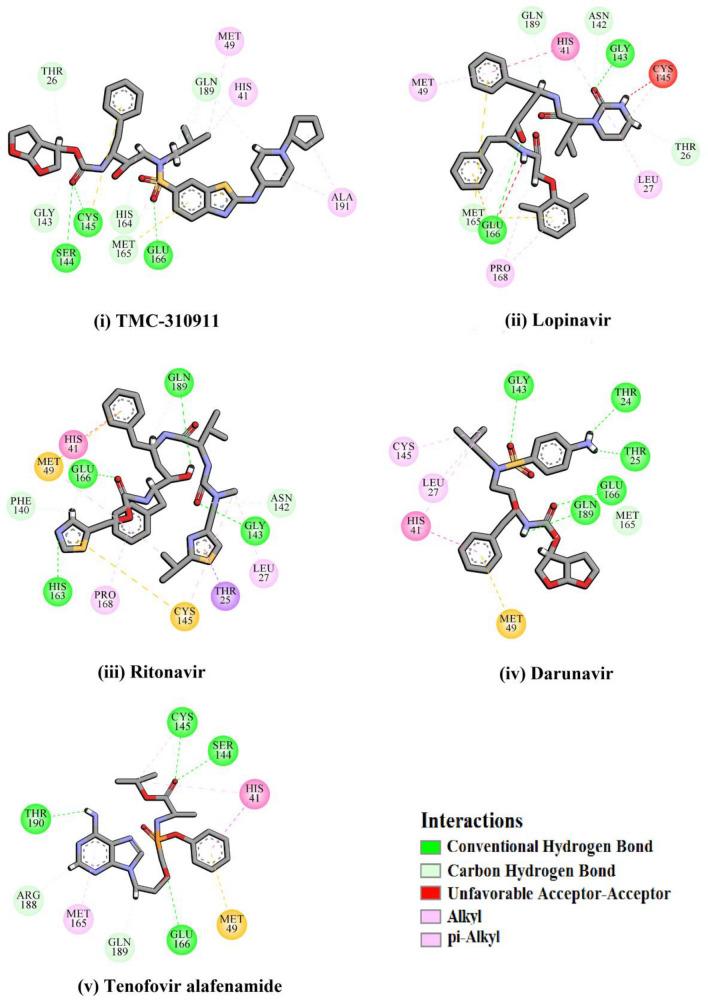
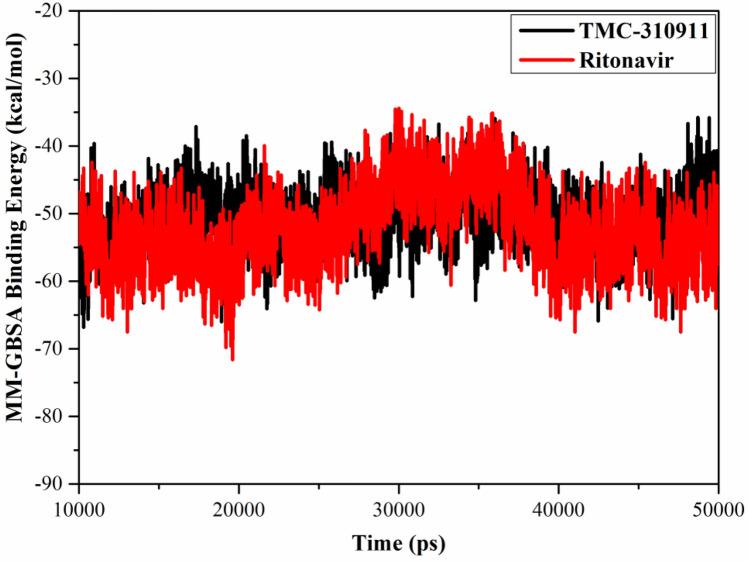
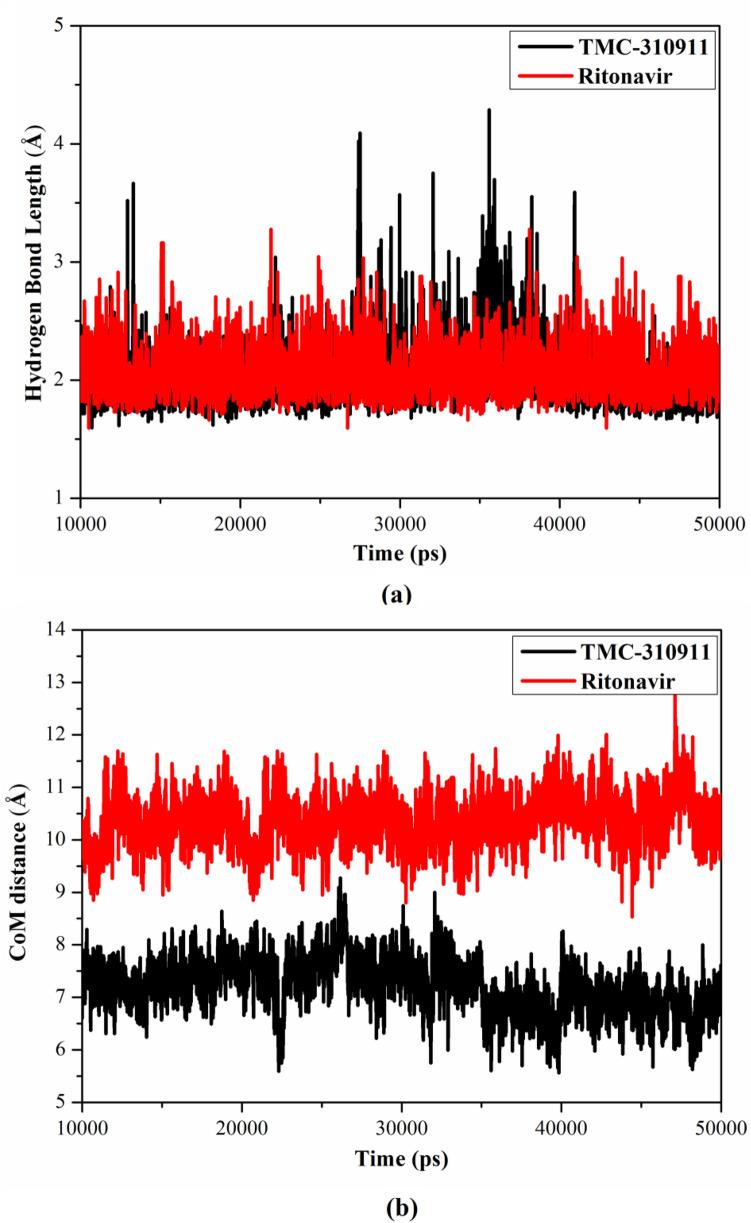
Severe acute respiratory syndrome coronavirus 2 (SARS-CoV-2) is a recently emanating human infectious coronavirus that causes COVID-19 disease. On 11th March 2020, it has been announced as a pandemic by the World Health Organization (WHO). Recently, several repositioned drugs have been subjected to clinical investigations as anti-COVID-19 drugs. Here, in silico drug discovery tools were utilized to evaluate the binding affinities and features of eighteen anti-COVID-19 drug candidates against SARS-CoV-2 main protease (M). Molecular docking calculations using Autodock Vina showed considerable binding affinities of the investigated drugs with docking scores ranging from - 5.3 to - 8.3 kcal/mol, with higher binding affinities for HIV drugs compared to the other antiviral drugs. Molecular dynamics (MD) simulations were performed for the predicted drug-M complexes for 50 ns, followed by binding energy calculations utilizing molecular mechanics-generalized Born surface area (MM-GBSA) approach. MM-GBSA calculations demonstrated promising binding affinities of TMC-310911 and ritonavir towards SARS-CoV-2 M, with binding energy values of - 52.8 and - 49.4 kcal/mol, respectively. Surpass potentialities of TMC-310911 and ritonavir are returned to their capabilities of forming multiple hydrogen bonds with the proximal amino acids inside M's binding site. Structural and energetic analyses involving root-mean-square deviation, binding energy per-frame, center-of-mass distance, and hydrogen bond length demonstrated the stability of TMC-310911 and ritonavir inside the M's active site over the 50 ns MD simulation. This study sheds light on HIV protease drugs as prospective SARS-CoV-2 M inhibitors.
严重急性呼吸系统综合症冠状病毒 2(SARS-CoV-2)是一种新出现的人类传染性冠状病毒,可引发 COVID-19 疾病。2020 年 3 月 11 日,世界卫生组织(WHO)宣布其为大流行。最近,几种已重新定位的药物已被用作抗 COVID-19 药物进行临床研究。在这里,我们利用计算机药物发现工具来评估 18 种抗 COVID-19 候选药物对 SARS-CoV-2 主要蛋白酶(M)的结合亲和力和特征。使用 Autodock Vina 的分子对接计算表明,研究药物与对接得分范围为-5.3 至-8.3 kcal/mol 的 SARS-CoV-2 M 具有相当的结合亲和力,与其他抗病毒药物相比,HIV 药物具有更高的结合亲和力。对预测的药物-M 复合物进行了 50 ns 的分子动力学(MD)模拟,然后使用分子力学-广义 Born 表面面积(MM-GBSA)方法进行结合能计算。MM-GBSA 计算表明 TMC-310911 和利托那韦对 SARS-CoV-2 M 具有有前途的结合亲和力,结合能值分别为-52.8 和-49.4 kcal/mol。TMC-310911 和利托那韦的超越潜力归因于它们能够与 M 结合位点内的近端氨基酸形成多个氢键。涉及均方根偏差、每帧结合能、质心距离和氢键长度的结构和能量分析表明,TMC-310911 和利托那韦在 50 ns MD 模拟期间在 M 的活性部位内稳定。这项研究揭示了 HIV 蛋白酶药物作为潜在的 SARS-CoV-2 M 抑制剂的潜力。


 Zotero 插件