
疟原虫利用可溶性 RhopH 复合物进行红细胞入侵,利用整合形式进行营养摄取。
Malaria parasites use a soluble RhopH complex for erythrocyte invasion and an integral form for nutrient uptake.
机构信息
Laboratory of Malaria and Vector Research, NIAID, National Institutes of Health, Rockville, United States.
Laboratory of Cell Biology, Center for Cancer Research, National Cancer Institute, National Institutes of Health, Bethesda, United States.
出版信息
Elife. 2021 Jan 4;10:e65282. doi: 10.7554/eLife.65282.
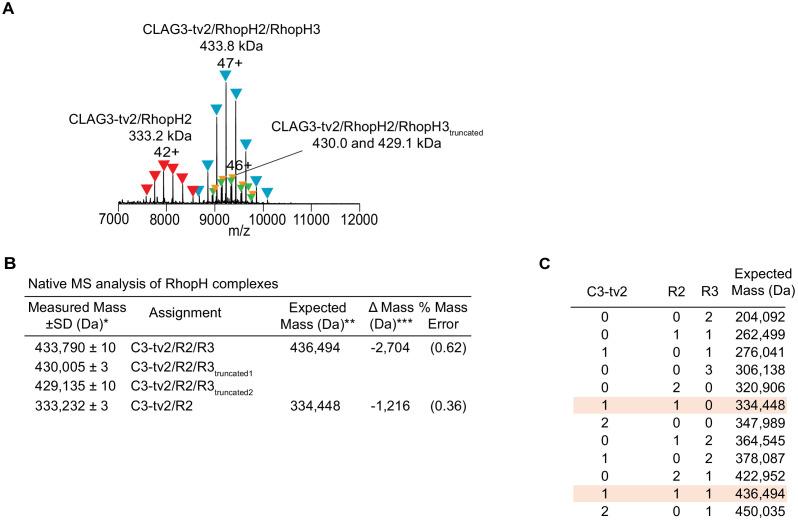
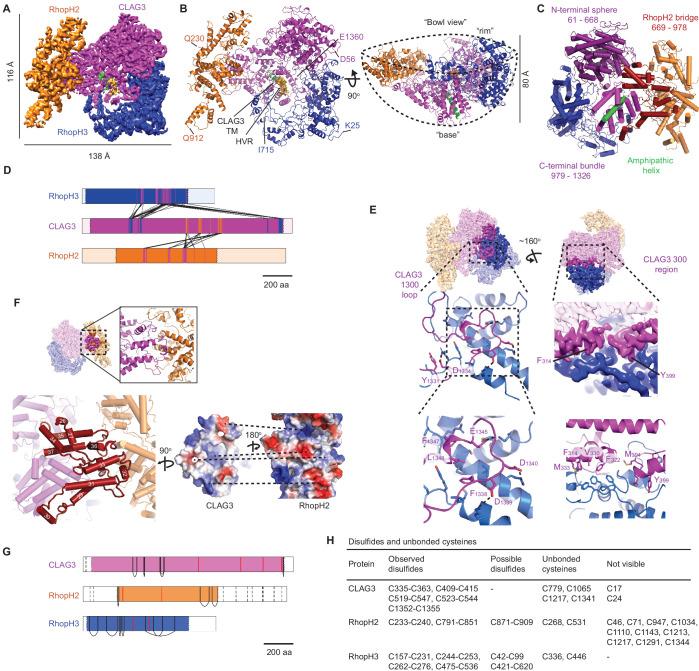
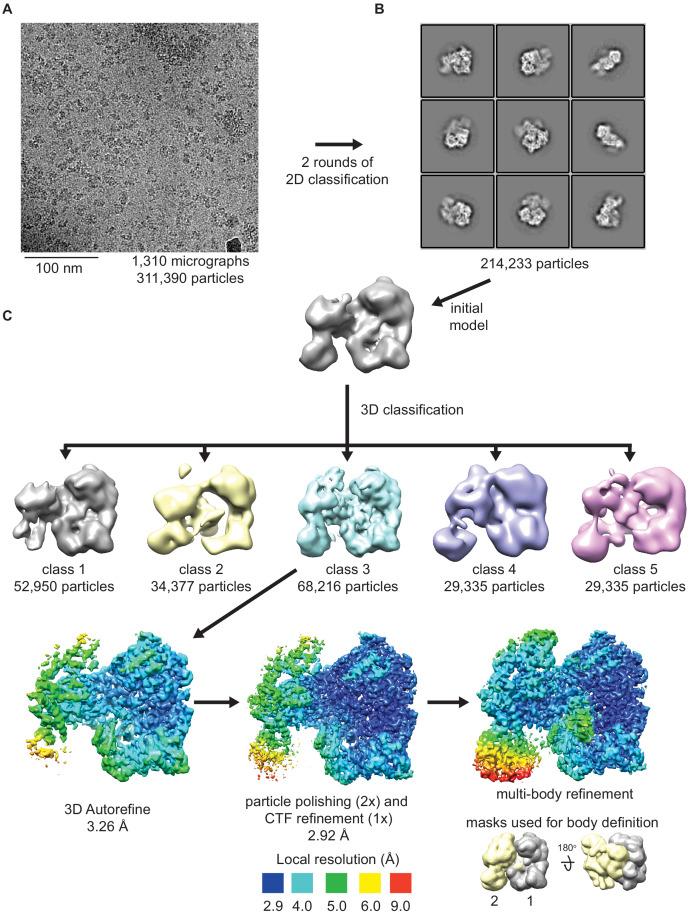
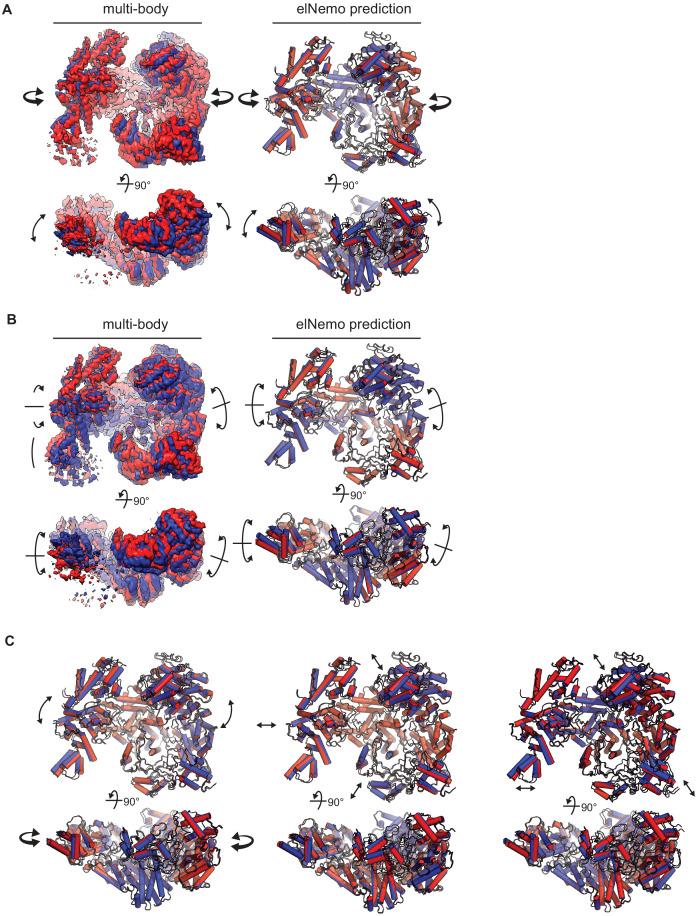
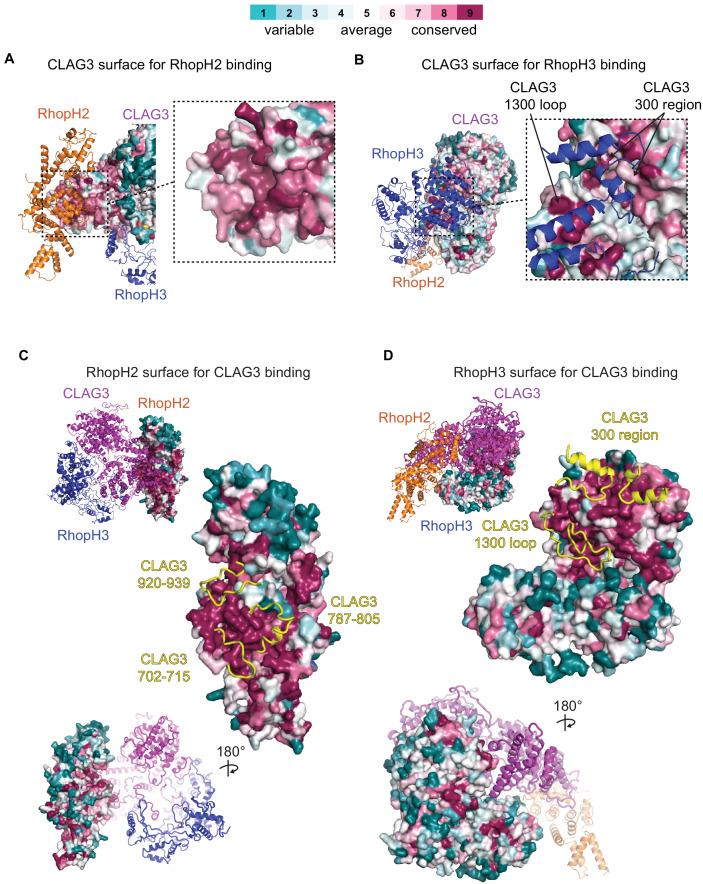
Malaria parasites use the RhopH complex for erythrocyte invasion and channel-mediated nutrient uptake. As the member proteins are unique to Plasmodium spp., how they interact and traffic through subcellular sites to serve these essential functions is unknown. We show that RhopH is synthesized as a soluble complex of CLAG3, RhopH2, and RhopH3 with 1:1:1 stoichiometry. After transfer to a new host cell, the complex crosses a vacuolar membrane surrounding the intracellular parasite and becomes integral to the erythrocyte membrane through a PTEX translocon-dependent process. We present a 2.9 Å single-particle cryo-electron microscopy structure of the trafficking complex, revealing that CLAG3 interacts with the other subunits over large surface areas. This soluble complex is tightly assembled with extensive disulfide bonding and predicted transmembrane helices shielded. We propose a large protein complex stabilized for trafficking but poised for host membrane insertion through large-scale rearrangements, paralleling smaller two-state pore-forming proteins in other organisms.
疟原虫利用 RhopH 复合物进行红细胞入侵和通道介导的营养摄取。由于成员蛋白是疟原虫属特有的,它们如何相互作用并通过亚细胞位点运输以发挥这些基本功能尚不清楚。我们发现 RhopH 作为 CLAG3、RhopH2 和 RhopH3 的可溶性复合物合成,具有 1:1:1 的化学计量比。转移到新的宿主细胞后,该复合物穿过包围细胞内寄生虫的液泡膜,并通过 PTEX 转位体依赖的过程成为红细胞膜的组成部分。我们呈现了一个 2.9Å 的转运复合物的单颗粒冷冻电子显微镜结构,揭示了 CLAG3 通过大面积与其他亚基相互作用。这种可溶性复合物通过广泛的二硫键和预测的跨膜螺旋紧密组装,被屏蔽。我们提出了一个大型蛋白质复合物,该复合物通过大规模重排稳定进行运输,但准备通过插入宿主膜,类似于其他生物体中小的两态形成孔的蛋白质。





 Zotero 插件