
肿瘤进展和转移过程中癌细胞的代谢重编程
Metabolic Reprogramming of Cancer Cells during Tumor Progression and Metastasis.
作者信息
Ohshima Kenji, Morii Eiichi
机构信息
Department of Pathology, Osaka University Graduate School of Medicine, 2-2 Yamadaoka, Suita, Osaka 565-0871, Japan.
出版信息
Metabolites. 2021 Jan 2;11(1):28. doi: 10.3390/metabo11010028.
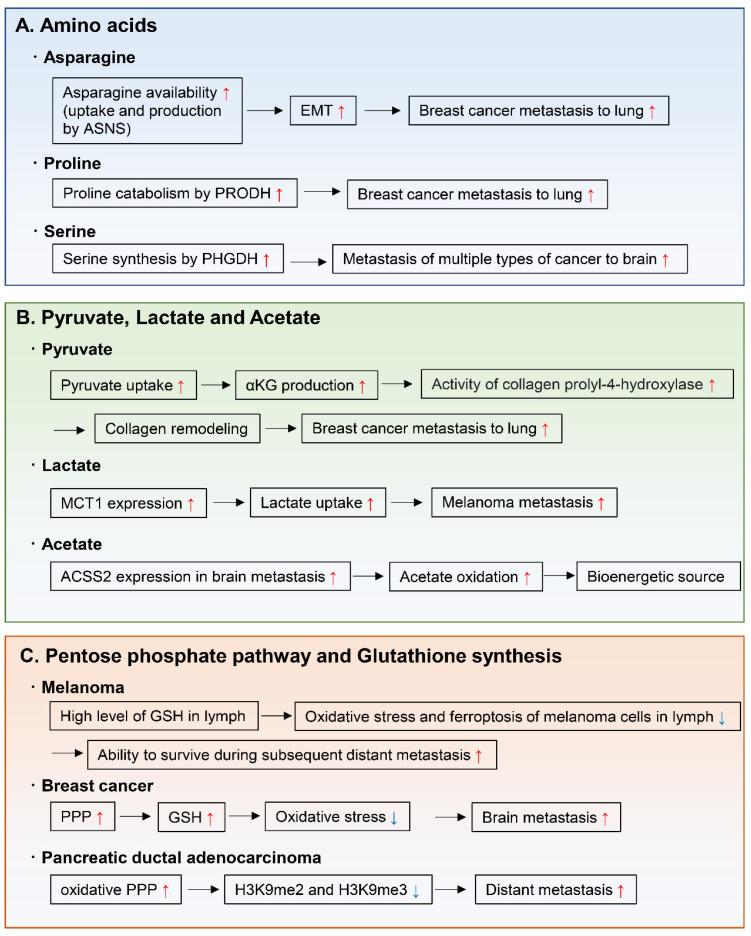
Cancer cells face various metabolic challenges during tumor progression, including growth in the nutrient-altered and oxygen-deficient microenvironment of the primary site, intravasation into vessels where anchorage-independent growth is required, and colonization of distant organs where the environment is distinct from that of the primary site. Thus, cancer cells must reprogram their metabolic state in every step of cancer progression. Metabolic reprogramming is now recognized as a hallmark of cancer cells and supports cancer growth. Elucidating the underlying mechanisms of metabolic reprogramming in cancer cells may help identifying cancer targets and treatment strategies. This review summarizes our current understanding of metabolic reprogramming during cancer progression and metastasis, including cancer cell adaptation to the tumor microenvironment, defense against oxidative stress during anchorage-independent growth in vessels, and metabolic reprogramming during metastasis.
在肿瘤进展过程中,癌细胞面临各种代谢挑战,包括在原发部位营养改变和缺氧的微环境中生长、进入需要非锚定依赖生长的血管以及在环境与原发部位不同的远处器官定植。因此,癌细胞必须在癌症进展的每一步重新编程其代谢状态。代谢重编程现在被认为是癌细胞的一个标志,并支持癌症生长。阐明癌细胞代谢重编程的潜在机制可能有助于确定癌症靶点和治疗策略。本综述总结了我们目前对癌症进展和转移过程中代谢重编程的理解,包括癌细胞对肿瘤微环境的适应、在血管中非锚定依赖生长期间对氧化应激的防御以及转移过程中的代谢重编程。


 Zotero 插件