
基于新建立的多器官微流控芯片模型的蛋白质组学揭示肺癌脑转移获得性耐药的原因。
Proteomic Reveals Reasons for Acquired Drug Resistance in Lung Cancer Derived Brain Metastasis Based on a Newly Established Multi-Organ Microfluidic Chip Model.
作者信息
Xu Mingxin, Wang Yingyan, Duan Wenzhe, Xia Shengkai, Wei Song, Liu Wenwen, Wang Qi
机构信息
Department of Respiratory Medicine, The Second Hospital, Dalian Medical University, Dalian, China.
Laboratory Center for Diagnostics, Dalian Medical University, Dalian, China.
出版信息
Front Bioeng Biotechnol. 2020 Dec 22;8:612091. doi: 10.3389/fbioe.2020.612091. eCollection 2020.
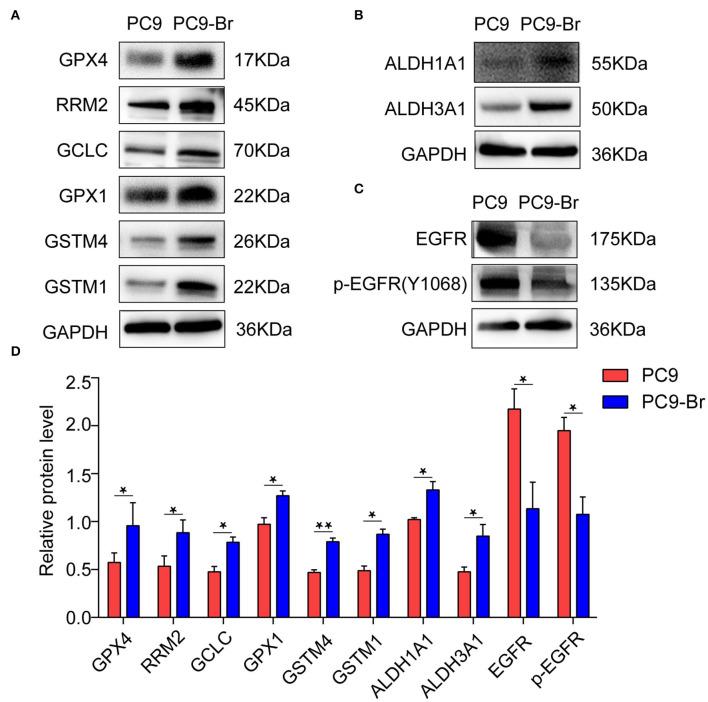
Anti-tumor drugs can effectively shrink the lesions of primary lung cancer; however, it has limited therapeutic effect on patients with brain metastasis (BM). A BM preclinical model based on a multi-organ microfluidic chip has been established proficiently in our previous work. In this study, the BM subpopulation (PC9-Br) derived from the parental PC9 cell line was isolated from the chip model and found to develop obvious resistance to antineoplastic drugs including chemotherapeutic agents (cisplatin, carboplatin, pemetrexed) and tyrosine kinase inhibitors (TKIs) which target epidermal growth factor receptor (EGFR); this suggested that the acquisition of drug-resistance by brain metastatic cells was attributable to the intrinsic changes in PC9-Br. Hence, we performed proteomic and revealed a greatly altered spectrum of BM protein expression compared with primary lung cancer cells. We identified the hyperactive glutathione (GSH) metabolism pathway with the overexpression of various GSH metabolism-related enzymes (GPX4, RRM2, GCLC, GPX1, GSTM4, GSTM1). Aldehyde dehydrogenases (ALDH1A1, ALDH3A1) were also found to be upregulated in BM. What's more, loss of EGFR and phosphorylated EGFR in PC9-Br gave reasons for the TKIs resistance. Collectively, our findings indicated potential mechanisms for the acquirement of drug resistance occurred in BM, providing new strategies to overcome therapeutic resistance in lung cancer BM.
抗肿瘤药物可有效缩小原发性肺癌的病灶;然而,其对脑转移(BM)患者的治疗效果有限。在我们之前的工作中,已成功建立了基于多器官微流控芯片的BM临床前模型。在本研究中,从芯片模型中分离出源自亲代PC9细胞系的BM亚群(PC9-Br),发现其对包括化疗药物(顺铂、卡铂、培美曲塞)和靶向表皮生长因子受体(EGFR)的酪氨酸激酶抑制剂(TKIs)在内的抗肿瘤药物产生明显耐药性;这表明脑转移细胞获得耐药性归因于PC9-Br的内在变化。因此,我们进行了蛋白质组学研究,结果显示与原发性肺癌细胞相比,BM的蛋白质表达谱发生了极大改变。我们鉴定出谷胱甘肽(GSH)代谢途径活跃,多种与GSH代谢相关的酶(GPX4、RRM2、GCLC、GPX1、GSTM4、GSTM1)过表达。还发现醛脱氢酶(ALDH1A1、ALDH3A1)在BM中上调。此外,PC9-Br中EGFR和磷酸化EGFR的缺失是产生TKIs耐药性的原因。总体而言,我们的研究结果表明了BM中产生耐药性的潜在机制,为克服肺癌BM的治疗耐药性提供了新策略。


 Zotero 插件