
洞穴蛛科 Meta menardi(蛛形纲, Tetragnathidae)蛛网结构的独特行为改变。
Unique behavioural modifications in the web structure of the cave orb spider Meta menardi (Araneae, Tetragnathidae).
机构信息
Department of Zoology, University of Oxford, Oxford, OX1 2PS, UK.
出版信息
Sci Rep. 2021 Jan 8;11(1):92. doi: 10.1038/s41598-020-79868-w.
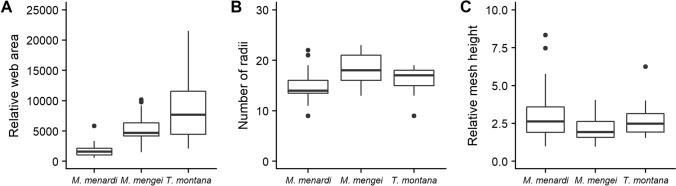
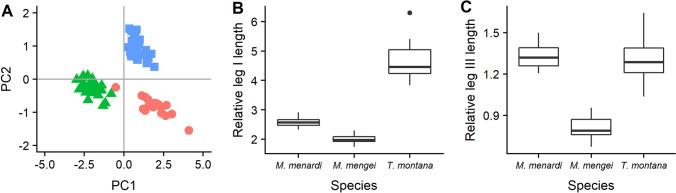
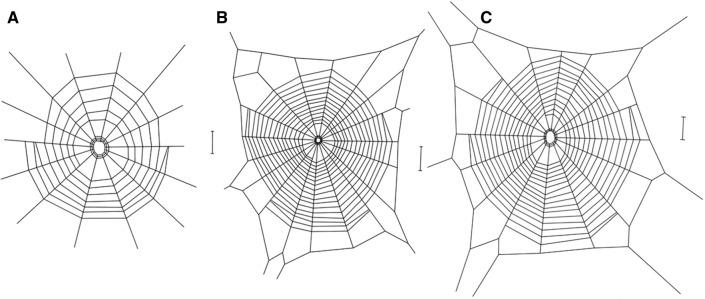
In the last decade there has been a renewed interest in the study of behavioural adaptations to environmental constraints with a focus on adaptations to challenging habitats due to their reduced ecological complexity. However, behavioural studies on organisms adapted to nutrient poor subterranean habitats are few and far between. Here, we compared both morphological traits, in terms of relative leg lengths, and behavioural traits, captured in the geometry of the spider web, between the cave-dwelling spider, Meta menardi, and two aboveground species from the same family (Tetragnathidae); Metellina mengei and Tetragnatha montana. We found that the webs of the cave spider differed significantly from the two surface-dwelling species. The most dramatic difference was the lack of frame threads with the radii in the webs instead attaching directly to the surrounding rock, but other differences in relative web size, web asymmetry and number of capture spiral threads were also found. We argue that these modifications are likely to be adaptations to allow for a novel foraging behaviour to additionally capture walking prey within the vicinity of the web. We found only limited evidence for morphological adaptations and suggest that the cave orb spider could act as a model organism for studies of behaviour in energy-poor environments.
在过去的十年中,人们对环境限制下行为适应的研究重新产生了兴趣,研究重点是由于生态复杂性降低而对具有挑战性的栖息地的适应。然而,针对适应营养贫瘠地下栖息地的生物的行为研究却很少。在这里,我们比较了洞穴蜘蛛 Meta menardi 与其同一家族(圆蛛科)的两种地上物种(Metellina mengei 和 Tetragnatha montana)的形态特征(相对腿长)和行为特征(蛛网的几何形状)。我们发现,洞穴蜘蛛的蛛网与两种地上栖息物种有明显的不同。最显著的差异是缺乏框架线,而是将半径直接附着在周围的岩石上,但也发现了相对蛛网大小、蛛网不对称性和捕获螺旋线数量的其他差异。我们认为,这些变化可能是为了适应在蛛网附近捕获行走猎物的新觅食行为。我们仅发现了形态适应的有限证据,并认为洞穴球蛛可能成为研究能量贫瘠环境中行为的模式生物。
 Zotero 插件