
肾移植中供体来源的游离DNA作为潜在排斥生物标志物的系统文献综述
Donor-Derived Cell-Free DNA in Kidney Transplantation as a Potential Rejection Biomarker: A Systematic Literature Review.
作者信息
Martuszewski Adrian, Paluszkiewicz Patrycja, Król Magdalena, Banasik Mirosław, Kepinska Marta
机构信息
Department of Nephrology and Transplantation Medicine, Wroclaw Medical University, Borowska 213, 50-556 Wroclaw, Poland.
Students Scientific Association, Department of Biomedical and Environmental Analysis, Faculty of Pharmacy, Wroclaw Medical University, 50-556 Wroclaw, Poland.
出版信息
J Clin Med. 2021 Jan 7;10(2):193. doi: 10.3390/jcm10020193.
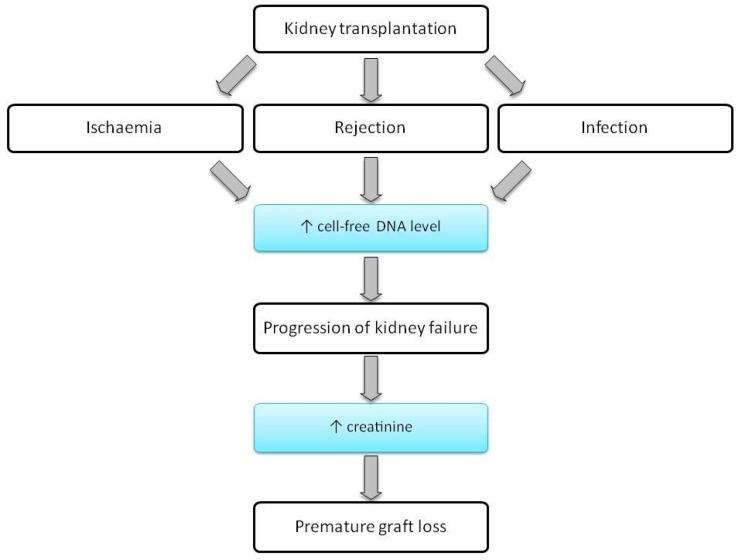
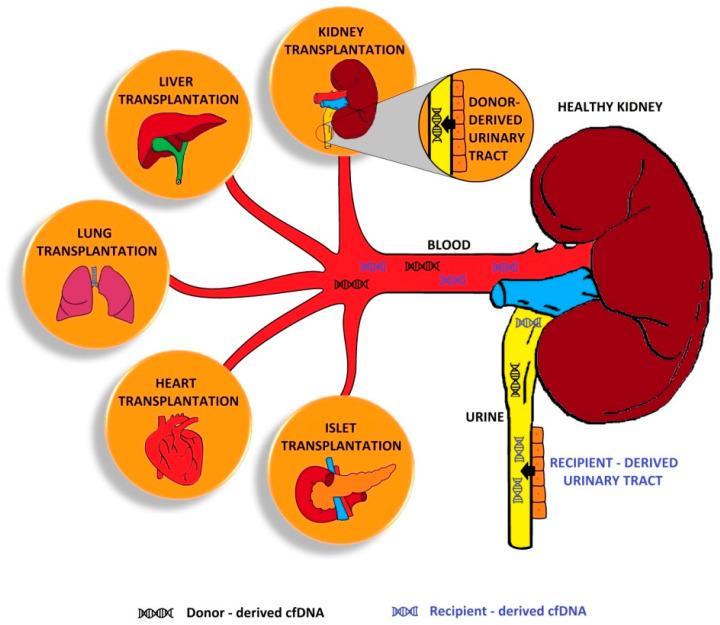
Kidney transplantation (KTx) is the best treatment method for end-stage kidney disease. KTx improves the patient's quality of life and prolongs their survival time; however, not all patients benefit fully from the transplantation procedure. For some patients, a problem is the premature loss of graft function due to immunological or non-immunological factors. Circulating cell-free DNA (cfDNA) is degraded deoxyribonucleic acid fragments that are released into the blood and other body fluids. Donor-derived cell-free DNA (dd-cfDNA) is cfDNA that is exogenous to the patient and comes from a transplanted organ. As opposed to an invasive biopsy, dd-cfDNA can be detected by a non-invasive analysis of a sample. The increase in dd-cfDNA concentration occurs even before the creatinine level starts rising, which may enable early diagnosis of transplant injury and adequate treatment to avoid premature graft loss. In this paper, we summarise the latest promising results related to cfDNA in transplant patients.
肾移植(KTx)是终末期肾病的最佳治疗方法。肾移植可改善患者的生活质量并延长其生存时间;然而,并非所有患者都能从移植手术中充分受益。对一些患者来说,一个问题是由于免疫或非免疫因素导致移植肾功能过早丧失。循环游离DNA(cfDNA)是降解后释放到血液和其他体液中的脱氧核糖核酸片段。供体来源的游离DNA(dd-cfDNA)是患者体内外源性的cfDNA,来自移植器官。与侵入性活检不同,dd-cfDNA可以通过对样本的非侵入性分析来检测。dd-cfDNA浓度的增加甚至在肌酐水平开始升高之前就会出现,这可能有助于移植损伤的早期诊断和进行适当治疗以避免移植肾过早丢失。在本文中,我们总结了与移植患者cfDNA相关的最新有前景的研究结果。

 Zotero 插件