
针对人乳头瘤病毒 16(HPV16)和 HPV18 的 E6 和 E7 蛋白的 DNA 疫苗的开发,用于与重组痘苗增强和 PD-1 抗体联合免疫治疗。
Development of DNA Vaccine Targeting E6 and E7 Proteins of Human Papillomavirus 16 (HPV16) and HPV18 for Immunotherapy in Combination with Recombinant Vaccinia Boost and PD-1 Antibody.
机构信息
Department of Pathology, The Johns Hopkins University, Baltimore, Maryland, USA.
Department of Oncology, The Johns Hopkins University, Baltimore, Maryland, USA.
出版信息
mBio. 2021 Jan 19;12(1):e03224-20. doi: 10.1128/mBio.03224-20.
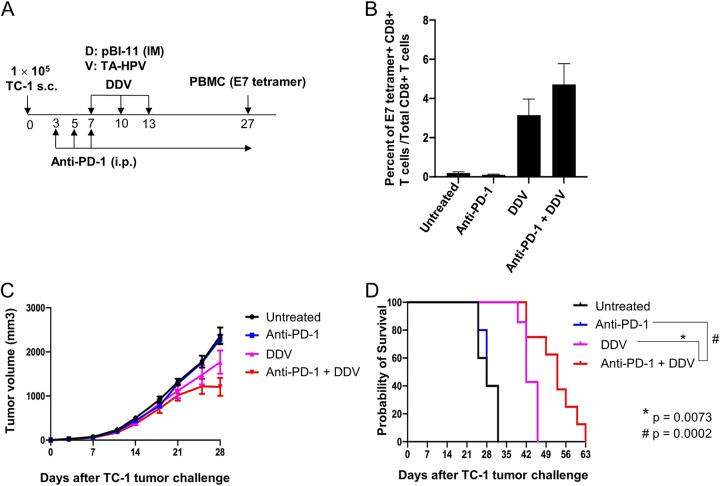
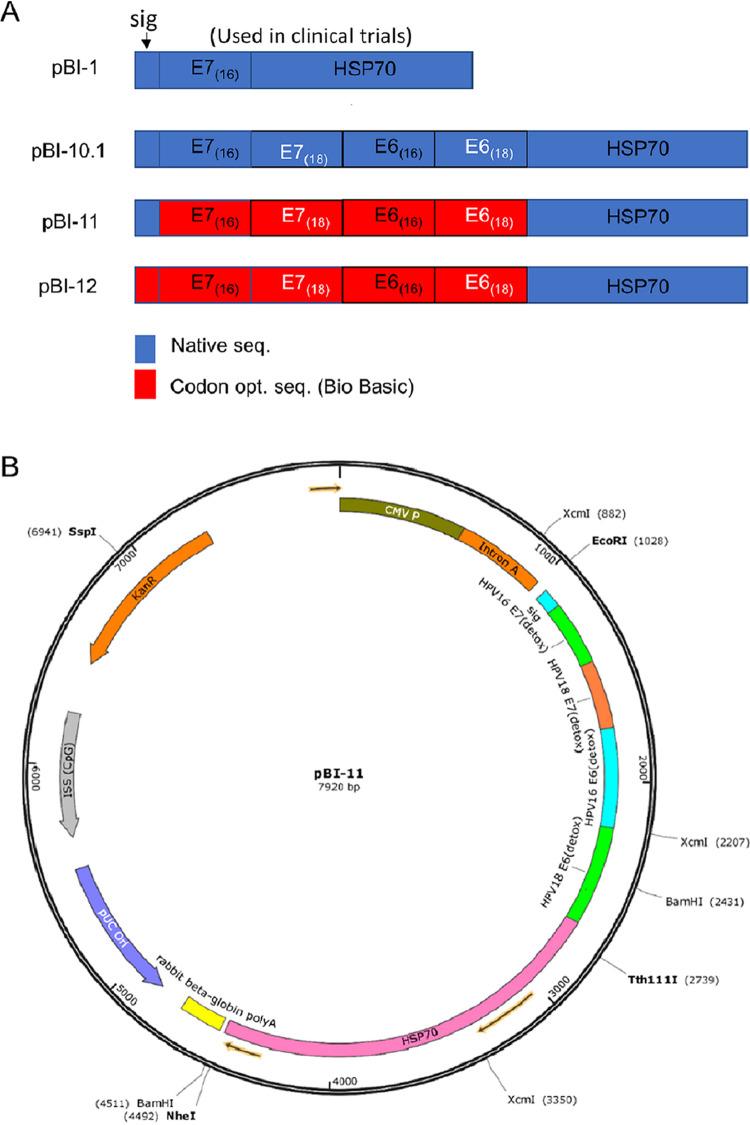
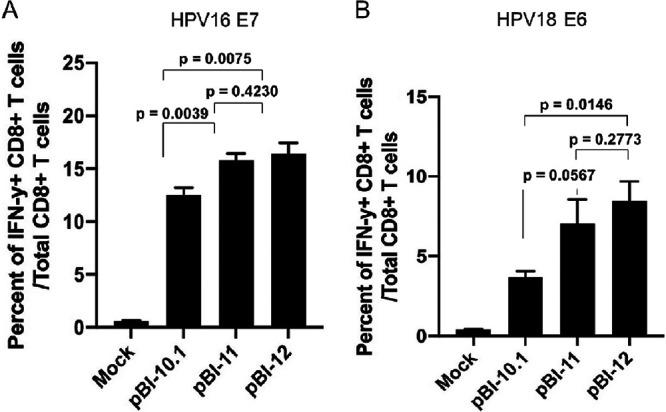
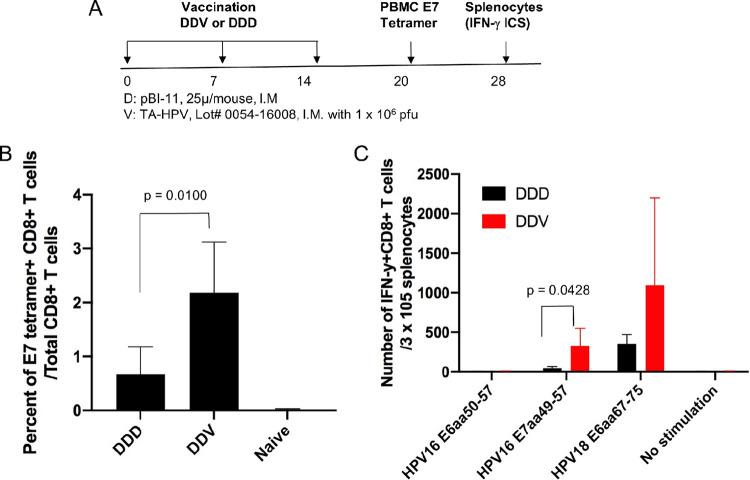
Immunotherapy for cervical cancer should target high-risk human papillomavirus types 16 and 18, which cause 50% and 20% of cervical cancers, respectively. Here, we describe the construction and characterization of the pBI-11 DNA vaccine via the addition of codon-optimized human papillomavirus 18 (HPV18) E7 and HPV16 and 18 E6 genes to the HPV16 E7-targeted DNA vaccine pNGVL4a-SigE7(detox)HSP70 (DNA vaccine pBI-1). Codon optimization of the HPV16/18 E6/E7 genes in pBI-11 improved fusion protein expression compared to that in DNA vaccine pBI-10.1 that utilized the native viral sequences fused 3' to a signal sequence and 5' to the HSP70 gene of Intramuscular vaccination of mice with pBI-11 DNA better induced HPV antigen-specific CD8 T cell immune responses than pBI-10.1 DNA. Furthermore, intramuscular vaccination with pBI-11 DNA generated stronger therapeutic responses for C57BL/6 mice bearing HPV16 E6/E7-expressing TC-1 tumors. The HPV16/18 antigen-specific T cell-mediated immune responses generated by pBI-11 DNA vaccination were further enhanced by boosting with tissue-antigen HPV vaccine (TA-HPV). Combination of the pBI-11 DNA and TA-HPV boost vaccination with PD-1 antibody blockade significantly improved the control of TC-1 tumors and extended the survival of the mice. Finally, repeat vaccination with clinical-grade pBI-11 with or without clinical-grade TA-HPV was well tolerated in vaccinated mice. These preclinical studies suggest that the pBI-11 DNA vaccine may be used with TA-HPV in a heterologous prime-boost strategy to enhance HPV 16/18 E6/E7-specific CD8 T cell responses, either alone or in combination with immune checkpoint blockade, to control HPV16/18-associated tumors. Our data serve as an important foundation for future clinical translation. Persistent expression of high-risk human papillomavirus (HPV) E6 and E7 is an obligate driver for several human malignancies, including cervical cancer, wherein HPV16 and HPV18 are the most common types. PD-1 antibody immunotherapy helps a subset of cervical cancer patients, and its efficacy might be improved by combination with active vaccination against E6 and/or E7. For patients with HPV16 cervical intraepithelial neoplasia grade 2/3 (CIN2/3), the precursor of cervical cancer, intramuscular vaccination with a DNA vaccine targeting HPV16 E7 and then a recombinant vaccinia virus expressing HPV16/18 E6-E7 fusion proteins (TA-HPV) was safe, and half of the patients cleared their lesions in a small study (NCT00788164). Here, we sought to improve upon this therapeutic approach by developing a new DNA vaccine that targets E6 and E7 of HPV16 and HPV18 for administration prior to a TA-HPV booster vaccination and for application against cervical cancer in combination with a PD-1-blocking antibody.
宫颈癌的免疫治疗应针对高危型人乳头瘤病毒(HPV)16 和 18 型,它们分别导致 50%和 20%的宫颈癌。在这里,我们通过在 HPV16 E7 靶向 DNA 疫苗 pNGVL4a-SigE7(detox)HSP70(DNA 疫苗 pBI-1)中添加密码子优化的 HPV18(HPV18)E7 和 HPV16 和 18 E6 基因来描述 pBI-11 DNA 疫苗的构建和特性。与使用融合到信号序列 3'端和 HSP70 基因 5'端的天然病毒序列的 DNA 疫苗 pBI-10.1 相比,pBI-11 中 HPV16/18 E6/E7 基因的密码子优化提高了融合蛋白的表达。与 DNA 疫苗 pBI-10.1 相比,用 pBI-11 DNA 肌肉内接种可更好地诱导 HPV 抗原特异性 CD8 T 细胞免疫应答。此外,用 pBI-11 DNA 肌肉内接种可生成更强的治疗性反应,用于携带 HPV16 E6/E7 表达 TC-1 肿瘤的 C57BL/6 小鼠。用 pBI-11 DNA 疫苗接种产生的 HPV16/18 抗原特异性 T 细胞介导的免疫应答通过与组织抗原 HPV 疫苗(TA-HPV)增强进一步增强。pBI-11 DNA 疫苗接种的 HPV16/18 抗原特异性 T 细胞介导的免疫应答通过与组织抗原 HPV 疫苗(TA-HPV)增强进一步增强。pBI-11 DNA 疫苗接种的 HPV16/18 抗原特异性 T 细胞介导的免疫应答通过与组织抗原 HPV 疫苗(TA-HPV)增强进一步增强。组合 pBI-11 DNA 和 TA-HPV 增强疫苗接种与 PD-1 抗体阻断显著改善了 TC-1 肿瘤的控制并延长了小鼠的生存时间。最后,在接种小鼠中重复接种临床级 pBI-11 加或不加临床级 TA-HPV 耐受性良好。这些临床前研究表明,pBI-11 DNA 疫苗可能与 TA-HPV 一起用于异源初免-加强策略,以增强 HPV 16/18 E6/E7 特异性 CD8 T 细胞反应,无论是单独使用还是与免疫检查点阻断联合使用,以控制 HPV16/18 相关肿瘤。我们的数据为未来的临床转化提供了重要的基础。高危型人乳头瘤病毒(HPV)E6 和 E7 的持续表达是包括宫颈癌在内的几种人类恶性肿瘤的强制性驱动因素,其中 HPV16 和 HPV18 是最常见的类型。PD-1 抗体免疫疗法有助于一部分宫颈癌患者,其疗效可能通过与针对 E6 和/或 E7 的主动疫苗接种相结合来提高。对于 HPV16 宫颈上皮内瘤变 2/3(CIN2/3)的患者,即宫颈癌的前体,肌肉内接种 HPV16 E7 靶向 DNA 疫苗,然后接种表达 HPV16/18 E6-E7 融合蛋白的重组痘苗病毒(TA-HPV)是安全的,在一项小型研究(NCT00788164)中,一半的患者清除了病变。在这里,我们试图通过开发一种新的 DNA 疫苗来改进这种治疗方法,该疫苗针对 HPV16 和 HPV18 的 E6 和 E7,用于 TA-HPV 加强疫苗接种之前,并与 PD-1 阻断抗体联合用于治疗宫颈癌。



 Zotero 插件