
一种用于基于Cas13检测SARS-CoV-2遗传物质的可扩展、易于部署的协议。
A Scalable, Easy-to-Deploy Protocol for Cas13-Based Detection of SARS-CoV-2 Genetic Material.
作者信息
Rauch Jennifer N, Valois Eric, Solley Sabrina C, Braig Friederike, Lach Ryan S, Audouard Morgane, Ponce-Rojas Jose Carlos, Costello Michael S, Baxter Naomi J, Kosik Kenneth S, Arias Carolina, Acosta-Alvear Diego, Wilson Maxwell Z
机构信息
University of California, Santa Barbara, Department of Molecular, Cellular, and Developmental Biology, Santa Barbara, California, USA.
Neuroscience Research Institute, University of California, Santa Barbara, Santa Barbara, California, USA.
出版信息
J Clin Microbiol. 2021 Mar 19;59(4). doi: 10.1128/JCM.02402-20.
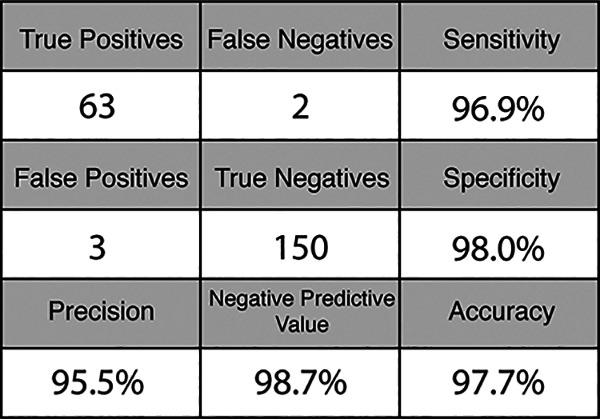
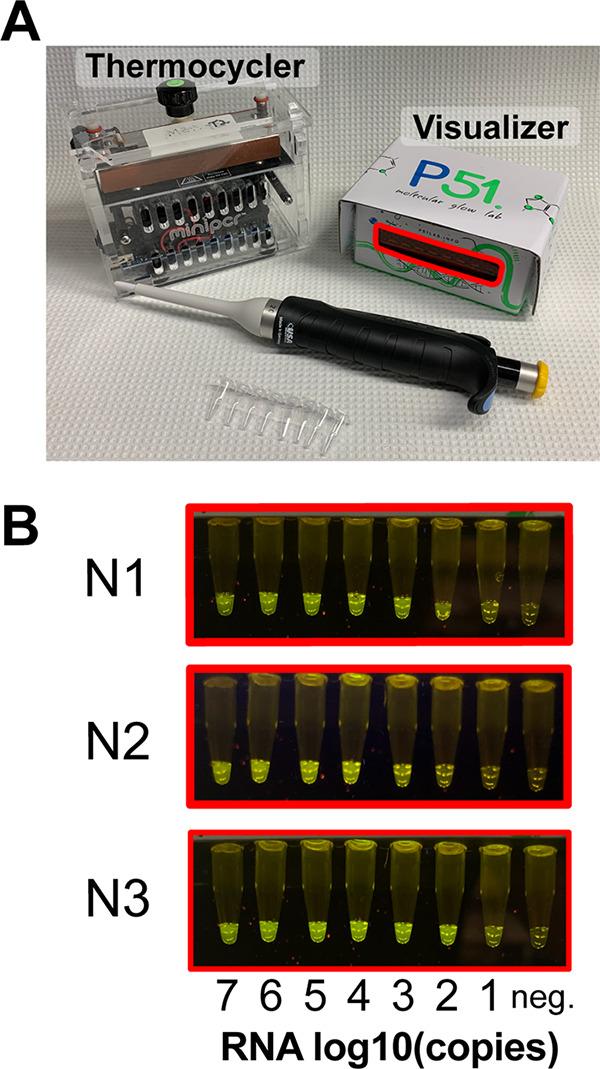
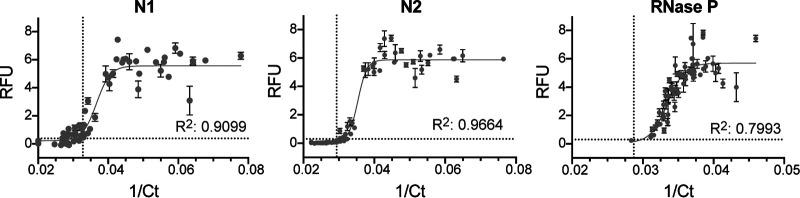
The COVID-19 pandemic has created massive demand for widespread, distributed tools for detecting SARS-CoV-2 genetic material. The hurdles to scalable testing include reagent and instrument accessibility, availability of highly trained personnel, and large upfront investment. Here, we showcase an orthogonal pipeline we call CREST (Cas13-based, rugged, equitable, scalable testing) that addresses some of these hurdles. Specifically, CREST pairs commonplace and reliable biochemical methods (PCR) with low-cost instrumentation, without sacrificing detection sensitivity. By taking advantage of simple fluorescence visualizers, CREST allows a binary interpretation of results. CREST may provide a point-of-care solution to increase the distribution of COVID-19 surveillance.
新冠疫情引发了对广泛分布的用于检测严重急性呼吸综合征冠状病毒2(SARS-CoV-2)遗传物质工具的巨大需求。可扩展检测面临的障碍包括试剂和仪器的可及性、训练有素人员的可用性以及大量前期投资。在此,我们展示了一种我们称之为CREST(基于Cas13的、坚固耐用、公平且可扩展的检测)的正交流程,该流程解决了其中一些障碍。具体而言,CREST将常见且可靠的生化方法(PCR)与低成本仪器相结合,同时不牺牲检测灵敏度。通过利用简单的荧光可视化工具,CREST实现了结果的二元解读。CREST可能会提供一种即时检测解决方案,以扩大新冠病毒监测的范围。


 Zotero 插件