
基于轻量级外骨骼的便携式步态数据采集系统。
A Lightweight Exoskeleton-Based Portable Gait Data Collection System.
机构信息
Department of Mechanical Engineering, The University of Alabama, Tuscaloosa, AL 35487, USA.
Department of Electrical and Computer Engineering, Clarkson University, Potsdam, NY 13699, USA.
出版信息
Sensors (Basel). 2021 Jan 24;21(3):781. doi: 10.3390/s21030781.
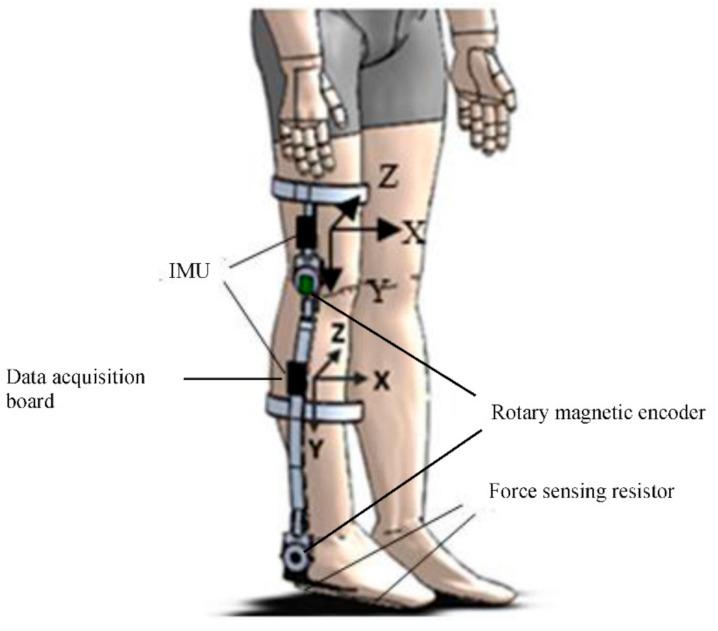
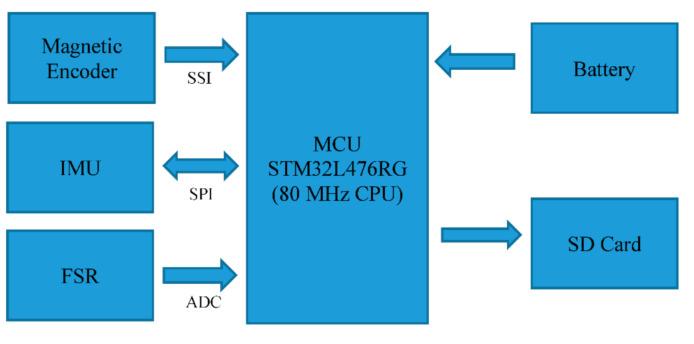
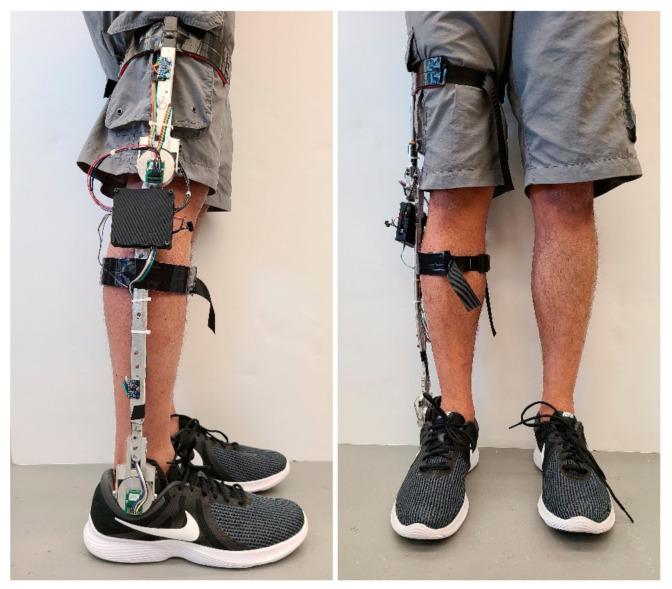
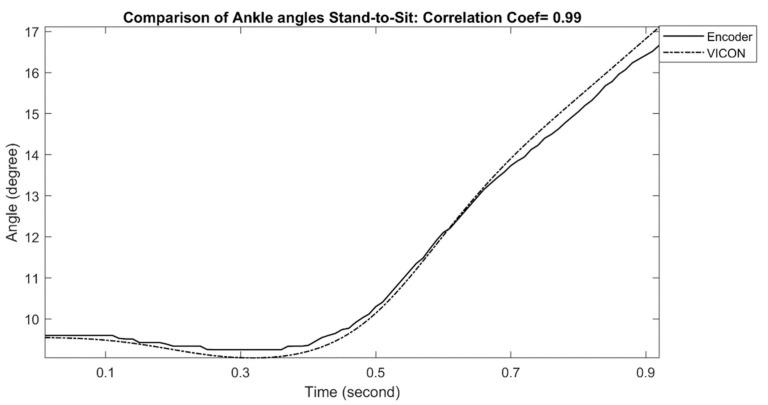
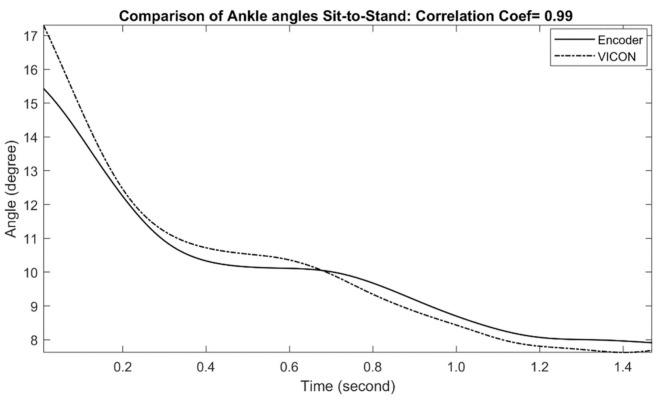
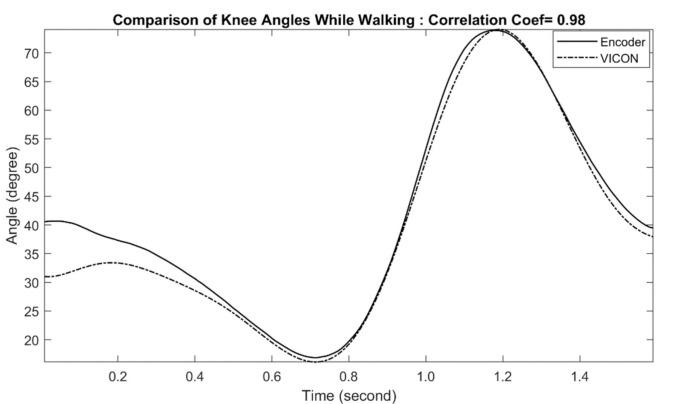
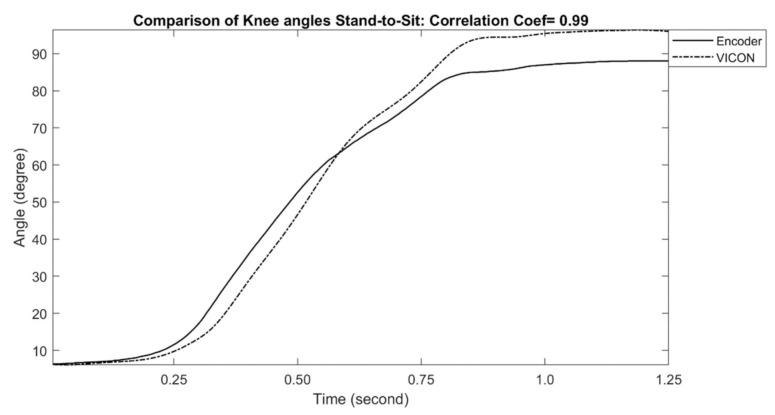
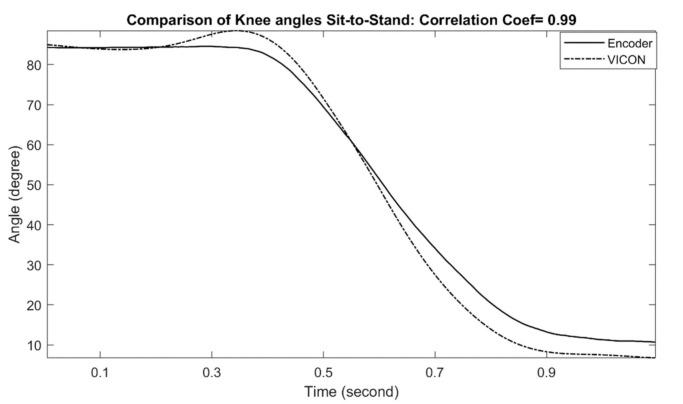
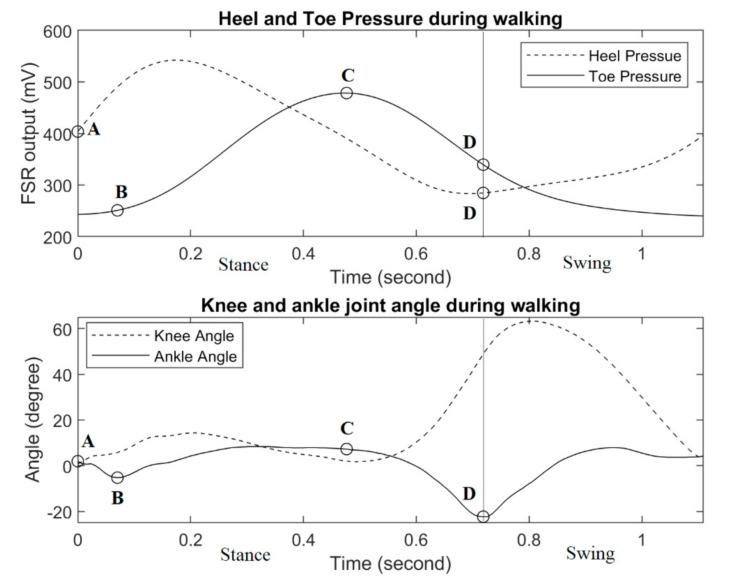
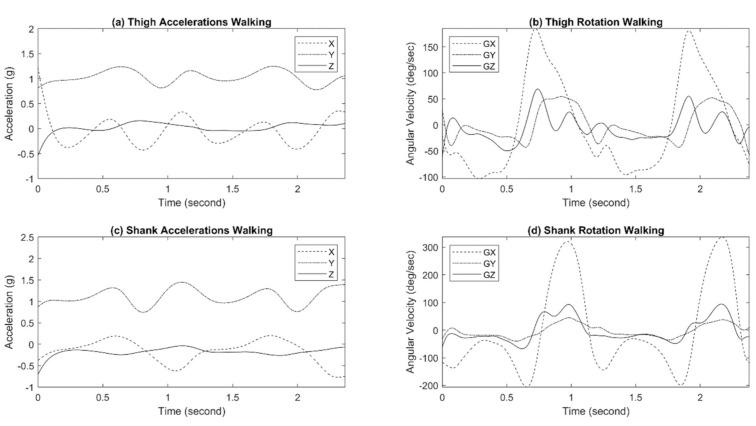
For the controller of wearable lower-limb assistive devices, quantitative understanding of human locomotion serves as the basis for human motion intent recognition and joint-level motion control. Traditionally, the required gait data are obtained in gait research laboratories, utilizing marker-based optical motion capture systems. Despite the high accuracy of measurement, marker-based systems are largely limited to laboratory environments, making it nearly impossible to collect the desired gait data in real-world daily-living scenarios. To address this problem, the authors propose a novel exoskeleton-based gait data collection system, which provides the capability of conducting independent measurement of lower limb movement without the need for stationary instrumentation. The basis of the system is a lightweight exoskeleton with articulated knee and ankle joints. To minimize the interference to a wearer's natural lower-limb movement, a unique two-degrees-of-freedom joint design is incorporated, integrating a primary degree of freedom for joint motion measurement with a passive degree of freedom to allow natural joint movement and improve the comfort of use. In addition to the joint-embedded goniometers, the exoskeleton also features multiple positions for the mounting of inertia measurement units (IMUs) as well as foot-plate-embedded force sensing resistors to measure the foot plantar pressure. All sensor signals are routed to a microcontroller for data logging and storage. To validate the exoskeleton-provided joint angle measurement, a comparison study on three healthy participants was conducted, which involves locomotion experiments in various modes, including overground walking, treadmill walking, and sit-to-stand and stand-to-sit transitions. Joint angle trajectories measured with an eight-camera motion capture system served as the benchmark for comparison. Experimental results indicate that the exoskeleton-measured joint angle trajectories closely match those obtained through the optical motion capture system in all modes of locomotion (correlation coefficients of 0.97 and 0.96 for knee and ankle measurements, respectively), clearly demonstrating the accuracy and reliability of the proposed gait measurement system.
对于可穿戴下肢辅助设备的控制器,对人体运动的定量理解是人体运动意图识别和关节级运动控制的基础。传统上,需要的步态数据是在步态研究实验室中使用基于标记的光学运动捕捉系统获得的。尽管测量精度很高,但基于标记的系统在很大程度上仅限于实验室环境,几乎不可能在真实的日常生活场景中收集所需的步态数据。为了解决这个问题,作者提出了一种新的基于外骨骼的步态数据采集系统,它提供了无需固定仪器即可独立测量下肢运动的能力。该系统的基础是一个带有铰接式膝关节和踝关节的轻质外骨骼。为了最小化对佩戴者自然下肢运动的干扰,采用了独特的双自由度关节设计,将关节运动测量的主自由度与允许自然关节运动并提高使用舒适性的被动自由度集成在一起。除了关节嵌入式测角计外,外骨骼还具有多个惯性测量单元 (IMU) 的安装位置以及足底嵌入式力感应电阻器,用于测量足底压力。所有传感器信号都被路由到微控制器进行数据记录和存储。为了验证外骨骼提供的关节角度测量,对三名健康参与者进行了对比研究,涉及各种模式的运动实验,包括地面行走、跑步机行走以及坐站和站坐转换。使用八相机运动捕捉系统测量的关节角度轨迹用作比较的基准。实验结果表明,外骨骼测量的关节角度轨迹在所有运动模式下都与光学运动捕捉系统获得的轨迹非常吻合(膝关节和踝关节测量的相关系数分别为 0.97 和 0.96),清楚地表明了所提出的步态测量系统的准确性和可靠性。



 Zotero 插件