
蛋白质组学分析鉴定出早期肺腺癌低风险和高风险亚型之间差异表达的蛋白质和途径及其预后影响。
Proteomic Analyses Identify Differentially Expressed Proteins and Pathways Between Low-Risk and High-Risk Subtypes of Early-Stage Lung Adenocarcinoma and Their Prognostic Impacts.
机构信息
Key Laboratory of Carcinogenesis and Translational Research (Ministry of Education), Department of Thoracic Surgery II, Peking University Cancer Hospital & Institute, Beijing, China; Beijing Advanced Innovation Center for Big Data-Based Precision Medicine, Beihang University, Beijing, China.
Key Laboratory of Carcinogenesis and Translational Research (Ministry of Education), Department of Thoracic Surgery II, Peking University Cancer Hospital & Institute, Beijing, China.
出版信息
Mol Cell Proteomics. 2021;20:100015. doi: 10.1074/mcp.RA120.002384. Epub 2021 Jan 26.
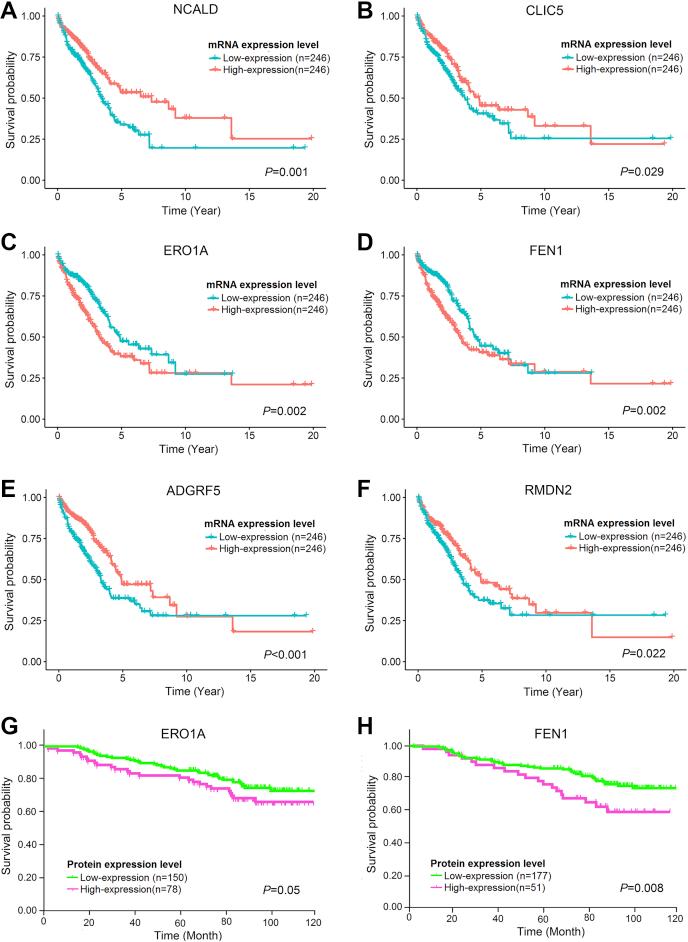
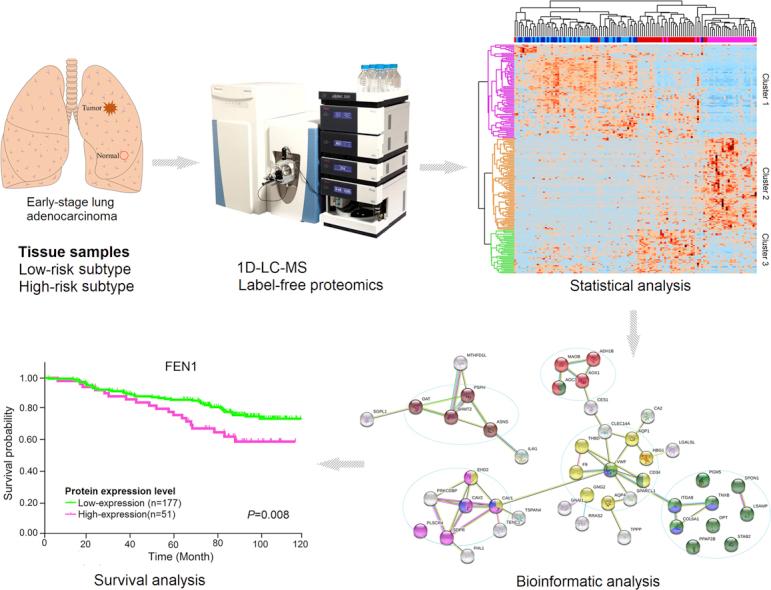
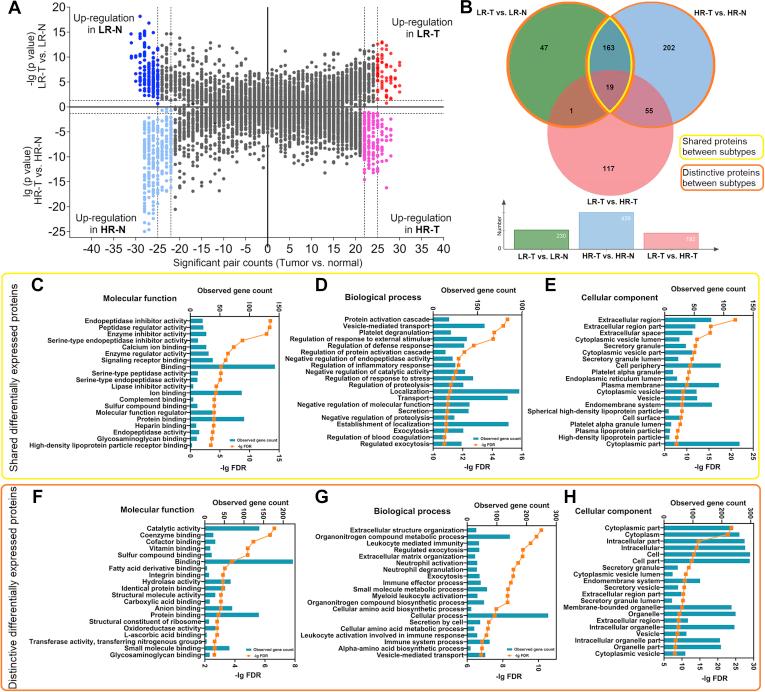
The histopathological subtype of lung adenocarcinoma (LUAD) is closely associated with prognosis. Micropapillary or solid predominant LUAD tends to relapse after surgery at an early stage, whereas lepidic pattern shows a favorable outcome. However, the molecular mechanism underlying this phenomenon remains unknown. Here, we recruited 31 lepidic predominant LUADs (LR: low-risk subtype group) and 28 micropapillary or solid predominant LUADs (HR: high-risk subtype group). Tissues of these cases were obtained and label-free quantitative proteomic and bioinformatic analyses were performed. Additionally, prognostic impact of targeted proteins was validated using The Cancer Genome Atlas databases (n = 492) and tissue microarrays composed of early-stage LUADs (n = 228). A total of 192 differentially expressed proteins were identified between tumor tissues of LR and HR and three clusters were identified via hierarchical clustering excluding eight proteins. Cluster 1 (65 proteins) showed a sequential decrease in expression from normal tissues to tumor tissues of LR and then to HR and was predominantly enriched in pathways such as tyrosine metabolism and ECM-receptor interaction, and increased matched mRNA expression of 18 proteins from this cluster predicted favorable prognosis. Cluster 2 (70 proteins) demonstrated a sequential increase in expression from normal tissues to tumor tissues of LR and then to HR and was mainly enriched in pathways such as extracellular organization, DNA replication and cell cycle, and high matched mRNA expression of 25 proteins indicated poor prognosis. Cluster 3 (49 proteins) showed high expression only in LR, with high matched mRNA expression of 20 proteins in this cluster indicating favorable prognosis. Furthermore, high expression of ERO1A and FEN1 at protein level predicted poor prognosis in early-stage LUAD, supporting the mRNA results. In conclusion, we discovered key differentially expressed proteins and pathways between low-risk and high-risk subtypes of early-stage LUAD. Some of these proteins could serve as potential biomarkers in prognostic evaluation.
肺腺癌(LUAD)的组织病理学亚型与预后密切相关。微乳头状或实体为主型 LUAD 术后早期易复发,而贴壁型则预后良好。然而,这种现象的分子机制尚不清楚。在这里,我们招募了 31 例贴壁型为主的 LUAD(LR:低风险亚型组)和 28 例微乳头状或实体为主型 LUAD(HR:高风险亚型组)。获取这些病例的组织,进行无标记定量蛋白质组学和生物信息学分析。此外,使用癌症基因组图谱数据库(n=492)和由早期 LUAD 组成的组织微阵列(n=228)验证了靶向蛋白的预后影响。在 LR 和 HR 的肿瘤组织之间鉴定出 192 个差异表达蛋白,并通过排除 8 个蛋白的层次聚类鉴定出 3 个聚类。聚类 1(65 个蛋白)显示从正常组织到 LR 肿瘤组织再到 HR 的表达顺序下降,主要富集于酪氨酸代谢和 ECM-受体相互作用等途径,该聚类的 18 个蛋白的匹配 mRNA 表达增加预示着良好的预后。聚类 2(70 个蛋白)显示从正常组织到 LR 肿瘤组织再到 HR 的表达顺序增加,主要富集于细胞外组织、DNA 复制和细胞周期等途径,该聚类的 25 个蛋白的高匹配 mRNA 表达预示着不良的预后。聚类 3(49 个蛋白)仅在 LR 中高表达,该聚类的 20 个蛋白的高匹配 mRNA 表达预示着良好的预后。此外,ERO1A 和 FEN1 蛋白水平高表达预示着早期 LUAD 的预后不良,支持了 mRNA 的结果。总之,我们发现了早期低风险和高风险 LUAD 亚型之间关键的差异表达蛋白和途径。其中一些蛋白可作为预后评估的潜在生物标志物。




 Zotero 插件