
网络药理学与实验验证揭示麻杏石甘汤防治 2019 年冠状病毒病(COVID-19)的潜在作用。
Potential effect of Maxing Shigan decoction against coronavirus disease 2019 (COVID-19) revealed by network pharmacology and experimental verification.
机构信息
School of Traditional Chinese Medicine, Beijing University of Chinese Medicine, Liangxiang University Town, Fangshan District, Beijing, 102488, China; Dongzhimen Hospital, Beijing University of Chinese Medicine, Dongcheng District, Hai Yun Cang on the 5th, Beijing, 100700, China.
School of Traditional Chinese Medicine, Beijing University of Chinese Medicine, Liangxiang University Town, Fangshan District, Beijing, 102488, China; Institute of Regulatory Science for Traditional Chinese Medicine, Beijing University of Chinese Medicine, Liangxiang University Town, Fangshan District, Beijing, 102488, China.
出版信息
J Ethnopharmacol. 2021 May 10;271:113854. doi: 10.1016/j.jep.2021.113854. Epub 2021 Jan 26.
ETHNOPHARMACOLOGICAL RELEVANCE
Since the occurrence of coronavirus disease 2019 (COVID-19) in Wuhan, China in December 2019, COVID-19 has been quickly spreading out to other provinces and countries. Considering that traditional Chinese medicine (TCM) played an important role during outbreak of SARS and H1N1, finding potential alternative approaches for COVID-19 treatment is necessary before vaccines are developed. According to previous studies, Maxing Shigan decoction (MXSGD) present a prominent antivirus effect and is often used to treat pulmonary diseases. Furthermore, we collected 115 open prescriptions for COVID-19 therapy from the National Health Commission, State Administration of TCM and other organizations, MXSGD was identified as the key formula. However, the underlying molecular mechanism of MXSGD against COVID-19 is still unknown.
AIM OF THE STUDY
The present study aimed to evaluate the therapeutic mechanism of MXSGD against COVID-19 by network pharmacology and in vitro experiment verification, and screen the potential components which could bind to key targets of COVID-19 via molecular docking method.
MATERIALS AND METHODS
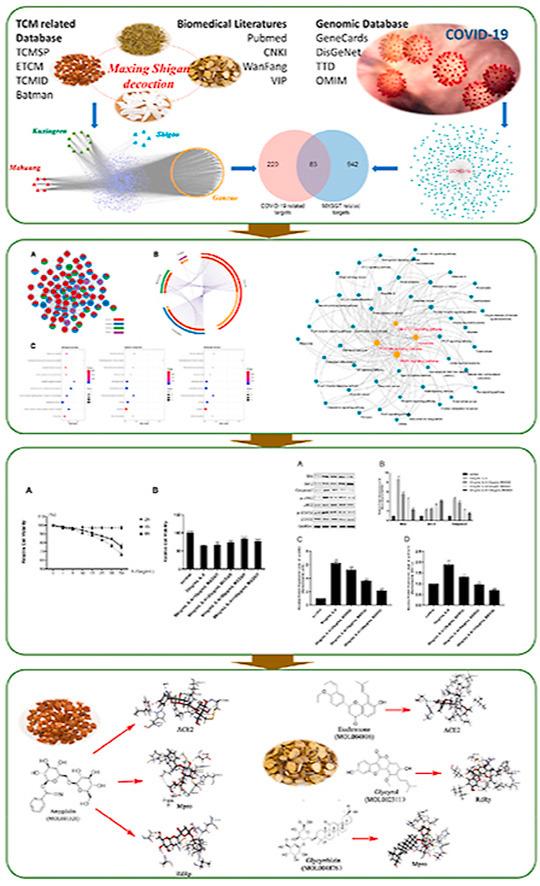
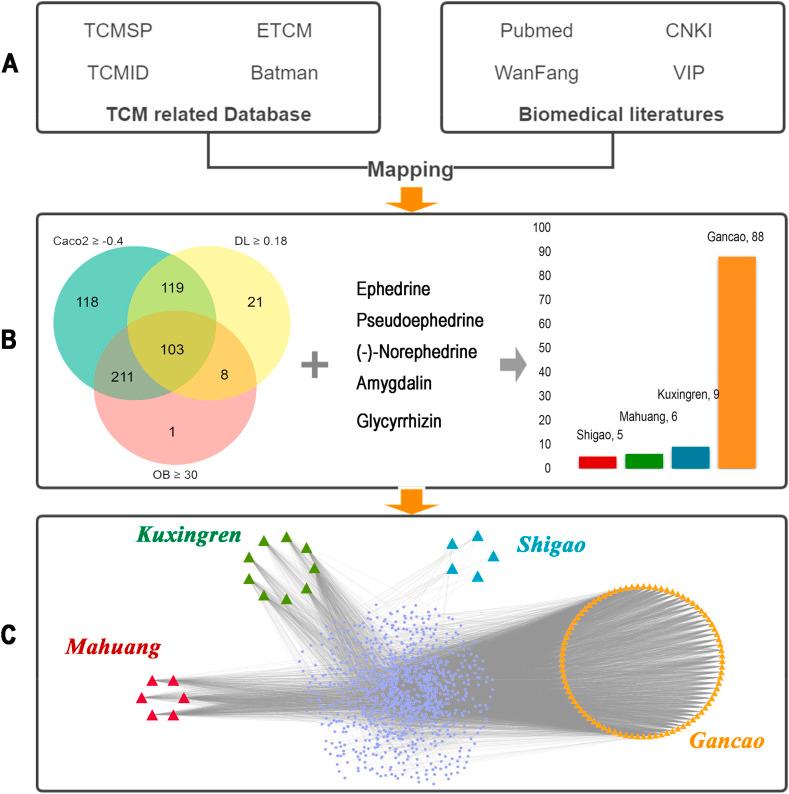
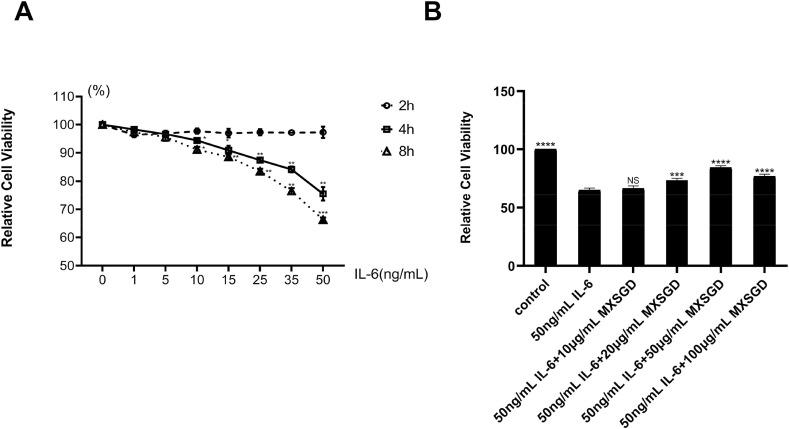
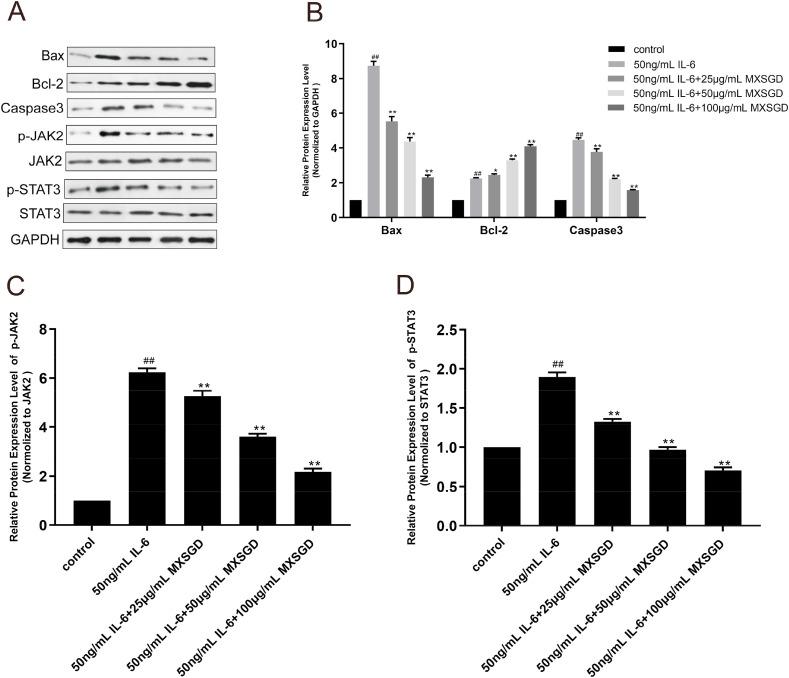
Multiple open-source databases related to TCM or compounds were employed to screen active ingredients and potential targets of MXSGD. Network pharmacology analysis methods were used to initially predict the antivirus and anti-inflammatory effects of MXSGD against COVID-19. IL-6 induced rat lung epithelial type Ⅱ cells (RLE-6TN) damage was established to explore the anti-inflammatory damage activity of MXSGD. After MXSGD intervention, the expression level of related proteins and their phosphorylation in the IL-6 mediated JAK-STAT signaling pathway were detected by Western blot. Molecular docking technique was used to further identify the potential substances which could bind to three key targets (ACE2, Mpro and RdRp) of COVID-19.
RESULTS
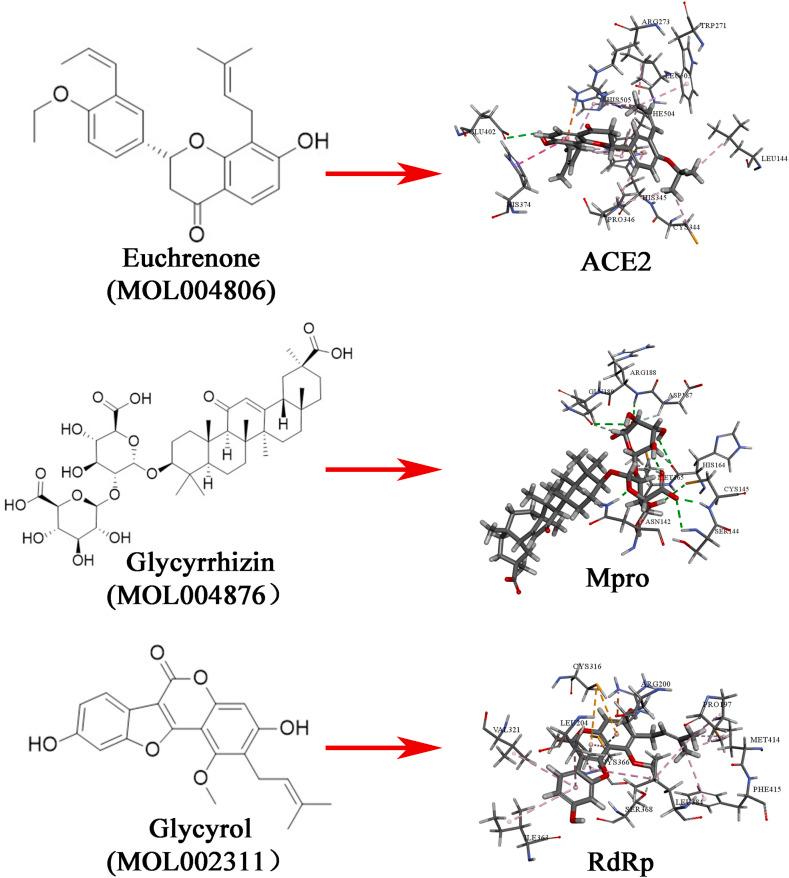
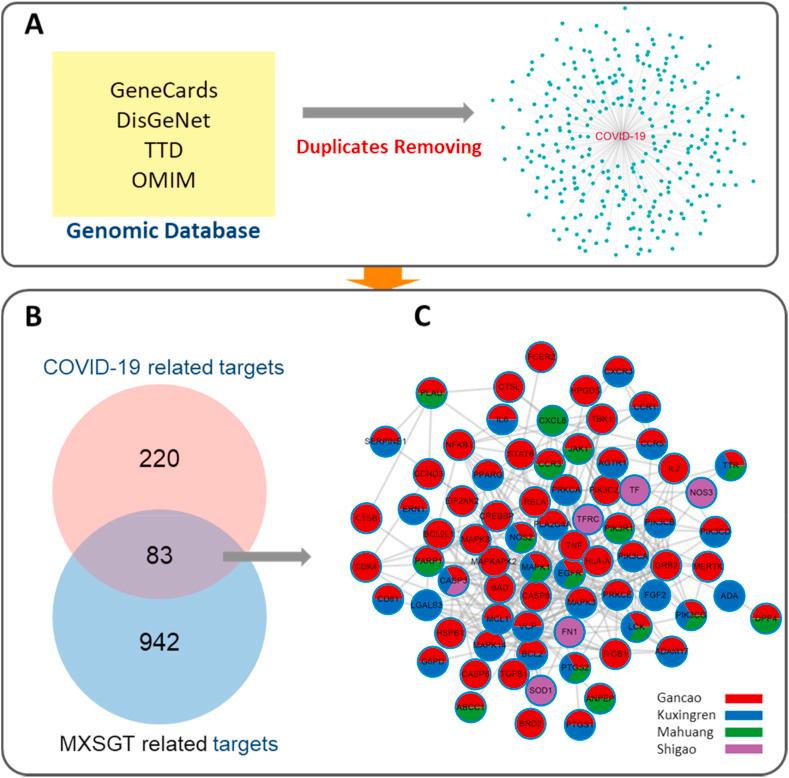
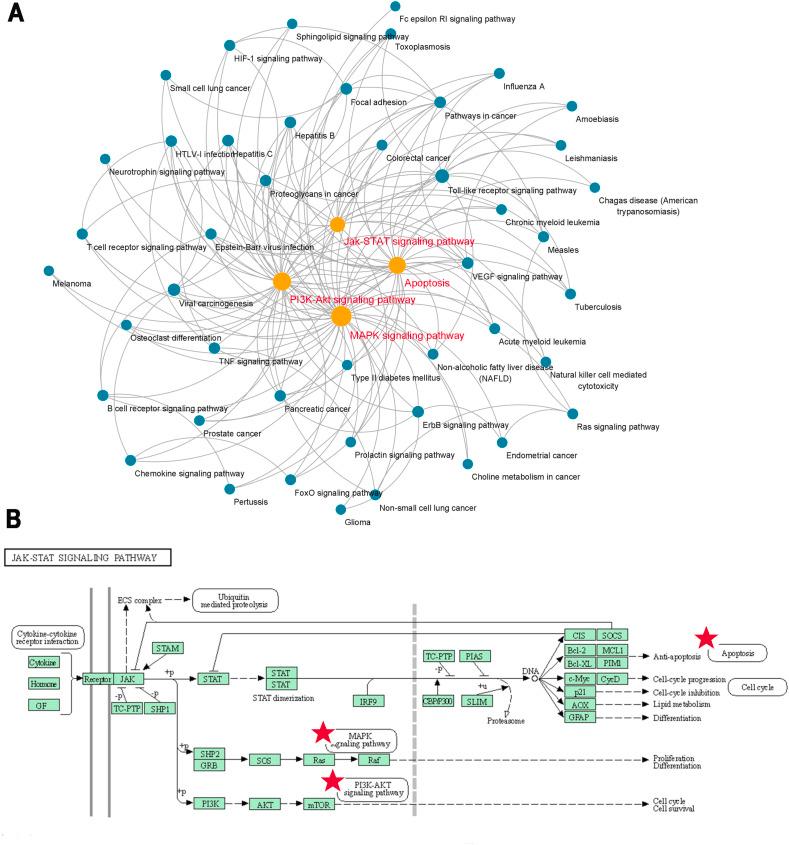
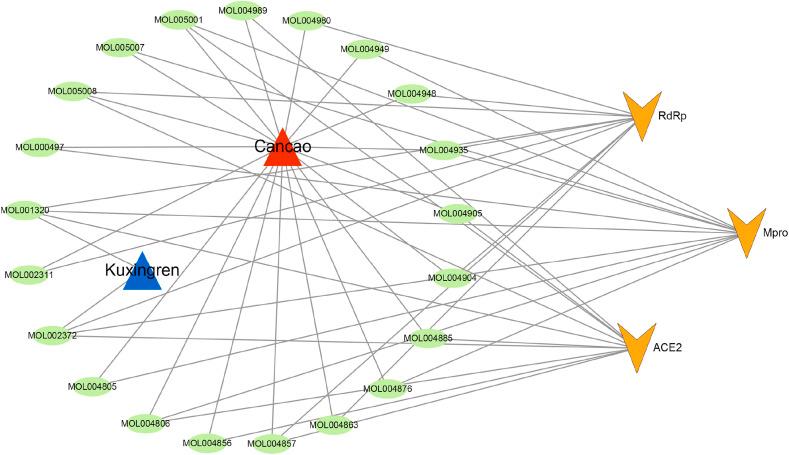
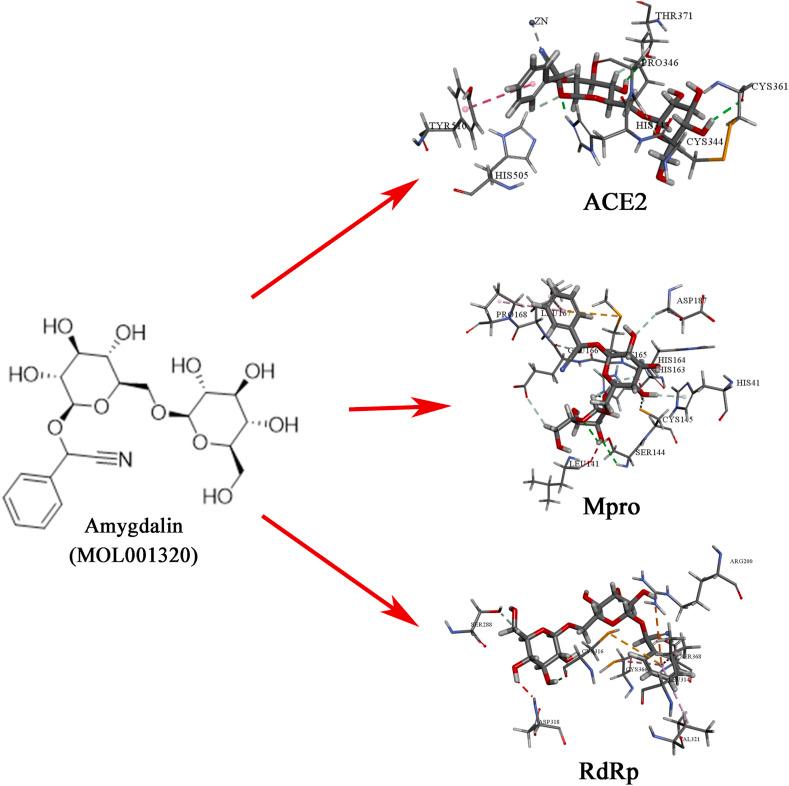
In this study, 105 active ingredients and 1025 candidate targets were selected for MXSGD, 83 overlapping targets related to MXSGD and COVID-19 were identified, and the protein-protein interaction (PPI) network of MXSGD against COVID-19 was constructed. According to the results of biological enrichment analysis, 63 significant KEGG pathways were enriched, and most of them were related to signal transduction, immune system and virus infection. Furthermore, according the relationship between signal pathways, we confirmed MXSGD could effectively inhibit IL-6 mediated JAK-STAT signal pathway related protein expression level, decreased the protein expression levels of p-JAK2, p-STAT3, Bax and Caspase 3, and increased the protein expression level of Bcl-2, thereby inhibiting RLE-6TN cells damage. In addition, according to the LibDock scores screening results, the components with strong potential affinity (Top 10) with ACE2, Mpro and RdRp are mainly from glycyrrhiza uralensis (Chinese name: Gancao) and semen armeniacae amarum (Chinese name: Kuxingren). Among them, amygdalin was selected as the optimal candidate component bind to all three key targets, and euchrenone, glycyrrhizin, and glycyrol also exhibited superior affinity interactions with ACE2, Mpro and RdRp, respectively.
CONCLUSION
This work explained the positive characteristics of multi-component, multi-target, and multi-approach intervention with MXSGD in combating COVID-19, and preliminary revealed the antiviral and anti-inflammatory pharmacodynamic substances and mechanism of MXSGD, which might provide insights into the vital role of TCM in the prevention and treatment of COVID-19.
民族药理学相关性
自 2019 年 12 月中国武汉发生冠状病毒病 2019(COVID-19)以来,COVID-19 迅速蔓延到其他省份和国家。考虑到中药(TCM)在 SARS 和 H1N1 爆发期间发挥了重要作用,在开发疫苗之前,有必要寻找 COVID-19 治疗的潜在替代方法。根据以往的研究,麻杏石甘汤(MXSGD)具有明显的抗病毒作用,常用于治疗肺部疾病。此外,我们从国家卫生健康委员会、国家中医药管理局等组织收集了 115 份 COVID-19 治疗的开放处方,MXSGD 被确定为关键配方。然而,MXSGD 治疗 COVID-19 的潜在分子机制仍不清楚。
研究目的
本研究旨在通过网络药理学和体外实验验证评估 MXSGD 治疗 COVID-19 的治疗机制,并通过分子对接方法筛选可能与 COVID-19 关键靶标结合的潜在成分。
材料和方法
使用多个与 TCM 或化合物相关的开源数据库筛选 MXSGD 的活性成分和潜在靶标。采用网络药理学分析方法初步预测 MXSGD 对 COVID-19 的抗病毒和抗炎作用。建立 IL-6 诱导的大鼠肺上皮型 2 细胞(RLE-6TN)损伤模型,探讨 MXSGD 的抗炎损伤活性。在 MXSGD 干预后,通过 Western blot 检测相关蛋白及其在 IL-6 介导的 JAK-STAT 信号通路中的磷酸化表达水平。采用分子对接技术进一步鉴定可能与 COVID-19 的三个关键靶标(ACE2、Mpro 和 RdRp)结合的潜在物质。
结果
本研究共筛选出 105 种活性成分和 1025 个候选靶标,确定了 83 个与 MXSGD 和 COVID-19 相关的重叠靶标,并构建了 MXSGD 治疗 COVID-19 的蛋白质-蛋白质相互作用(PPI)网络。根据生物富集分析的结果,共富集到 63 个显著的 KEGG 通路,其中大部分与信号转导、免疫系统和病毒感染有关。此外,根据信号通路之间的关系,我们证实 MXSGD 能有效抑制 IL-6 介导的 JAK-STAT 信号通路相关蛋白表达水平,降低 p-JAK2、p-STAT3、Bax 和 Caspase 3 的蛋白表达水平,增加 Bcl-2 的蛋白表达水平,从而抑制 RLE-6TN 细胞损伤。此外,根据 LibDock 评分筛选结果,与 ACE2、Mpro 和 RdRp 具有强潜在亲和力(前 10 名)的成分主要来自甘草(Chinese name: Gancao)和苦杏仁(Chinese name: Kuxingren)。其中,苦杏仁苷被选为与所有三个关键靶标结合的最佳候选成分,而补骨脂素、甘草酸和糖醛也分别与 ACE2、Mpro 和 RdRp 表现出优越的亲和相互作用。
结论
本研究解释了 MXSGD 多成分、多靶点、多途径干预治疗 COVID-19 的积极特征,并初步揭示了 MXSGD 的抗病毒和抗炎药效物质和机制,这可能为 TCM 在 COVID-19 的预防和治疗中的重要作用提供了新的见解。
 Zotero 插件