
全球范围内,细胞非自主基因调控驱动同基因个体寿命。
Global, cell non-autonomous gene regulation drives individual lifespan among isogenic .
机构信息
Department of Biomedical Engineering, Washington University in St. Louis, St. Louis, United States.
Department of Developmental Biology and Department of Genetics, Washington University in St. Louis, St. Louis, United States.
出版信息
Elife. 2021 Feb 1;10:e65026. doi: 10.7554/eLife.65026.
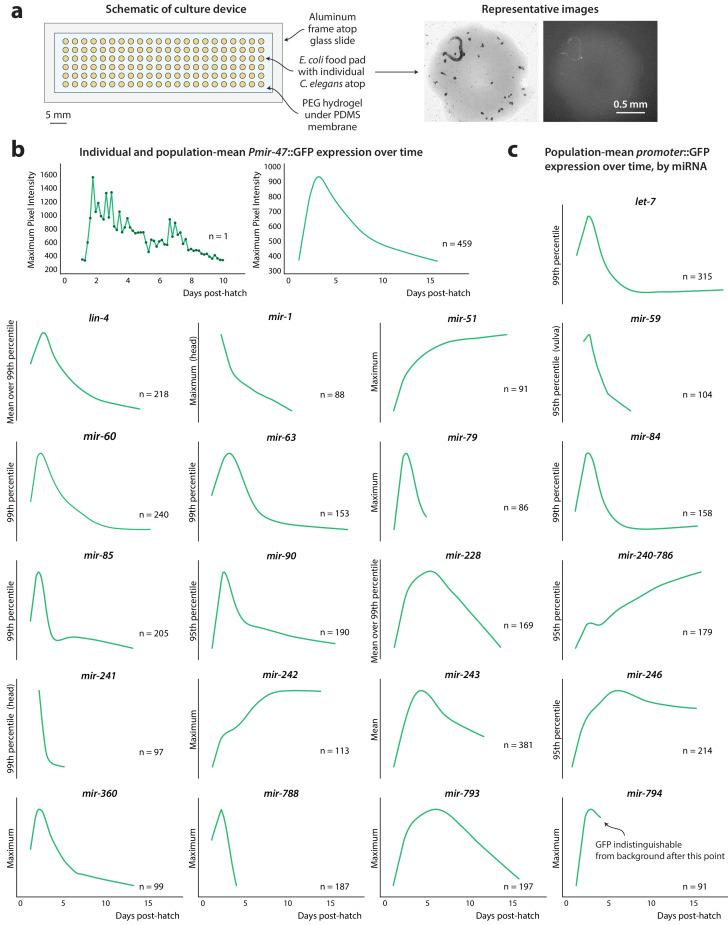
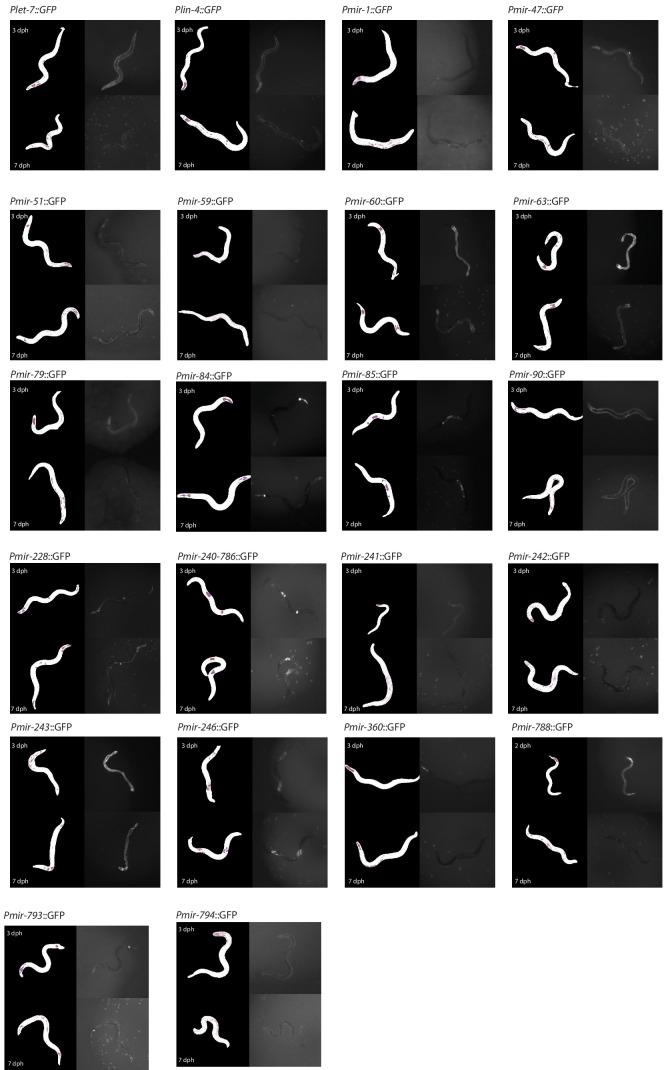
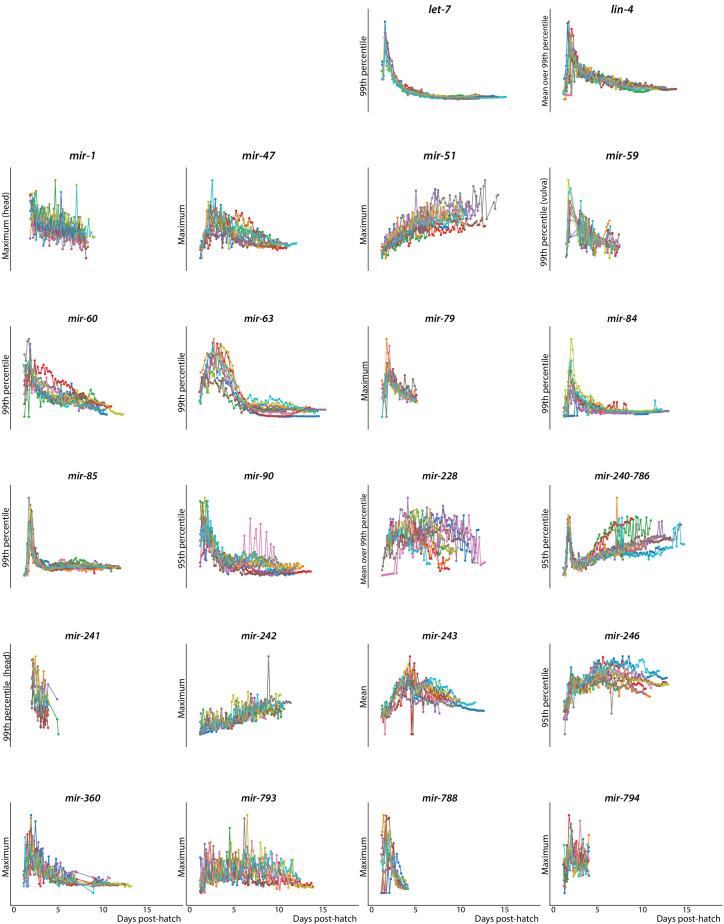
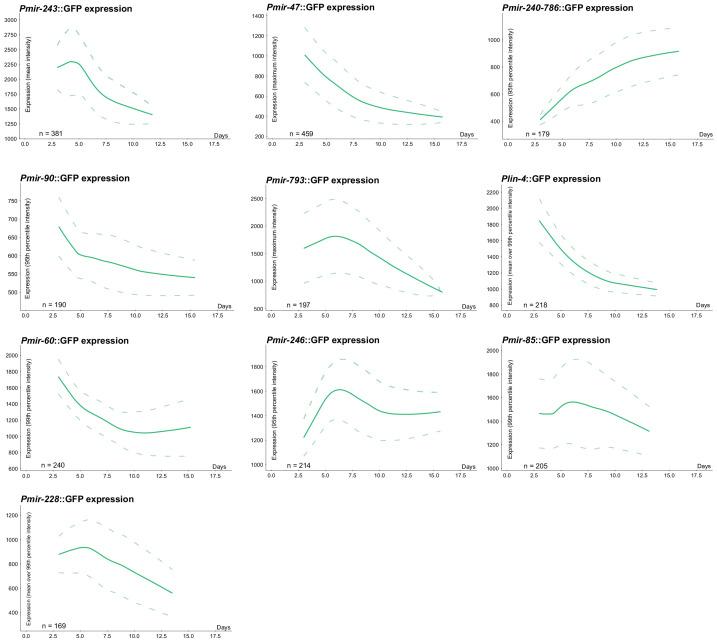
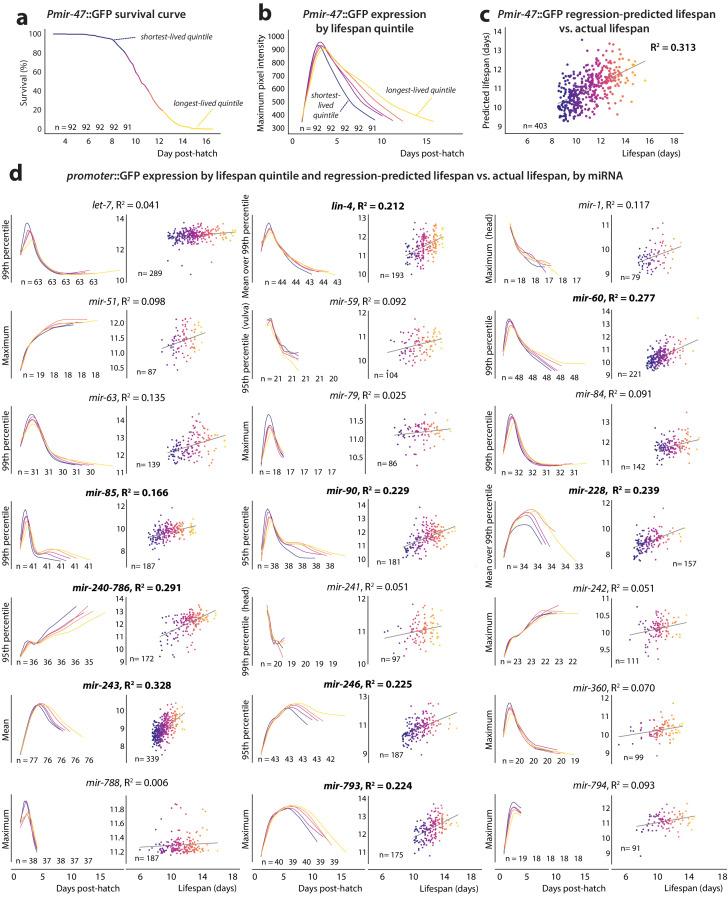
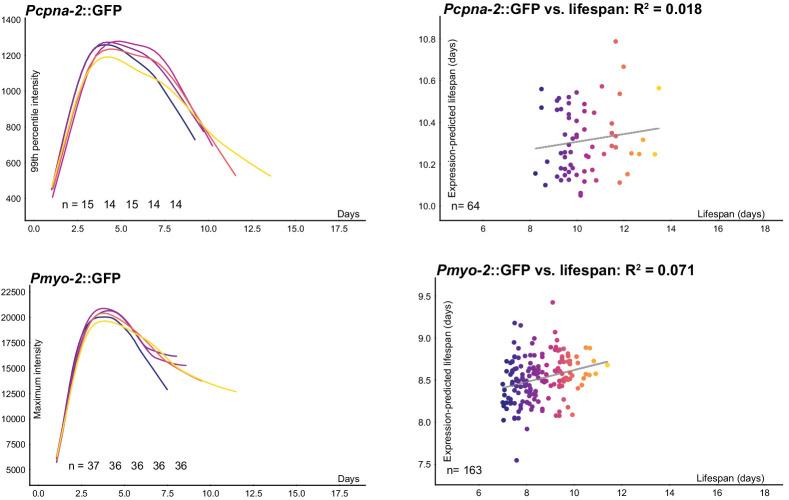
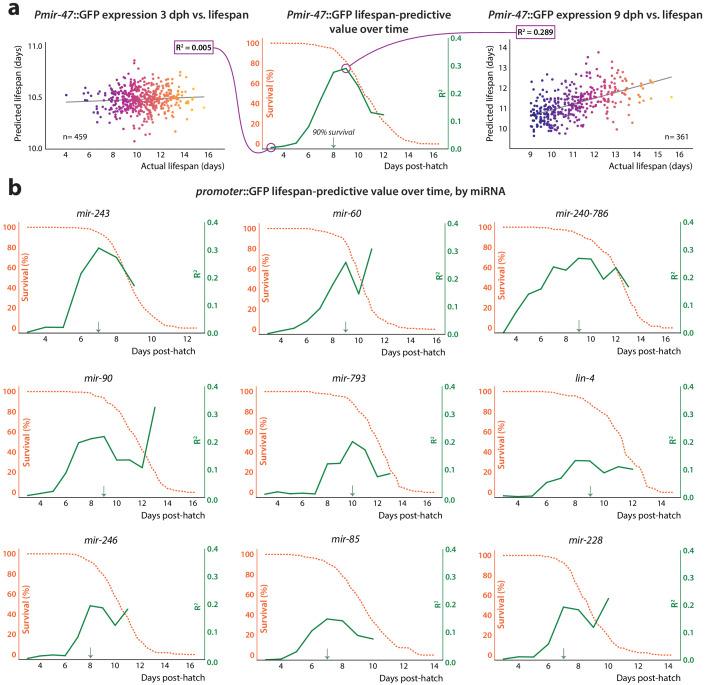
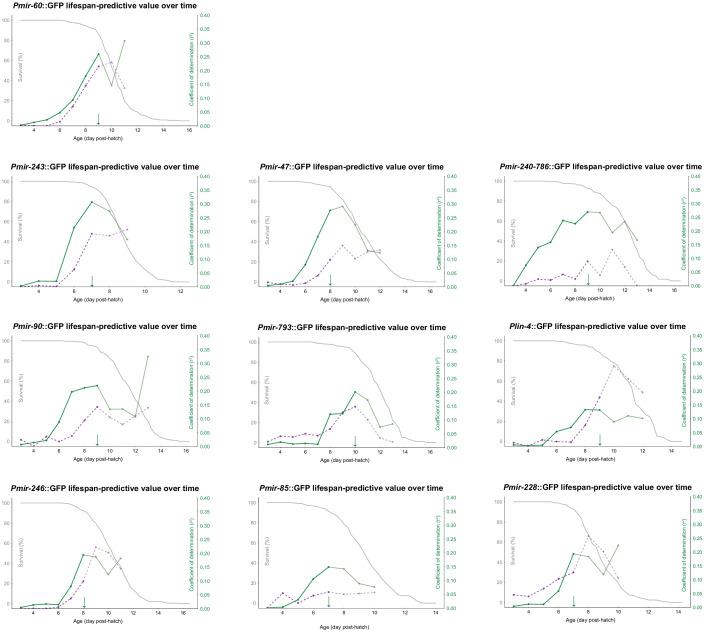
Across species, lifespan is highly variable among individuals within a population. Even genetically identical reared in homogeneous environments are as variable in lifespan as outbred human populations. We hypothesized that persistent inter-individual differences in expression of key regulatory genes drives this lifespan variability. As a test, we examined the relationship between future lifespan and the expression of 22 microRNA promoter::GFP constructs. Surprisingly, expression of nearly half of these reporters, well before death, could effectively predict lifespan. This indicates that prospectively long- vs. short-lived individuals have highly divergent patterns of transgene expression and transcriptional regulation. The gene-regulatory processes reported on by two of the most lifespan-predictive transgenes do not require DAF-16, the FOXO transcription factor that is a principal effector of insulin/insulin-like growth factor (IGF-1) signaling. Last, we demonstrate a hierarchy of redundancy in lifespan-predictive ability among three transgenes expressed in distinct tissues, suggesting that they collectively report on an organism-wide, cell non-autonomous process that acts to set each individual's lifespan.
在不同物种中,即使是在遗传上相同、在同质环境中饲养的个体,其寿命也存在高度的个体间差异,这种差异与异交人群相当。我们假设,关键调节基因表达的持续个体间差异驱动了这种寿命变异性。作为一个测试,我们研究了未来寿命与 22 个 microRNA 启动子::GFP 构建体表达之间的关系。令人惊讶的是,这些报告者中的近一半在死亡前就可以有效地预测寿命。这表明,预期寿命长的个体与预期寿命短的个体的转基因表达和转录调控模式具有高度的差异。两个最能预测寿命的转基因报告的基因调控过程并不需要 DAF-16,即胰岛素/胰岛素样生长因子 (IGF-1) 信号的 FOXO 转录因子。最后,我们证明了在三个在不同组织中表达的转基因中,寿命预测能力存在层次冗余,这表明它们共同报告了一个在整个生物体范围内起作用的、非细胞自主的过程,该过程决定了每个个体的寿命。




 Zotero 插件