
非编码 RNA 对癌症中巨噬细胞极化的调控。
Non-coding RNAs regulation of macrophage polarization in cancer.
机构信息
Department of Translational Molecular Pathology, The University of Texas MD Anderson Cancer Center, Houston, TX, USA.
The University of Texas MD Anderson Cancer Center UT Health Graduate School of Biomedical Sciences (GSBS), Houston, TX, USA.
出版信息
Mol Cancer. 2021 Feb 1;20(1):24. doi: 10.1186/s12943-021-01313-x.
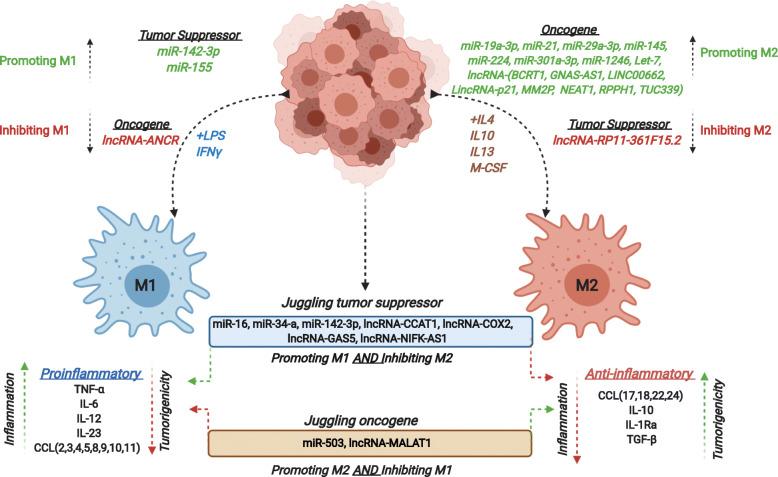
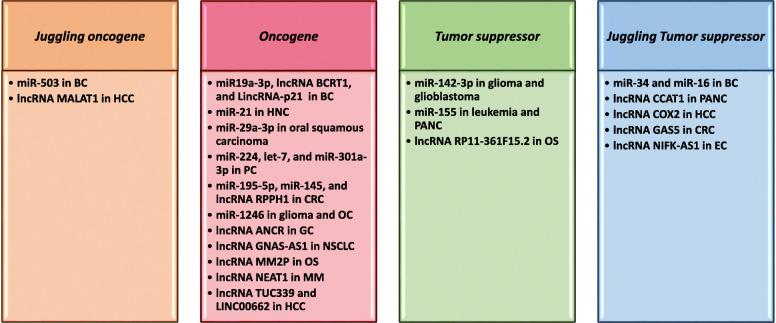
Noncoding RNA (ncRNA) transcripts that did not code proteins but regulate their functions were extensively studied for the last two decades and the plethora of discoveries have instigated scientists to investigate their dynamic roles in several diseases especially in cancer. However, there is much more to learn about the role of ncRNAs as drivers of malignant cell evolution in relation to macrophage polarization in the tumor microenvironment. At the initial stage of tumor development, macrophages have an important role in directing Go/No-go decisions to the promotion of tumor growth, immunosuppression, and angiogenesis. Tumor-associated macrophages behave differently as they are predominantly induced to be polarized into M2, a pro-tumorigenic type when recruited with the tumor tissue and thereby favoring the tumorigenesis. Polarization of macrophages into M1 or M2 subtypes plays a vital role in regulating tumor progression, metastasis, and clinical outcome, highlighting the importance of studying the factors driving this process. A substantial number of studies have demonstrated that ncRNAs are involved in the macrophage polarization based on their ability to drive M1 or M2 polarization and in this review we have described their functions and categorized them into oncogenes, tumor suppressors, Juggling tumor suppressors, and Juggling oncogenes.
在过去的二十年里,非编码 RNA (ncRNA) 转录本作为不编码蛋白质但调节其功能的分子,受到了广泛的研究,大量的发现促使科学家们研究它们在几种疾病中的动态作用,特别是在癌症中。然而,ncRNAs 作为恶性细胞进化的驱动因子与肿瘤微环境中巨噬细胞极化的关系,还有更多的内容需要了解。在肿瘤发展的初始阶段,巨噬细胞在指导肿瘤生长、免疫抑制和血管生成的去或留决策中起着重要作用。肿瘤相关巨噬细胞的行为不同,因为当它们被招募到肿瘤组织中时,主要被诱导极化成为 M2 型,即促进肿瘤发生的类型,从而有利于肿瘤发生。巨噬细胞向 M1 或 M2 亚型的极化在调节肿瘤进展、转移和临床结局方面起着至关重要的作用,这凸显了研究驱动这一过程的因素的重要性。大量研究表明,ncRNAs 参与了巨噬细胞极化,这是基于它们驱动 M1 或 M2 极化的能力,在这篇综述中,我们描述了它们的功能,并将其分为癌基因、肿瘤抑制因子、Juggling 肿瘤抑制因子和Juggling 癌基因。
 Zotero 插件