
霍诺醇通过激活 mTOR 和 MAPK 信号通路诱导急性早幼粒细胞白血病发生 Paraptosis 样细胞死亡。
Honokiol induces paraptosis-like cell death of acute promyelocytic leukemia via mTOR & MAPK signaling pathways activation.
机构信息
Jiangsu Key Laboratory for Pharmacology and Safety Evaluation of Chinese Materia Medica, School of Pharmacy, Nanjing University of Chinese Medicine, Nanjing, Jiangsu, 210023, People's Republic of China.
Department of Geriatrics, The Second Hospital of Nanjing, Nanjing University of Chinese Medicine, Nanjing, Jiangsu, 210003, People's Republic of China.
出版信息
Apoptosis. 2021 Apr;26(3-4):195-208. doi: 10.1007/s10495-020-01655-9. Epub 2021 Feb 7.
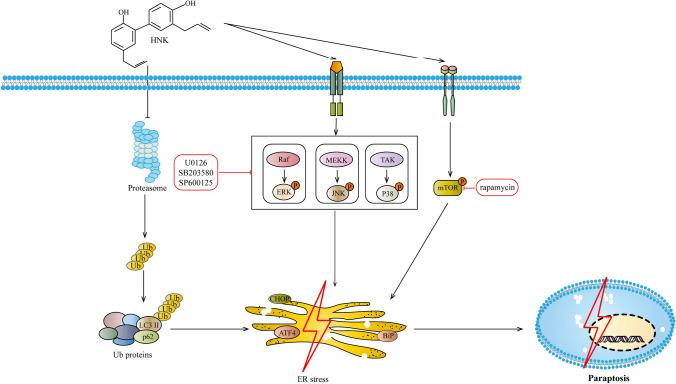
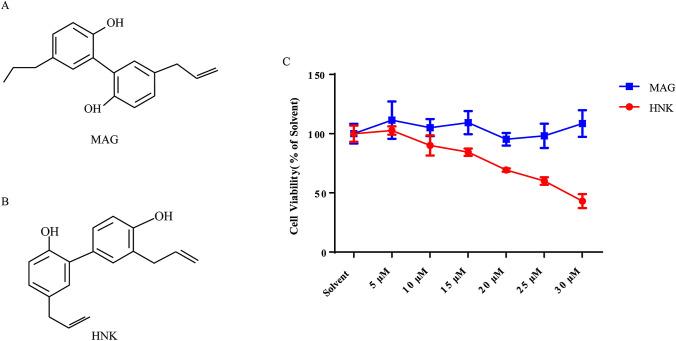
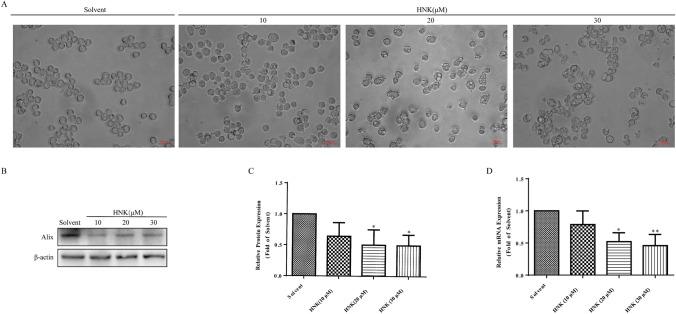
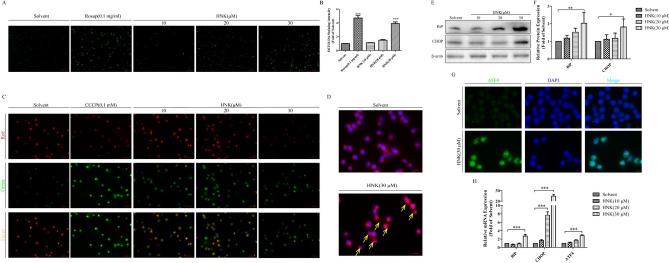
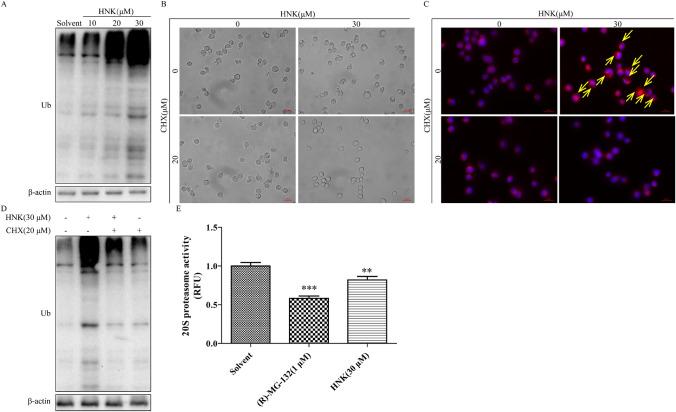
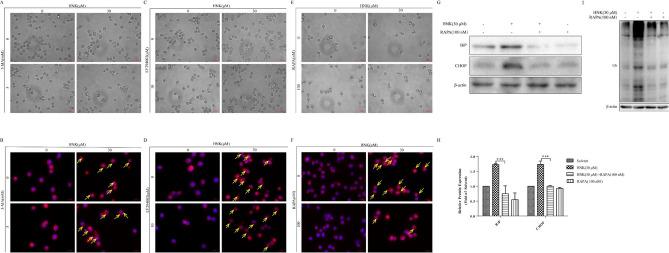
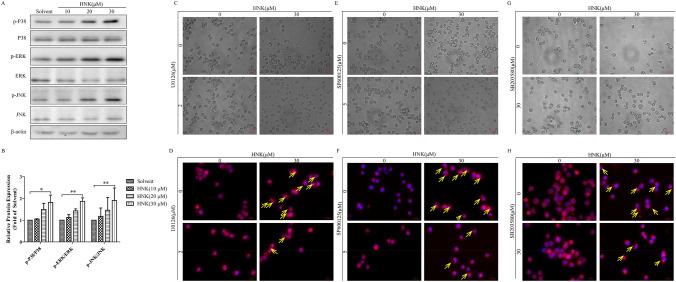
Acute promyelocytic leukemia (APL) is a blood system disease caused by the accumulation of a large number of immature blood cells in bone marrow. Although the introduction of all-trans retinoic acid (ATRA) and arsenic has reached a high level of complete remission rate and 5-year disease-free survival rate, the occurrence of various adverse reactions still severely affects the quality of life of patients. As a natural product, honokiol (HNK) has the advantages of low toxicity and high efficiency, and it is a potential drug for the treatment of cancer. Since cancer cells can escape apoptotic cell death through multiple adaptive mechanisms, HNK, a drug that induces cancer cell death in a nonapoptotic way, has attracted much interest. We found that HNK reduced the viability of human APL cell line (NB4 cells) by inducing paraptosis-like cell death. The process was accompanied by excessive reactive oxygen species (ROS), mitochondrial damage, endoplasmic reticulum stress, and increased microtubule-associated protein 1 light chain 3 (LC3) processing. The inactivation of proteasome activity was the main cause of misfolded and unfolded protein accumulation in endoplasmic reticulum, such as LC3II/I and p62. This phenomenon could be alleviated by adding cycloheximide (CHX), a protein synthesis inhibitor. We found that mTOR signaling pathway participated in paraptosis-like cell death induced by HNK in an autophagy-independent process. Moreover, the mitogen-activated protein kinase (MAPK) signaling pathway induced paraptosis of NB4 cells by promoting endoplasmic reticulum stress. In summary, these findings indicate that paraptosis may be a new way to treat APL, and provide novel insights into the potential mechanism of paraptosis-like cell death.
急性早幼粒细胞白血病(APL)是一种血液系统疾病,其特征是骨髓中大量未成熟血细胞的积累。尽管全反式维甲酸(ATRA)和砷剂的引入使完全缓解率和 5 年无病生存率达到了很高的水平,但各种不良反应的发生仍严重影响了患者的生活质量。作为一种天然产物,厚朴酚(HNK)具有低毒性和高效性的优点,是治疗癌症的潜在药物。由于癌细胞可以通过多种适应性机制逃避细胞凋亡死亡,因此 HNK 作为一种诱导非凋亡方式的癌细胞死亡的药物引起了广泛关注。我们发现 HNK 通过诱导类细胞凋亡样细胞死亡来降低人 APL 细胞系(NB4 细胞)的活力。这一过程伴随着过量的活性氧(ROS)、线粒体损伤、内质网应激和微管相关蛋白 1 轻链 3(LC3)的加工增加。蛋白酶体活性的失活是内质网中未折叠和错误折叠蛋白积累的主要原因,如 LC3II/I 和 p62。这种现象可以通过添加蛋白合成抑制剂环己酰亚胺(CHX)得到缓解。我们发现 HNK 通过自噬非依赖性过程诱导的类细胞凋亡样细胞死亡与 mTOR 信号通路有关。此外,丝裂原活化蛋白激酶(MAPK)信号通路通过促进内质网应激诱导 NB4 细胞发生类细胞凋亡。总之,这些发现表明类细胞凋亡可能是治疗 APL 的一种新方法,并为类细胞凋亡样细胞死亡的潜在机制提供了新的见解。



 Zotero 插件