
膀胱癌的完全体内机器人辅助尿流改道(第1部分)。回肠导管和改良印第安纳袋的综述及详细特征描述
Totally intracorporeal robot-assisted urinary diversion for bladder cancer (Part 1). Review and detailed characterization of ileal conduit and modified Indiana pouch.
作者信息
Otaola-Arca Hugo, Coelho Rafael, Patel Vipul R, Orvieto Marcelo
机构信息
Department of Urology, Clínica Alemana, Santiago, Chile.
School of Medicine, Clínica Alemana-Universidad del Desarrollo, Santiago, Chile.
出版信息
Asian J Urol. 2021 Jan;8(1):50-62. doi: 10.1016/j.ajur.2020.10.001. Epub 2020 Oct 22.
OBJECTIVE
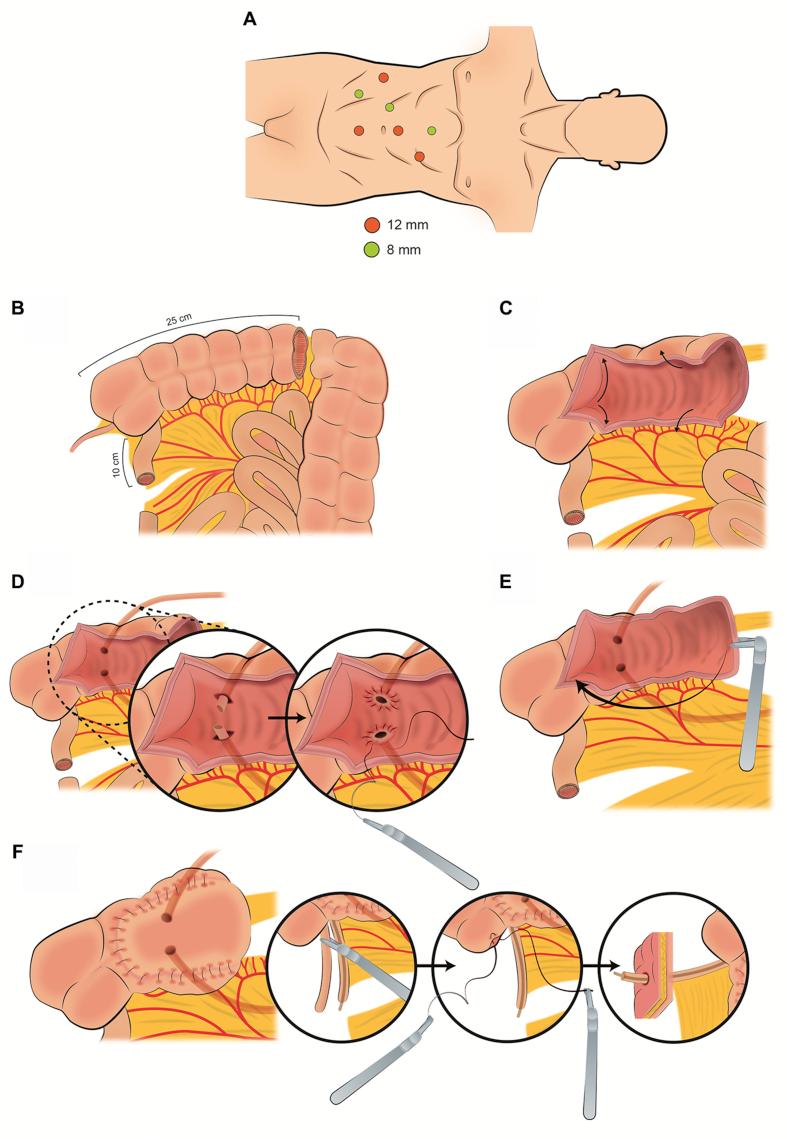
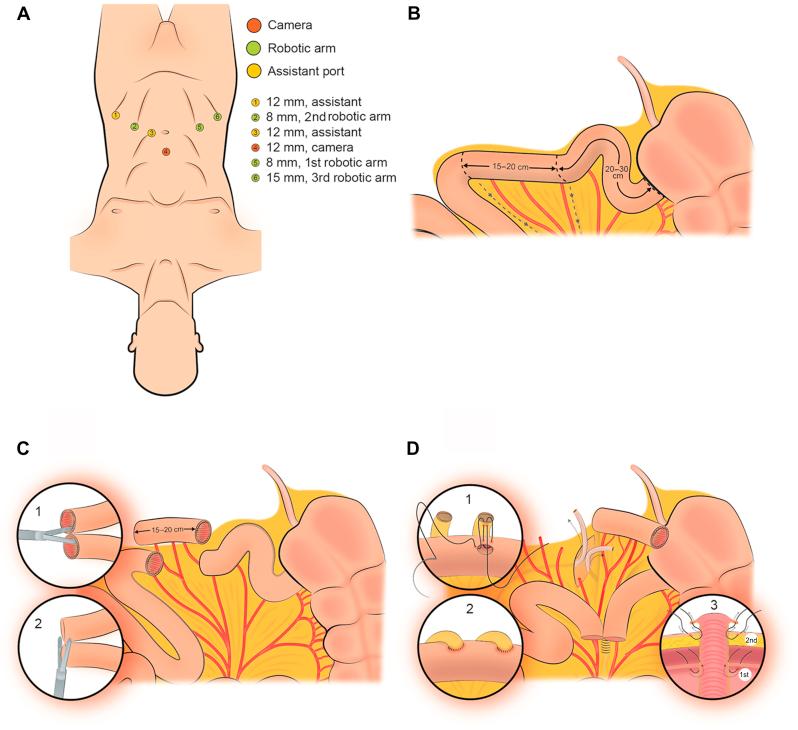
To review the most used robot-assisted cutaneous urinary diversion (CUD) after radical cystectomy for bladder cancer and create a unified compendium of the different alternatives, including new consistent images.
METHODS
A non-systematic review of the literature with the keywords "bladder cancer", "cutaneous urinary diversion", and "radical cystectomy" was performed.
RESULTS
Twenty-four studies of intracorporeal ileal conduit (ICIC) and two of intracorporeal Indiana pouch (ICIP) were included in the analysis. Regarding ICIC, the patients' age ranged from 60 to 76 years. The operative time to perform a urinary diversion ranged from 60 to 133 min. The total estimated blood loss ranged from 200 to 1 117 mL. The rate of positive surgical margins ranged from 0% to 14.3%. Early minor and major complication rates ranged from 0% to 71.4% and from 0% to 53.4%, respectively. Late minor and major complication rates ranged from 0% to 66% and from 0% to 32%, respectively. Totally ICIP data are limited to one case report and one clinical series.
CONCLUSION
The most frequent type of CUD is ICIC. Randomized studies comparing the performance of the different types of CUD, the performance in an intra- or extracorporeal manner, or the performance of a CUD versus orthotopic ileal neobladder are lacking in the literature. To this day, there are not enough quality data to determine the supremacy of one technique. This manuscript represents a compendium of the most used CUD with detailed descriptions of the technical aspects, operative and perioperative outcomes, and new consistent images for each technique.
目的
回顾膀胱癌根治性膀胱切除术后最常用的机器人辅助皮肤尿流改道术(CUD),并创建一个包含不同替代方案的统一汇编,包括新的统一图像。
方法
对文献进行非系统性回顾,关键词为“膀胱癌”“皮肤尿流改道术”和“根治性膀胱切除术”。
结果
分析纳入了24项关于体内回肠导管术(ICIC)的研究和2项关于体内印第安纳袋术(ICIP)的研究。关于ICIC,患者年龄在60至76岁之间。进行尿流改道的手术时间为60至133分钟。估计总失血量为200至1117毫升。手术切缘阳性率为0%至14.3%。早期轻微和严重并发症发生率分别为0%至71.4%和0%至53.4%。晚期轻微和严重并发症发生率分别为0%至66%和0%至32%。ICIP的全部数据仅限于1例病例报告和1个临床系列。
结论
最常见的CUD类型是ICIC。文献中缺乏比较不同类型CUD性能、体内或体外方式性能或CUD与原位回肠新膀胱性能的随机研究。时至今日,尚无足够的高质量数据来确定一种技术的优越性。本手稿是最常用CUD的汇编,详细描述了技术方面、手术和围手术期结果以及每种技术新的统一图像。
 Zotero 插件