
乳腺癌干细胞特性与耐药性
The Breast Cancer Stem Cells Traits and Drug Resistance.
作者信息
Zheng Qinghui, Zhang Mengdi, Zhou Fangfang, Zhang Long, Meng Xuli
机构信息
Department of Breast Surgery, Zhejiang Provincial People's Hospital, Hangzhou, China.
MOE Laboratory of Biosystems Homeostasis and Protection and Innovation Center for Cell Signaling Network, Life Sciences Institute, Zhejiang University, Hangzhou, China.
出版信息
Front Pharmacol. 2021 Jan 28;11:599965. doi: 10.3389/fphar.2020.599965. eCollection 2020.
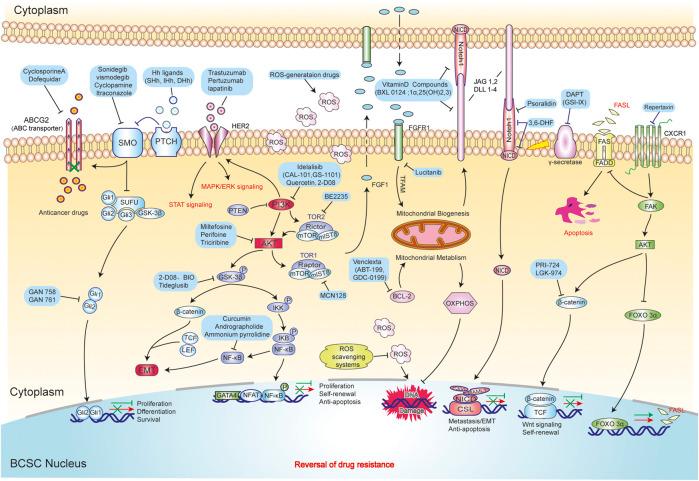
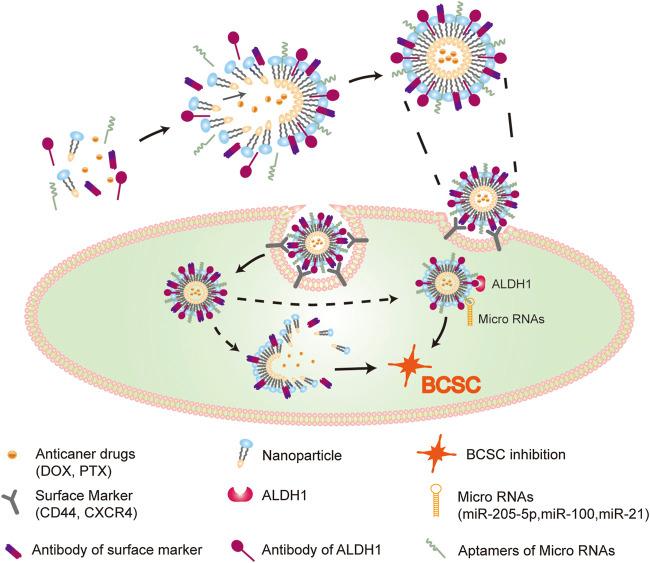
Drug resistance is a major challenge in breast cancer (BC) treatment at present. Accumulating studies indicate that breast cancer stem cells (BCSCs) are responsible for the BC drugs resistance, causing relapse and metastasis in BC patients. Thus, BCSCs elimination could reverse drug resistance and improve drug efficacy to benefit BC patients. Consequently, mastering the knowledge on the proliferation, resistance mechanisms, and separation of BCSCs in BC therapy is extremely helpful for BCSCs-targeted therapeutic strategies. Herein, we summarize the principal BCSCs surface markers and signaling pathways, and list the BCSCs-related drug resistance mechanisms in chemotherapy (CT), endocrine therapy (ET), and targeted therapy (TT), and display therapeutic strategies for targeting BCSCs to reverse drug resistance in BC. Even more importantly, more attention should be paid to studies on BCSC-targeted strategies to overcome the drug resistant dilemma of clinical therapies in the future.
耐药性是目前乳腺癌(BC)治疗中的一项重大挑战。越来越多的研究表明,乳腺癌干细胞(BCSCs)是导致BC耐药的原因,会引起BC患者的复发和转移。因此,消除BCSCs可以逆转耐药性并提高药物疗效,从而使BC患者受益。因此,掌握BC治疗中BCSCs的增殖、耐药机制及分离等知识,对于以BCSCs为靶点的治疗策略极为有用。在此,我们总结了主要的BCSCs表面标志物和信号通路,列出了化疗(CT)、内分泌治疗(ET)和靶向治疗(TT)中与BCSCs相关的耐药机制,并展示了针对BCSCs逆转BC耐药性的治疗策略。更重要的是,未来应更加关注以BCSCs为靶点的策略研究,以克服临床治疗中的耐药困境。


 Zotero 插件