
芳樟醇的抗菌活性及其作用机制探讨
Antimicrobial Activity and Proposed Action Mechanism of Linalool Against .
作者信息
Guo Fengyu, Chen Qianping, Liang Qiong, Zhang Ming, Chen Wenxue, Chen Haiming, Yun Yonghuan, Zhong Qiuping, Chen Weijun
机构信息
College of Food Science and Technology, Hainan University, Haikou, China.
出版信息
Front Microbiol. 2021 Jan 28;12:562094. doi: 10.3389/fmicb.2021.562094. eCollection 2021.
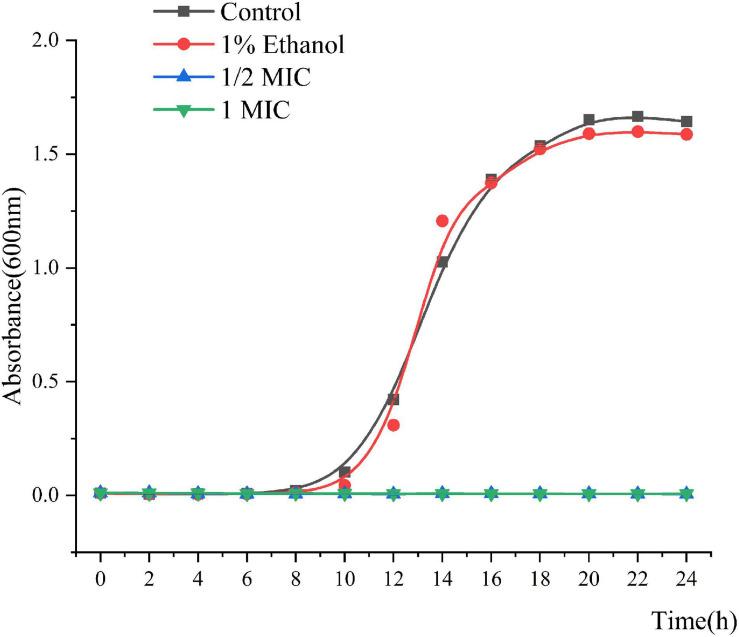
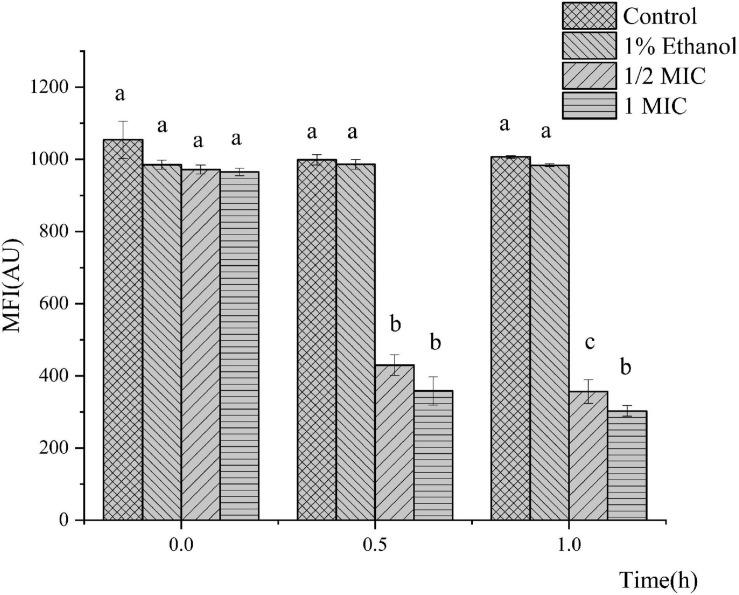
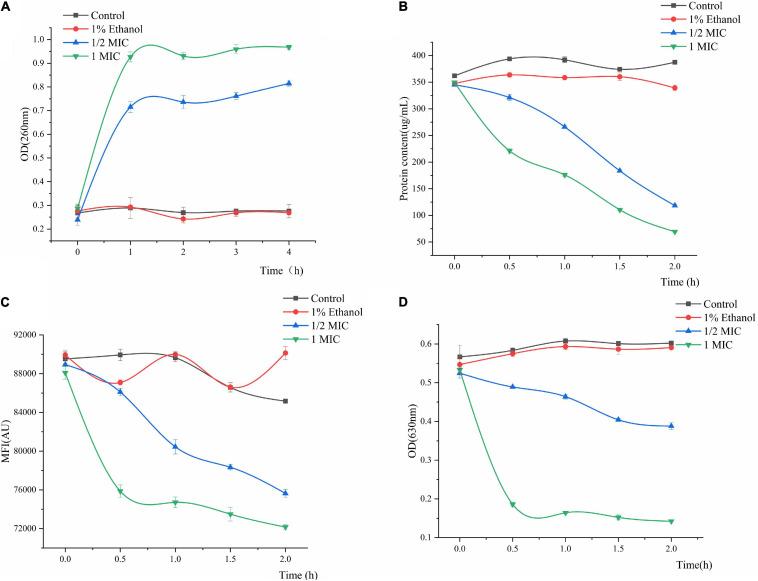
In this study, linalool, one of the principal components of essential oils, was used as an antibacterial agent to investigate the antibacterial activity and mechanism of linalool against The reduction in membrane potential (MP), leakage of alkaline phosphatase (AKP) and the release of macromolecules, including DNA, RNA and protein confirmed that damage to cell wall membrane structure and leakage of cytoplasmic contents were due to the linalool treatment. Furthermore, the decrease of enzyme activity, including the succinate dehydrogenase (SDH), malate dehydrogenase (MDH), pyruvate kinase (PK), and ATPase indicated that linalool could lead to metabolic dysfunction and inhibit energy synthesis. In addition, the activity of respiratory chain dehydrogenase and metabolic activity of respiration indicated that linalool inhibits cellular respiration. These results revealed that linalool had strong antibacterial activity against via membrane damage, bacterial metabolic and oxidative respiratory perturbations, interfering in cellular functions and even causing cell death. It was suggested that linalool may be a new potential source as food antiseptics in food systems.
在本研究中,芳樟醇作为香精油的主要成分之一,被用作抗菌剂,以研究其对[细菌名称未给出]的抗菌活性及作用机制。膜电位(MP)的降低、碱性磷酸酶(AKP)的泄漏以及包括DNA、RNA和蛋白质在内的大分子的释放证实,细胞壁膜结构的损伤和细胞质内容物的泄漏是由芳樟醇处理所致。此外,包括琥珀酸脱氢酶(SDH)、苹果酸脱氢酶(MDH)、丙酮酸激酶(PK)和ATP酶在内的酶活性降低表明,芳樟醇可导致代谢功能障碍并抑制能量合成。另外,呼吸链脱氢酶的活性和呼吸代谢活性表明芳樟醇抑制细胞呼吸。这些结果表明,芳樟醇通过膜损伤、细菌代谢和氧化呼吸干扰,干扰细胞功能甚至导致细胞死亡,对[细菌名称未给出]具有很强的抗菌活性。有人提出,芳樟醇可能是食品体系中一种新的潜在食品防腐剂来源。



 Zotero 插件