
非典型端粒结合蛋白在癌症中的作用。
Non-canonical roles of canonical telomere binding proteins in cancers.
机构信息
Division of Cancer Genetics and Therapeutics, Laboratory of NFκB Signaling, Institute of Molecular and Cell Biology (IMCB), A*STAR (Agency for Science, Technology and Research), Proteos, 61, Biopolis Drive, Singapore, 138673, Singapore.
Department of Pathology, Yong Loo Lin School of Medicine, National University of Singapore, Singapore, 117593, Singapore.
出版信息
Cell Mol Life Sci. 2021 May;78(9):4235-4257. doi: 10.1007/s00018-021-03783-0. Epub 2021 Feb 18.
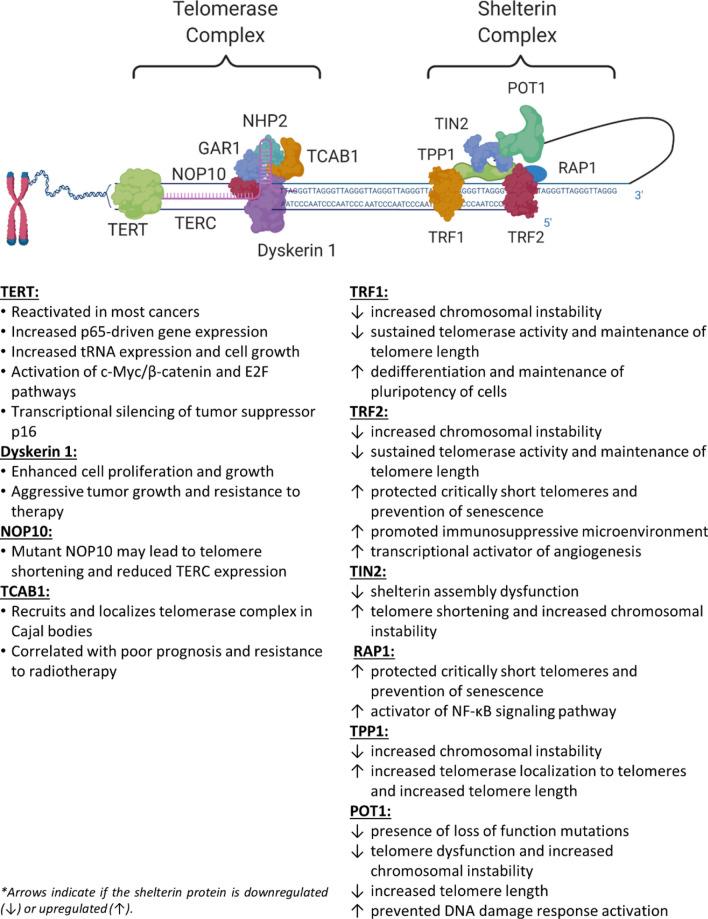
Reactivation of telomerase is a major hallmark observed in 90% of all cancers. Yet paradoxically, enhanced telomerase activity does not correlate with telomere length and cancers often possess short telomeres; suggestive of supplementary non-canonical roles that telomerase might play in the development of cancer. Moreover, studies have shown that aberrant expression of shelterin proteins coupled with their release from shortening telomeres can further promote cancer by mechanisms independent of their telomeric role. While targeting telomerase activity appears to be an attractive therapeutic option, this approach has failed in clinical trials due to undesirable cytotoxic effects on stem cells. To circumvent this concern, an alternative strategy could be to target the molecules involved in the non-canonical functions of telomeric proteins. In this review, we will focus on emerging evidence that has demonstrated the non-canonical roles of telomeric proteins and their impact on tumorigenesis. Furthermore, we aim to address current knowledge gaps in telomeric protein functions and propose future research approaches that can be undertaken to achieve this.
端粒酶的重新激活是在所有癌症中观察到的主要标志,大约占 90%。然而,矛盾的是,增强的端粒酶活性与端粒长度不相关,而且癌症通常具有短的端粒;这表明端粒酶在癌症的发展中可能具有补充的非典型作用。此外,研究表明,庇护蛋白的异常表达与其从缩短的端粒上释放,可以通过与端粒功能无关的机制进一步促进癌症。虽然靶向端粒酶活性似乎是一种有吸引力的治疗选择,但由于对干细胞产生不良的细胞毒性作用,这种方法在临床试验中失败了。为了避免这种担忧,可以采用靶向参与端粒蛋白非典型功能的分子的替代策略。在这篇综述中,我们将重点关注新兴的证据,这些证据已经证明了端粒蛋白的非典型作用及其对肿瘤发生的影响。此外,我们旨在解决端粒蛋白功能的当前知识差距,并提出可以采取的未来研究方法来实现这一目标。
 Zotero 插件