
极端、天体生物学相关缺氧环境中微生物群落的分类和功能分析。
Taxonomic and functional analyses of intact microbial communities thriving in extreme, astrobiology-relevant, anoxic sites.
机构信息
Diagnostic and Research Institute of Hygiene, Microbiology and Environmental Medicine, Medical University of Graz, Graz, Austria.
Department of Microbiology and Archaea Center, University of Regensburg, Regensburg, Germany.
出版信息
Microbiome. 2021 Feb 18;9(1):50. doi: 10.1186/s40168-020-00989-5.
BACKGROUND
Extreme terrestrial, analogue environments are widely used models to study the limits of life and to infer habitability of extraterrestrial settings. In contrast to Earth's ecosystems, potential extraterrestrial biotopes are usually characterized by a lack of oxygen.
METHODS
In the MASE project (Mars Analogues for Space Exploration), we selected representative anoxic analogue environments (permafrost, salt-mine, acidic lake and river, sulfur springs) for the comprehensive analysis of their microbial communities. We assessed the microbiome profile of intact cells by propidium monoazide-based amplicon and shotgun metagenome sequencing, supplemented with an extensive cultivation effort.
RESULTS
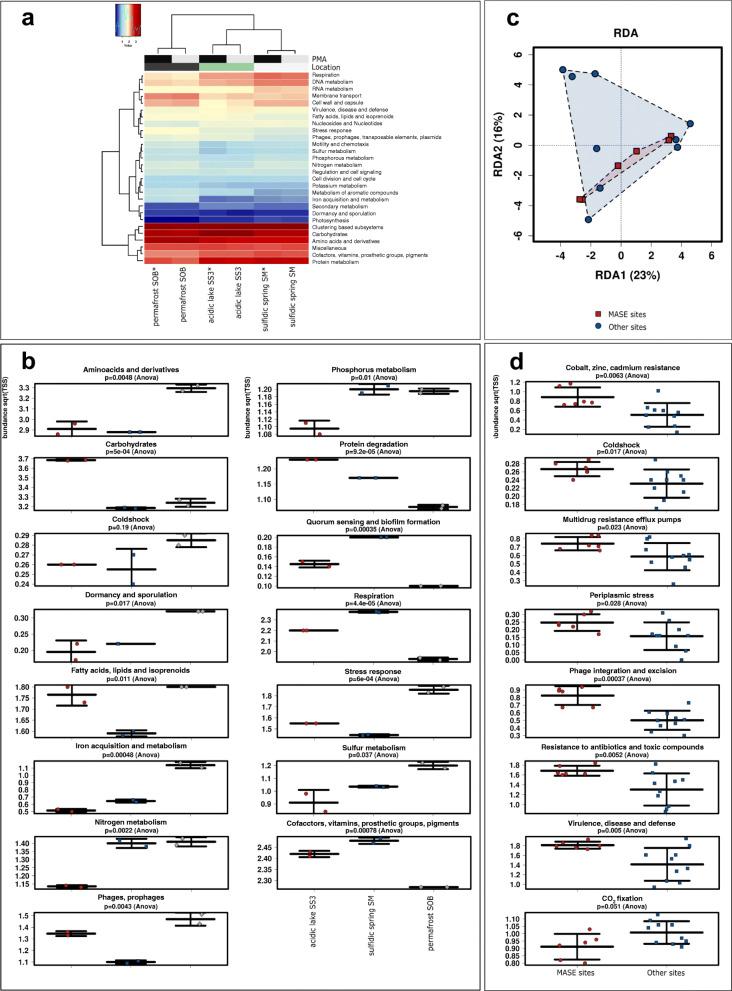
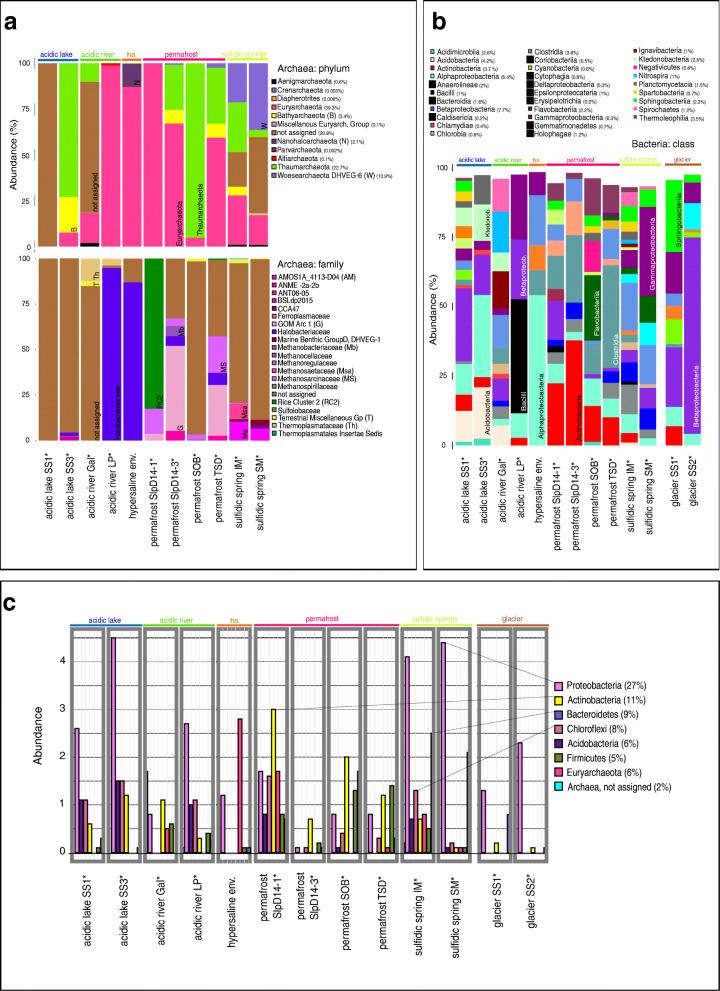
The information retrieved from microbiome analyses on the intact microbial community thriving in the MASE sites, together with the isolation of 31 model microorganisms and successful binning of 15 high-quality genomes allowed us to observe principle pathways, which pinpoint specific microbial functions in the MASE sites compared to moderate environments. The microorganisms were characterized by an impressive machinery to withstand physical and chemical pressures. All levels of our analyses revealed the strong and omnipresent dependency of the microbial communities on complex organic matter. Moreover, we identified an extremotolerant cosmopolitan group of 34 poly-extremophiles thriving in all sites.
CONCLUSIONS
Our results reveal the presence of a core microbiome and microbial taxonomic similarities between saline and acidic anoxic environments. Our work further emphasizes the importance of the environmental, terrestrial parameters for the functionality of a microbial community, but also reveals a high proportion of living microorganisms in extreme environments with a high adaptation potential within habitability borders. Video abstract.
背景
极端的地球模拟环境被广泛用作研究生命极限和推断外星环境宜居性的模型。与地球的生态系统相比,潜在的外星生物栖息地通常缺乏氧气。
方法
在 MASE 项目(火星探索模拟)中,我们选择了具有代表性的缺氧模拟环境(永久冻土、盐矿、酸性湖泊和河流、硫磺泉),对其微生物群落进行综合分析。我们通过基于吖啶橙的扩增子和 shotgun 宏基因组测序评估了完整细胞的微生物组图谱,并辅以广泛的培养工作。
结果
从 MASE 地点中完整微生物群落中获取的微生物组分析信息,加上 31 种模型微生物的分离和 15 个高质量基因组的成功分类,使我们能够观察到特定微生物功能在 MASE 地点与中温和环境相比的主要途径。这些微生物具有令人印象深刻的机制来承受物理和化学压力。我们所有分析水平都揭示了微生物群落对复杂有机物的强烈和普遍依赖。此外,我们鉴定出了一组在所有地点都能生存的 34 种耐多极端环境的广域极端微生物。
结论
我们的研究结果揭示了盐性和酸性缺氧环境中存在核心微生物组和微生物分类相似性。我们的工作进一步强调了环境、陆地参数对微生物群落功能的重要性,但也揭示了在高适应潜力的极限环境中存在大量具有生存能力的微生物。视频摘要。

 Zotero 插件