
新冠疫情与非洲新兴的基于塑料的个人防护装备废弃物污染及管理
COVID-19 pandemic and emerging plastic-based personal protective equipment waste pollution and management in Africa.
作者信息
Benson Nsikak U, Fred-Ahmadu Omowunmi H, Bassey David E, Atayero Aderemi A
机构信息
Analytical and Environmental Chemistry Unit, Department of Chemistry, Covenant University, Ota, Nigeria.
DR Energy Services Inc. Calgary, Alberta, Canada.
出版信息
J Environ Chem Eng. 2021 Jun;9(3):105222. doi: 10.1016/j.jece.2021.105222. Epub 2021 Feb 13.
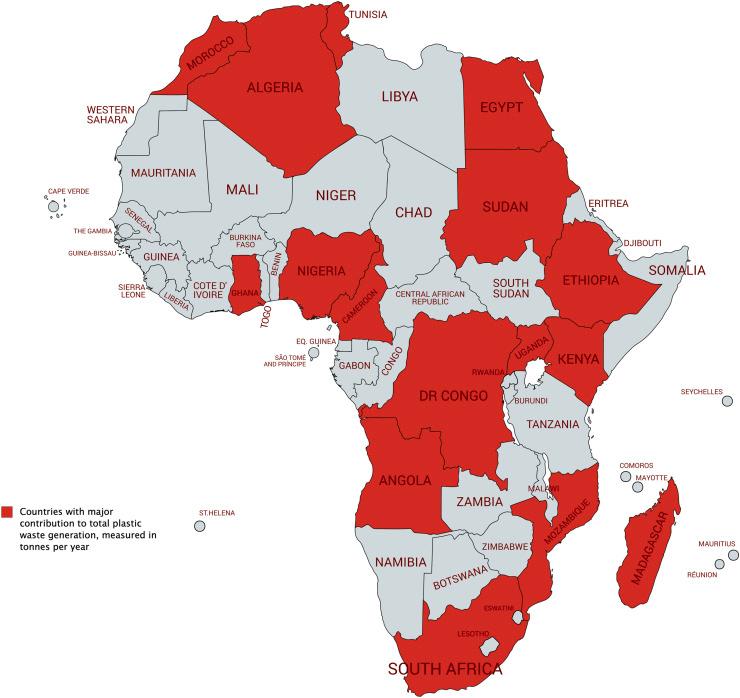
The threat of plastic waste pollution in African countries is increasing exponentially since the World Health Organisation declared the coronavirus infection as a pandemic. Fundamental to this growing threat are multiple factors, including the increased public consumption for single-use plastics, limited or non-existence of adequate plastic waste management infrastructures, and urbanisation. Plastics-based personal protective equipment including millions of surgical masks, medical gowns, face shields, safety glasses, protective aprons, sanitiser containers, plastics shoes, and gloves have been widely used for the reduction of exposure risk to Severe Acute Respiratory Syndrome (SARS) Coronavirus 2 (SARS-CoV-2). This paper estimates and elucidates the growing plethora of plastic wastes in African countries in the context of the current SARS-CoV-2 pandemic. A Fourier transform infrared (FTIR) spectral fingerprint indicates that face masks were characterised by natural and artificial fibres including polyester fibres, polypropylene, natural latex resin. Our estimate suggests that over 12 billion medical and fabric face masks are discarded monthly, giving the likelihood that an equivalent of about 105,000 tonnes of face masks per month could be disposed into the environment by Africans. In general, 15 out of 57 African countries are significant plastic waste contributors with Nigeria (15%), Ethiopia (8.6%), Egypt (7.6%), DR Congo (6.7%), Tanzania (4.5%), and South Africa (4.4%) topping the list. Therefore, this expert insight is an attempt to draw the attention of governments, healthcare agencies, and the public to the potential risks of SARS-CoV-2-generated plastics (COVID plastic wastes), and the environmental impacts that could exacerbate the existing plastic pollution epidemic after the COVID-19 pandemic.
自世界卫生组织宣布冠状病毒感染为大流行以来,非洲国家塑料垃圾污染的威胁呈指数级增长。造成这一日益严重威胁的根本因素有多个,包括一次性塑料的公众消费量增加、缺乏或仅有有限的适当塑料垃圾管理基础设施以及城市化。包括数百万个外科口罩、医用防护服、面罩、安全眼镜、防护围裙、消毒剂容器、塑料鞋和手套在内的基于塑料的个人防护装备已被广泛用于降低感染严重急性呼吸综合征冠状病毒2(SARS-CoV-2)的风险。本文在当前SARS-CoV-2大流行的背景下,估计并阐明了非洲国家日益增多的塑料垃圾。傅里叶变换红外(FTIR)光谱指纹表明,口罩的特征是含有天然和人造纤维,包括聚酯纤维、聚丙烯、天然乳胶树脂。我们的估计表明,每月有超过120亿个医用和织物口罩被丢弃,这意味着非洲人每月可能会有相当于约10.5万吨的口罩被丢弃到环境中。总体而言,57个非洲国家中有15个是塑料垃圾的主要贡献者,尼日利亚(15%)、埃塞俄比亚(8.6%)、埃及(7.6%)、刚果民主共和国(6.7%)、坦桑尼亚(4.5%)和南非(4.4%)位居前列。因此,这一专家见解旨在引起政府、医疗保健机构和公众对SARS-CoV-2产生的塑料(新冠塑料垃圾)的潜在风险以及在新冠疫情后可能加剧现有塑料污染流行的环境影响的关注。




 Zotero 插件