
饮料瓶容量、包装效率和减少塑料废物的潜力。
Beverage bottle capacity, packaging efficiency, and the potential for plastic waste reduction.
机构信息
University of South Carolina, Columbia, USA.
University of California, Los Angeles, USA.
出版信息
Sci Rep. 2021 Feb 25;11(1):3542. doi: 10.1038/s41598-021-82983-x.
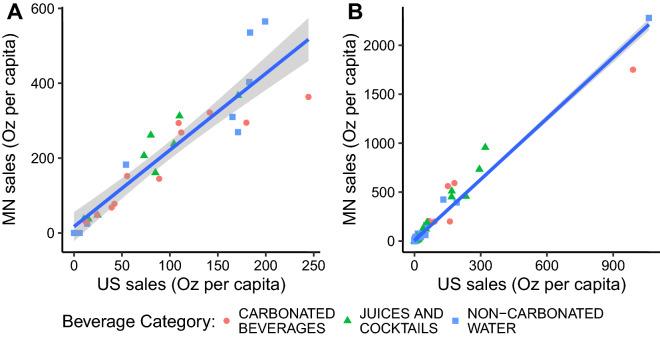
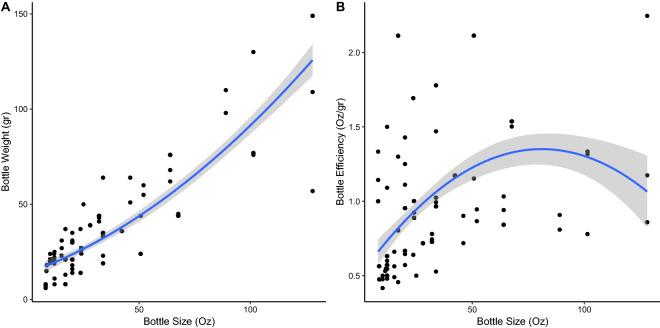
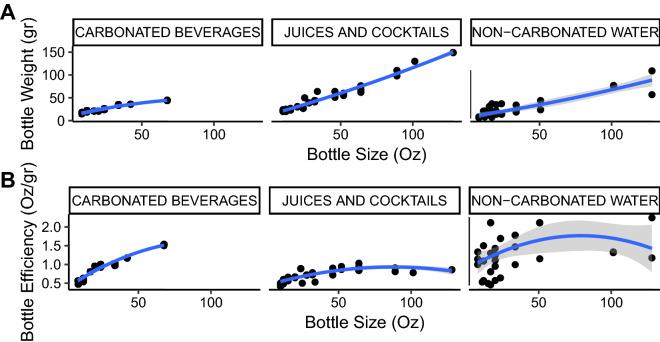
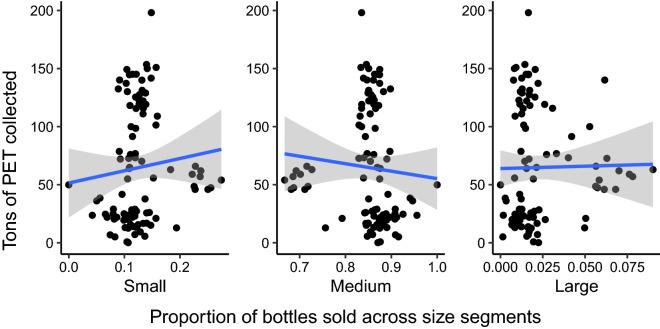
Plastic pollution is a pressing issue because authorities struggle to contain and process the enormous amount of waste produced. We study the potential for reducing plastic waste by examining the efficiency with which different polyethylene terephthalate (PET) bottles deliver beverages. We find that 80% of the variation in bottle weight is explained by bottle capacity, 16% by product category, and 1% by brand. Bottle weight is quadratic and convex function of capacity, which implies that medium capacity bottles are most efficient at delivering consumable product. Local data on PET bottle sales and municipal waste recovery validate the findings. A 20% shift in consumption from smaller to larger bottles could reduce the production of PET waste by over 10,000 t annually in the U.S. alone.
塑料污染是一个紧迫的问题,因为当局难以控制和处理产生的大量废物。我们通过研究不同的聚对苯二甲酸乙二醇酯 (PET) 瓶在输送饮料时的效率,来研究减少塑料废物的潜力。我们发现,瓶重的 80%可以由瓶容量解释,16%由产品类别解释,1%由品牌解释。瓶重与容量呈二次凸函数关系,这意味着中等容量的瓶子在输送可消费产品方面效率最高。关于 PET 瓶销售和城市废物回收的本地数据验证了这一发现。仅在美国,将消费从较小的瓶子转向较大的瓶子,每年可减少超过 10000 吨的 PET 废物产生。
 Zotero 插件