
GASC1 通过增强 NOTCH1 信号促进神经胶质瘤进展。
GASC1 promotes glioma progression by enhancing NOTCH1 signaling.
机构信息
Department of Neurosurgery, Henan Key Laboratory of Cancer Epigenetics, Cancer Institute, The First Affiliated Hospital and College of Clinical Medicine of Henan University of Science and Technology, Luoyang, Henan 471003, P.R. China.
Department of General Practice, The First Affiliated Hospital and College of Clinical Medicine of Henan University of Science and Technology, Luoyang, Henan 471003, P.R. China.
出版信息
Mol Med Rep. 2021 May;23(5). doi: 10.3892/mmr.2021.11949. Epub 2021 Mar 2.
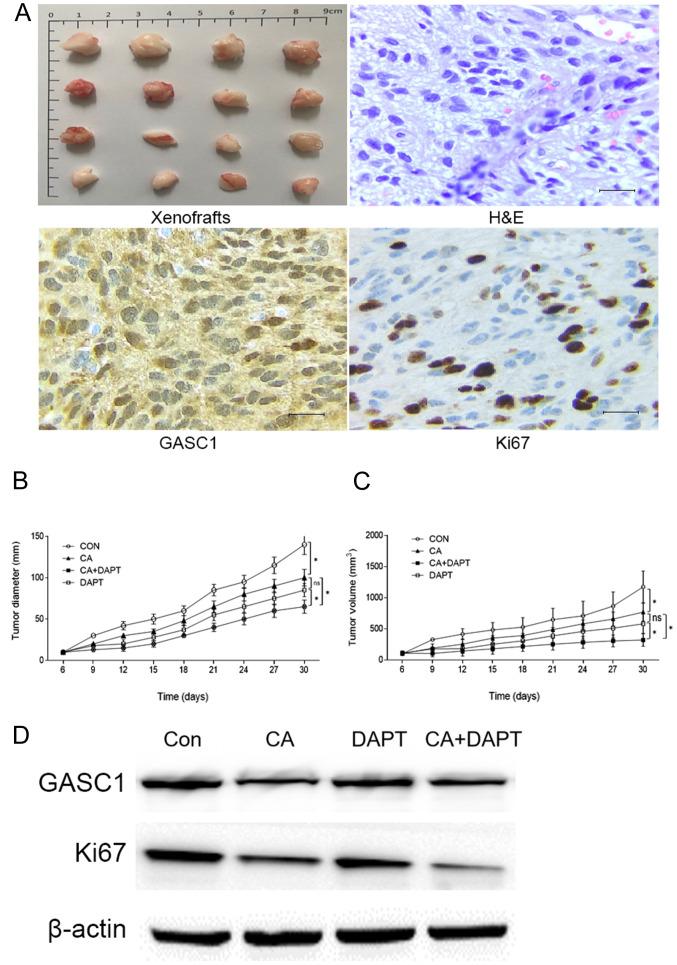
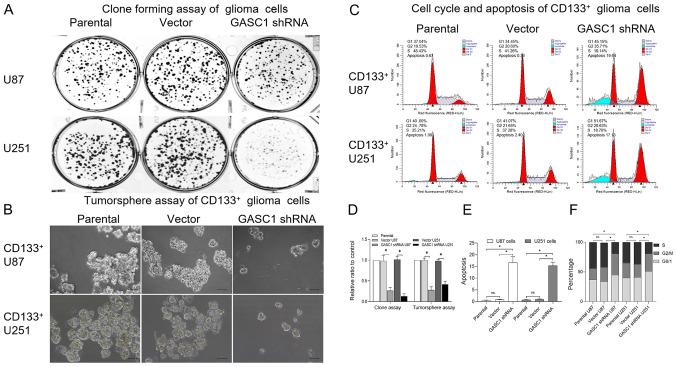
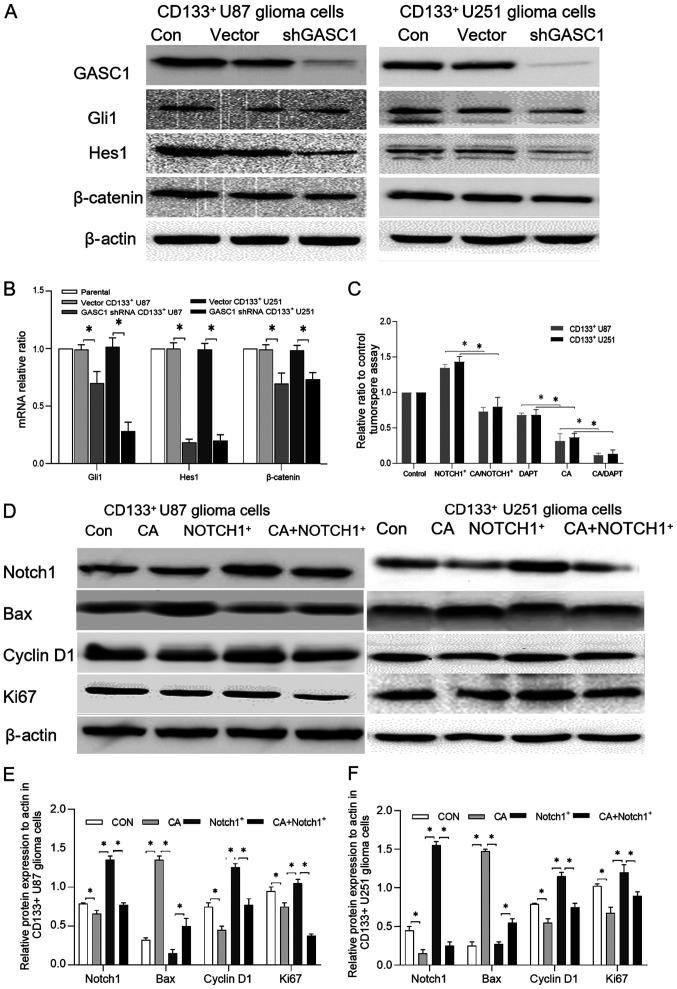
Recent studies have reported that gene amplified in squamous cell carcinoma 1 (GASC1) is involved in the progression of several types of cancer. However, whether GASC1 promotes glioma progression remains unknown. Therefore, the present study aimed to investigate the effect of GASC1 exposure on glioma tumorigenesis. The western blot demonstrated that grade III and IV glioma tissues exhibited a higher mRNA and protein expression of GASC1. Moreover, CD133+ U87 or U251 cells from magnetic cell separation exhibited a higher GASC1 expression. Invasion Transwell assay, clonogenic assay and wound healing assay have shown that GASC1 inhibition using a pharmacological inhibitor and specific short hairpin (sh)RNA suppressed the invasive, migratory and tumorsphere forming abilities of primary culture human glioma cells. Furthermore, GASC1‑knockdown decreased notch receptor (Notch) responsive protein hes family bHLH transcription factor 1 (Hes1) signaling. GASC1 inhibition reduced notch receptor 1 (NOTCH1) expression, and a NOTCH1 inhibitor enhanced the effects of GASC1 inhibition on the CD133+ U87 or U251 cell tumorsphere forming ability, while NOTCH1 overexpression abrogated these effects. In addition, the GASC1 inhibitor caffeic acid and/or the NOTCH1 inhibitor DAPT (a γ‑Secretase Inhibitor), efficiently suppressed the human glioma xenograft tumors. Thus, the present results demonstrated the importance of GASC1 in the progression of glioma and identified that GASC1 promotes glioma progression, at least in part, by enhancing NOTCH signaling, suggesting that GASC1/NOTCH1 signaling may be a potential therapeutic target for glioma treatment.
最近的研究报告称,鳞状细胞癌 1 基因扩增物(GASC1)参与了多种类型癌症的进展。然而,GASC1 是否促进神经胶质瘤的进展尚不清楚。因此,本研究旨在探讨 GASC1 暴露对神经胶质瘤发生的影响。Western blot 分析表明,III 级和 IV 级神经胶质瘤组织中 GASC1 的 mRNA 和蛋白表达水平较高。此外,来自磁珠细胞分选的 CD133+U87 或 U251 细胞显示出更高的 GASC1 表达水平。侵袭 Transwell 测定、集落形成测定和划痕愈合测定表明,使用药理学抑制剂和特异性短发夹(sh)RNA 抑制 GASC1 可抑制原代培养的人脑神经胶质瘤细胞的侵袭、迁移和肿瘤球形成能力。此外,GASC1 敲低降低了 Notch 受体(Notch)反应蛋白 hes 家族碱性螺旋-环-螺旋转录因子 1(Hes1)信号。GASC1 抑制降低了 Notch 受体 1(NOTCH1)的表达,而 NOTCH1 抑制剂增强了 GASC1 抑制对 CD133+U87 或 U251 细胞肿瘤球形成能力的影响,而 NOTCH1 过表达则消除了这些影响。此外,GASC1 抑制剂咖啡酸和/或 NOTCH1 抑制剂 DAPT(γ-分泌酶抑制剂)有效地抑制了人神经胶质瘤异种移植瘤的生长。因此,本研究结果表明 GASC1 在神经胶质瘤进展中的重要性,并证实 GASC1 通过增强 NOTCH 信号促进神经胶质瘤的进展,至少部分是通过增强 NOTCH 信号,表明 GASC1/NOTCH1 信号可能是治疗神经胶质瘤的潜在治疗靶点。


 Zotero 插件