
正常仓鼠的常规和斑点追踪超声心动图评估的可行性和参考区间。
Feasibility and reference intervals assessed by conventional and speckle-tracking echocardiography in normal hamsters.
机构信息
Cardiology Center of the Medical School of Ribeirao Preto, University of Sao Paulo, São Paulo, Brazil.
出版信息
Physiol Rep. 2021 Mar;9(5):e14776. doi: 10.14814/phy2.14776.
OBJECTIVES
This study aimed to determine feasibility, reference intervals, and reproducibility of left ventricular ejection fraction (LVEF) and speckle-tracking echocardiography (STE) in adult Syrian hamsters.
BACKGROUND
Syrian hamster is an experimental model for several heart diseases. Echocardiography allows the evaluation of structure and function with bidimensional conventional techniques and STE. However, there is no data regarding reference values for bidimensional LVEF and myocardial strain in hamsters.
METHODS
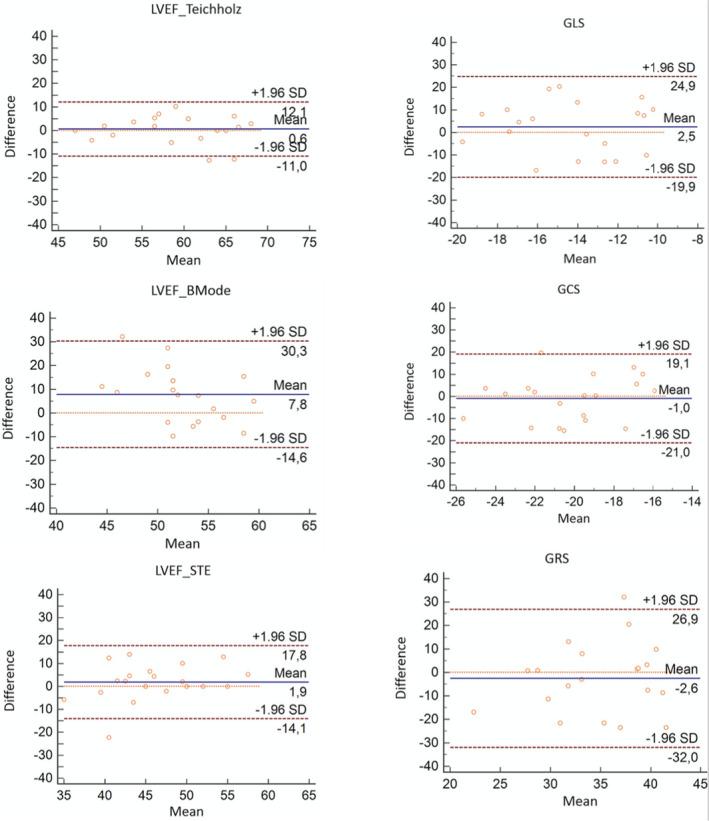
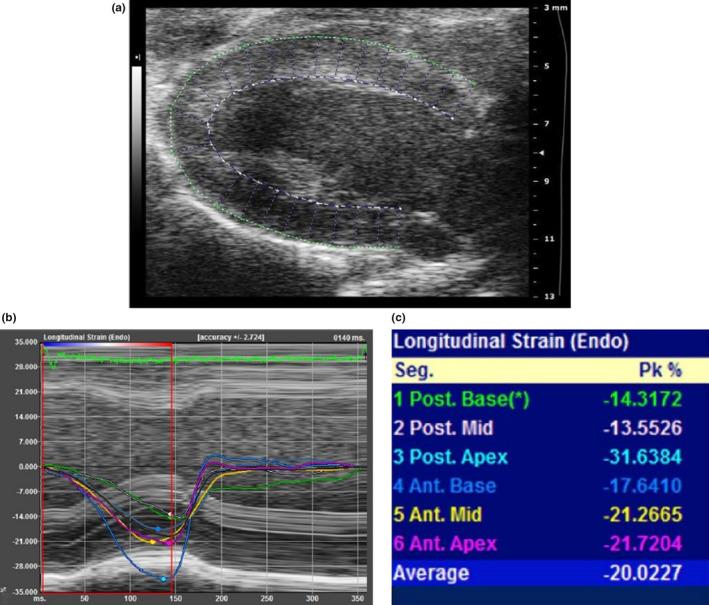
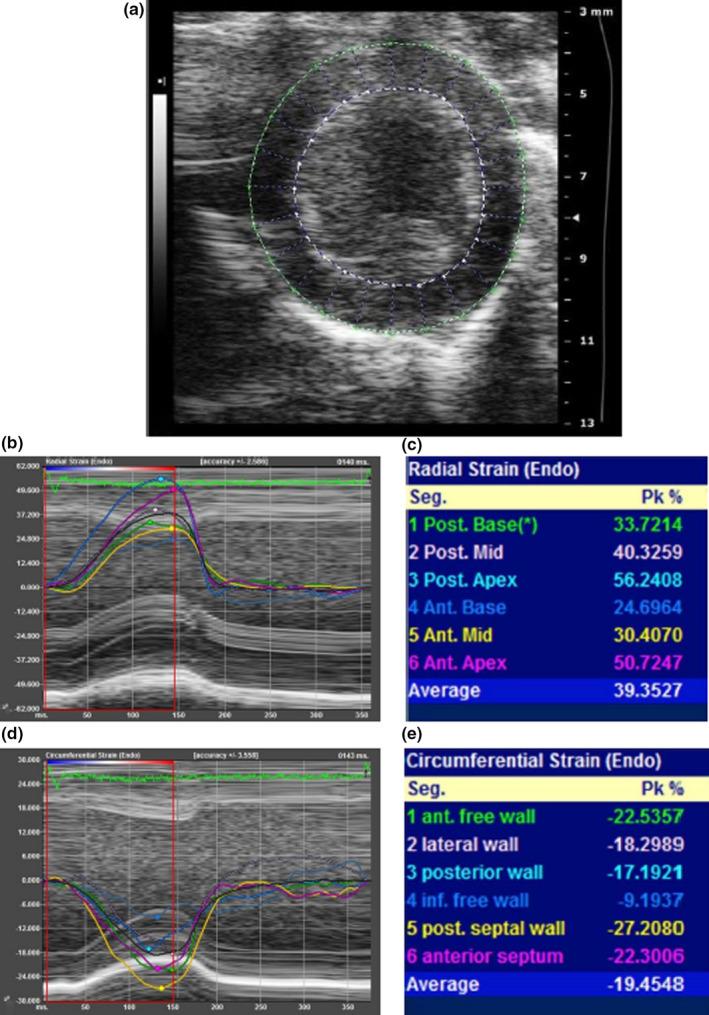
A total of 135 female Syrian hamsters were anesthetized and studied with a small animal dedicated echocardiography system. Echocardiography measurements were obtained from M-mode and B-mode images. Feasibility and 95% reference intervals were obtained for LVEF using three different approaches: LVEF_Teichholz (from M-mode linear measurements), LVEF_BMode (from area-length method), and LVEF_ STE (from strain), and for global longitudinal (GLS), circumferential (GCS), and radial (GRS) endocardial strain. Reproducibility was assessed as intra-class correlation coefficients.
RESULTS
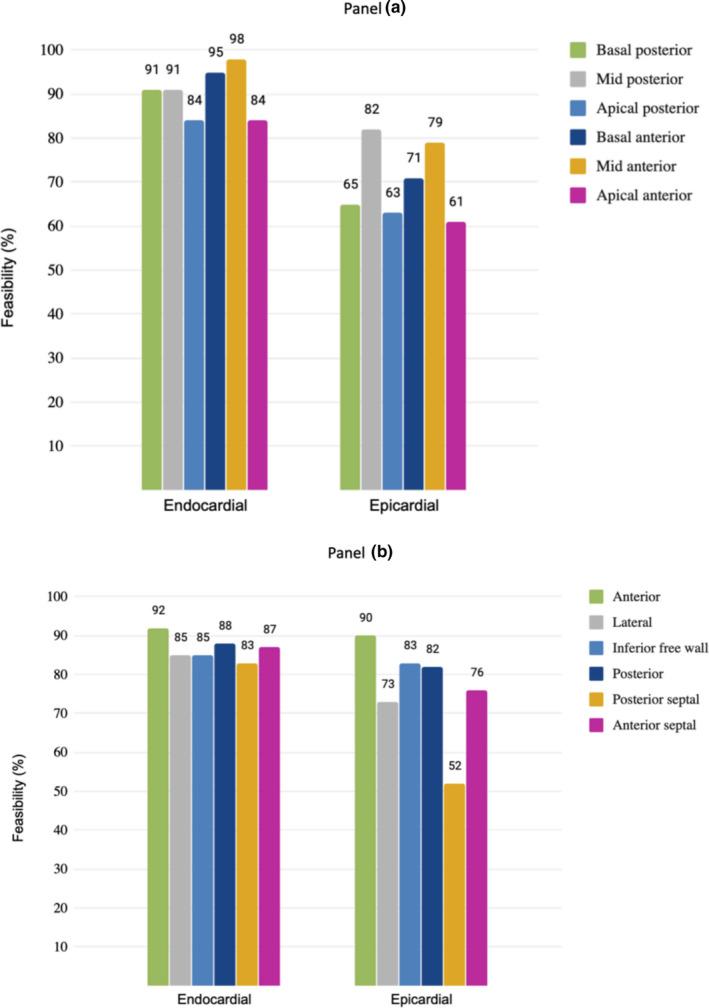
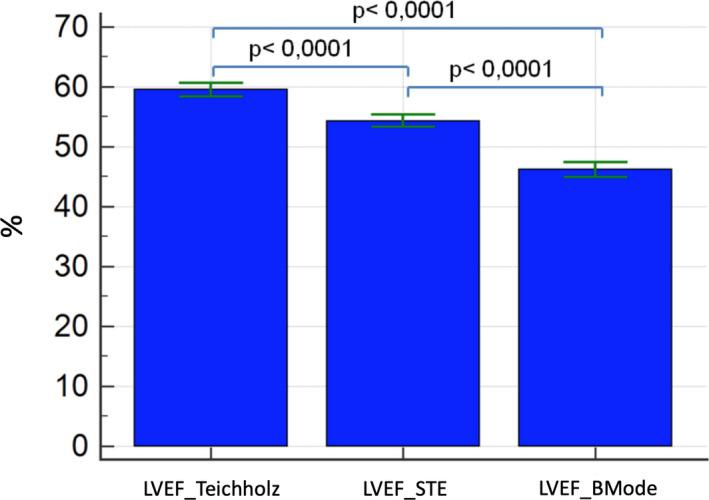
Feasibility of LVEF and endocardial strain was high (95% in FEVE_Teichholz, 93% in the LVEF_BMode, 84% in the LVEF_STE, 84% from PSLAX, and 80% from PSSAX). Values of LVEF_Teichholz were significantly higher than values of LVEF_BMode, and LVEF_STE-derived methods (59.0 ± 5.8, 53.8 ± 4.7, 46.3 ± 5.7, p < 0.0001). The 95% reference intervals for GLS, GCS, and GRS were respectively -13.6(-7.5;-20.4)%, -20.5 ± 3.1%, and + 34,7 ± 7.0%. Intra-class correlation coefficients were 0.49 - 0.91 for LVEF measurements, 0.73 - 0.92 for STE, with better results for LVEF_Teichholz and GLS.
CONCLUSIONS
Evaluation of LVEF by several methods and STE parameters is feasible in hamsters. Reference intervals for LVEF and STE obtained for this experimental animal model can be applied at future research.
目的
本研究旨在确定成年叙利亚仓鼠左心室射血分数(LVEF)和斑点追踪超声心动图(STE)的可行性、参考区间和可重复性。
背景
叙利亚仓鼠是多种心脏病的实验模型。超声心动图允许使用二维常规技术和 STE 评估结构和功能。然而,关于仓鼠二维 LVEF 和心肌应变的参考值尚无数据。
方法
对 135 只雌性叙利亚仓鼠进行麻醉,并使用小动物专用超声心动图系统进行研究。从 M 模式和 B 模式图像中获取超声心动图测量值。使用三种不同方法(LVEF_Teichholz[来自 M 模式线性测量值]、LVEF_BMode[来自面积-长度法]和 LVEF_STE[来自应变])和整体纵向(GLS)、圆周(GCS)和径向(GRS)心内膜应变获得 LVEF 的可行性和 95%参考区间。将组内相关系数作为重复性评估。
结果
LVEF 和心内膜应变的可行性较高(LVEF_Teichholz 为 95%,LVEF_BMode 为 93%,LVEF_STE 为 84%,PSLAX 为 84%,PSSAX 为 80%)。LVEF_Teichholz 值明显高于 LVEF_BMode 和 LVEF_STE 衍生方法(59.0±5.8、53.8±4.7、46.3±5.7,p<0.0001)。GLS、GCS 和 GRS 的 95%参考区间分别为-13.6(-7.5;-20.4)%、20.5±3.1%和+34.7±7.0%。LVEF 测量的组内相关系数为 0.49-0.91,STE 为 0.73-0.92,LVEF_Teichholz 和 GLS 的结果更好。
结论
在仓鼠中,几种方法和 STE 参数评估 LVEF 是可行的。为该实验动物模型获得的 LVEF 和 STE 参考区间可应用于未来的研究。
 Zotero 插件