
微小RNA-181a-5p的上调通过诱导维生素D受体介导的细胞自噬增加了HS578T乳腺癌细胞对顺铂的敏感性。
Upregulation of microRNA-181a-5p increases the sensitivity of HS578T breast cancer cells to cisplatin by inducing vitamin D receptor-mediated cell autophagy.
作者信息
Lin Jianmin, Chen Xuming, Sun Mingliang, Qu Xiaojiao, Wang Ye, Li Chenxi, Li Xiujuan, Zhao Li, Su Zhiying, Ye Huiming
机构信息
Department of Clinical Laboratory, Women and Children's Hospital, School of Medicine, Xiamen University, Xiamen, Fujian 361000, P.R. China.
Department of Surgery, Women and Children's Hospital, School of Medicine, Xiamen University, Xiamen, Fujian 361000, P.R. China.
出版信息
Oncol Lett. 2021 Apr;21(4):247. doi: 10.3892/ol.2021.12508. Epub 2021 Feb 3.
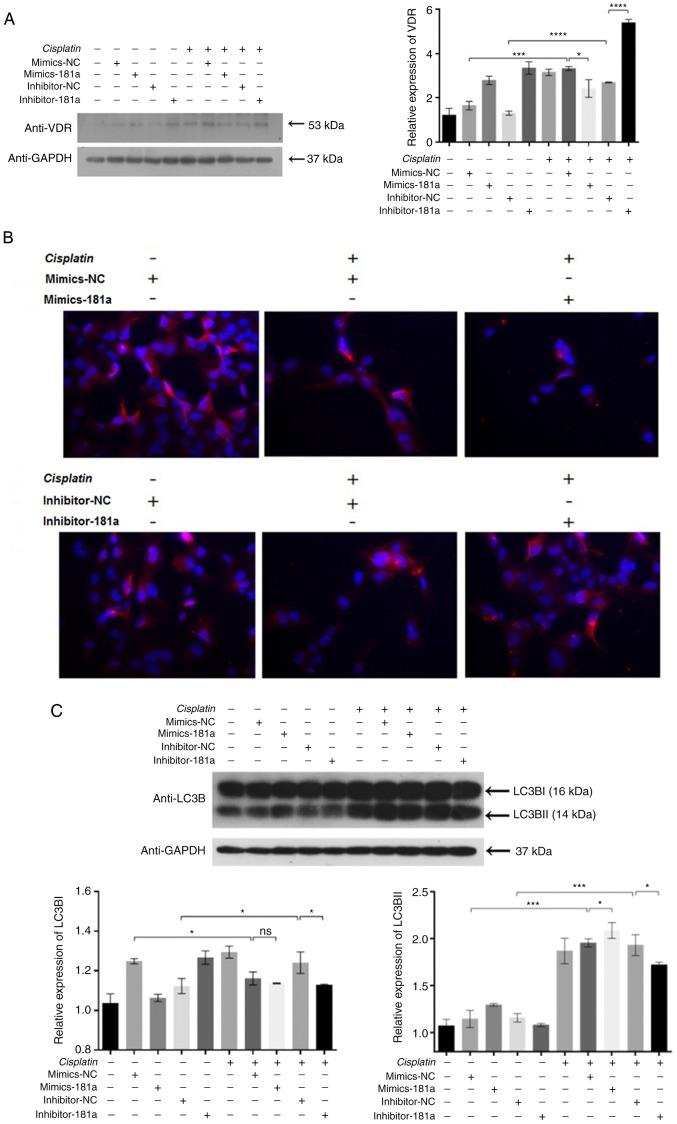
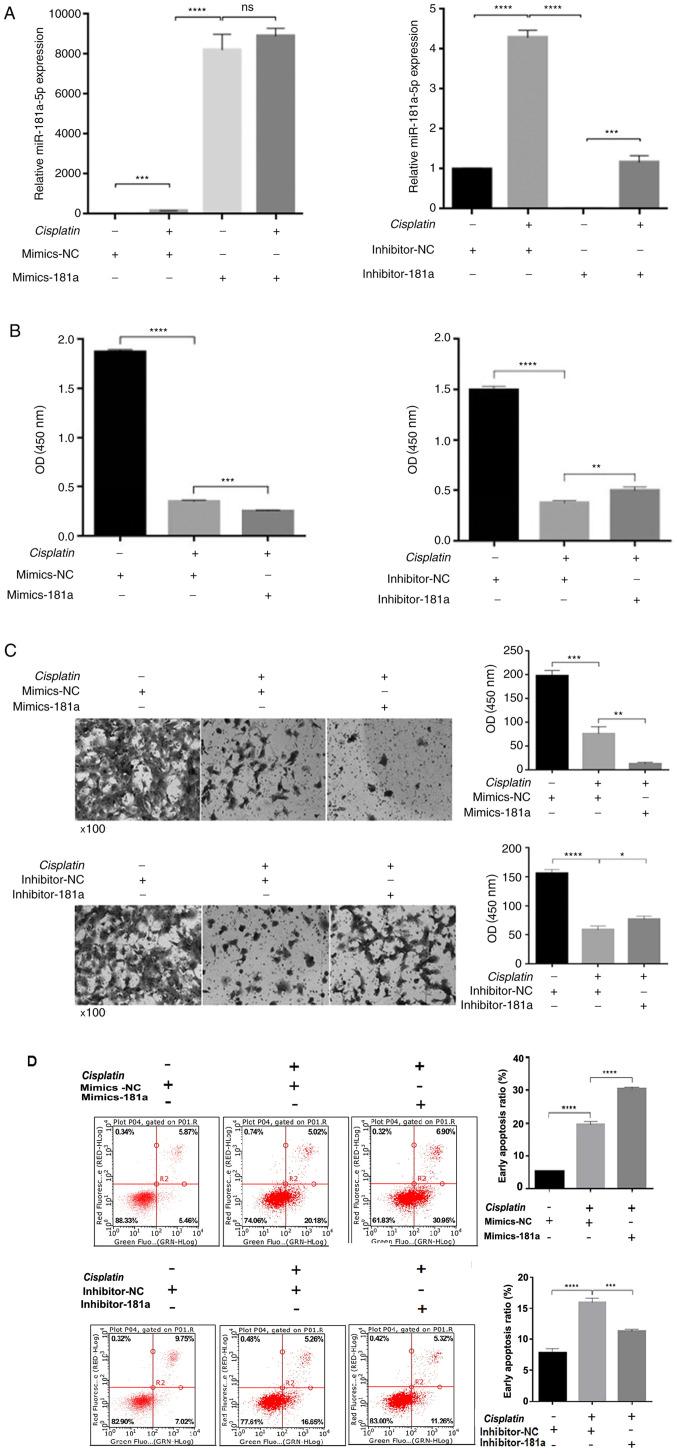
Breast cancer (BC) is the leading cause of death in females worldwide. Although cisplatin is a strong-effect and broad-spectrum chemotherapy drug, resistance to cisplatin remains a significant factor effecting clinical efficacy. The underlying mechanism of cancer cell resistance to cisplatin is not fully understood. MicroRNAs (miRs/miRNAs), as a regulator, are involved in regulating chemosensitivity to numerous chemotherapeutic drugs. The present study aimed to investigate the function of miR-181a-5p as a potential tumor suppressor in improving the efficiency of cisplatin in BC. The IC of cisplatin and miR-181a-5p expression were determined in five BC cell lines, and HS578T was selected as an appropriate cell line for subsequent experiments. The sensitivity of HS578T cells to cisplatin was assessed using cell proliferation, migration and apoptosis assays. Western blotting was performed to detect the expression of vitamin D receptor (VDR) and autophagy in HS578T cells. It was found that the increase in autophagy resulted in increased apoptosis and sensitivity to cisplatin in HS578T cells. miR-181a-5p transfection also inhibited the proliferation and migration ability of HS578T cells and induced apoptosis. Meanwhile, HS578T cells have increased sensitivity to cisplatin. VDR, as a target gene and autophagy regulator of miR-181a-5p, was negatively regulated by miR-181a-5p. Upon the decrease in VDR expression, the autophagy in HS578T cells was increased. These results indicate that the increase in autophagy enhanced the chemosensitivity of cisplatin by inducing apoptosis of HS578T cells and by inhibiting proliferation and migration. The present study showed that miR-181a-5p increased the chemical sensitivity of HS578T cells to cisplatin by inhibiting VDR to promote autophagy. The use of miR-181a-5p/autophagy/VDR-based treatment strategies may be a potential method to overcome cisplatin resistance in BC.
乳腺癌(BC)是全球女性死亡的主要原因。尽管顺铂是一种强效且广谱的化疗药物,但对顺铂的耐药性仍然是影响临床疗效的重要因素。癌细胞对顺铂耐药的潜在机制尚未完全明确。微小RNA(miRs/miRNAs)作为一种调节因子,参与调控对多种化疗药物的化学敏感性。本研究旨在探讨miR-181a-5p作为潜在肿瘤抑制因子在提高顺铂治疗BC效率方面的作用。测定了五种BC细胞系中顺铂的半数抑制浓度(IC)以及miR-181a-5p的表达水平,并选择HS578T细胞系用于后续实验。通过细胞增殖、迁移和凋亡实验评估HS578T细胞对顺铂的敏感性。采用蛋白质免疫印迹法检测HS578T细胞中维生素D受体(VDR)的表达及自噬情况。研究发现,自噬增加导致HS578T细胞凋亡增加及对顺铂的敏感性增强。miR-181a-5p转染也抑制了HS578T细胞的增殖和迁移能力并诱导其凋亡。同时,HS578T细胞对顺铂的敏感性增加。VDR作为miR-181a-5p的靶基因和自噬调节因子,受到miR-181a-5p的负调控。VDR表达降低时,HS578T细胞中的自噬增加。这些结果表明,自噬增加通过诱导HS578T细胞凋亡以及抑制增殖和迁移增强了顺铂的化学敏感性。本研究表明,miR-181a-5p通过抑制VDR促进自噬,从而增加了HS578T细胞对顺铂的化学敏感性。采用基于miR-181a-5p/自噬/VDR的治疗策略可能是克服BC顺铂耐药性的一种潜在方法。

 Zotero 插件