
糖尿病患者某些传染病易感性:血糖的关键作用。
Susceptibility for Some Infectious Diseases in Patients With Diabetes: The Key Role of Glycemia.
机构信息
Departamento de Fisiología y Farmacología, Centro de Ciencias Básicas, Universidad Autónoma de Aguascalientes, Aguascalientes, Mexico.
Facultad de Ciencias Químicas, Universidad Autónoma de Nuevo León, Nuevo León, Mexico.
出版信息
Front Public Health. 2021 Feb 16;9:559595. doi: 10.3389/fpubh.2021.559595. eCollection 2021.
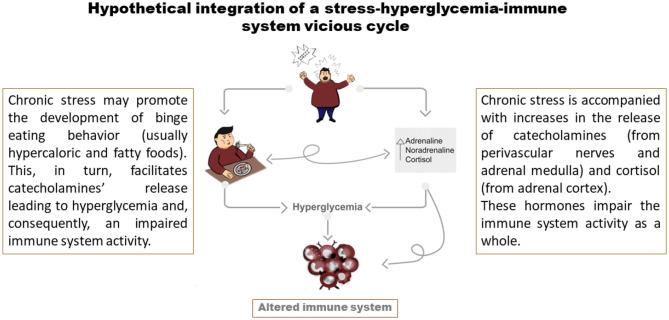
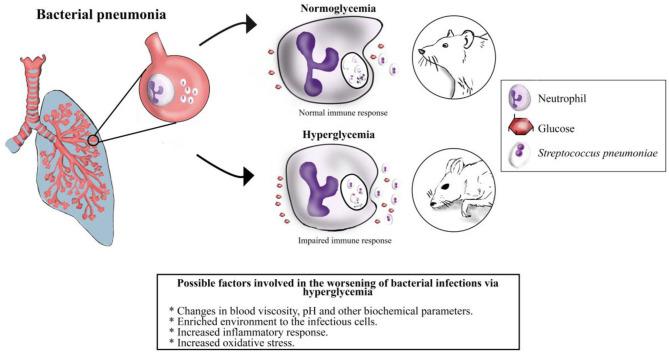
Uncontrolled diabetes results in several metabolic alterations including hyperglycemia. Indeed, several preclinical and clinical studies have suggested that this condition may induce susceptibility and the development of more aggressive infectious diseases, especially those caused by some bacteria (including , and , among others) and viruses [such as coronavirus 2 (CoV2), Influenza A virus, Hepatitis B, etc.]. Although the precise mechanisms that link glycemia to the exacerbated infections remain elusive, hyperglycemia is known to induce a wide array of changes in the immune system activity, including alterations in: (i) the microenvironment of immune cells (e.g., H, blood viscosity and other biochemical parameters); (ii) the supply of energy to infectious bacteria; (iii) the inflammatory response; and (iv) oxidative stress as a result of bacterial proliferative metabolism. Consistent with this evidence, some bacterial infections are typical (and/or have a worse prognosis) in patients with hypercaloric diets and a stressful lifestyle (conditions that promote hyperglycemic episodes). On this basis, the present review is particularly focused on: (i) the role of diabetes in the development of some bacterial and viral infections by analyzing preclinical and clinical findings; (ii) discussing the possible mechanisms by which hyperglycemia may increase the susceptibility for developing infections; and (iii) further understanding the impact of hyperglycemia on the immune system.
失控的糖尿病会导致多种代谢异常,包括高血糖。事实上,一些临床前和临床研究表明,这种情况可能会导致易感性增加,并使更具侵袭性的传染病恶化,特别是由某些细菌(包括金黄色葡萄球菌、肺炎链球菌等)和病毒(如冠状病毒 2(CoV2)、甲型流感病毒、乙型肝炎病毒等)引起的传染病。尽管将血糖与加重感染联系起来的确切机制仍不清楚,但高血糖已知会引起免疫系统活性的广泛变化,包括:(i)免疫细胞的微环境(例如,H、血液粘度和其他生化参数);(ii)向感染细菌提供能量;(iii)炎症反应;以及(iv)由于细菌增殖代谢而导致的氧化应激。根据这一证据,一些细菌感染在高热量饮食和压力大的生活方式(促进高血糖发作的条件)的患者中是典型的(和/或预后更差)。基于这一基础,本综述特别关注:(i)通过分析临床前和临床发现,糖尿病在一些细菌和病毒感染中的作用;(ii)讨论高血糖可能增加感染易感性的可能机制;以及(iii)进一步了解高血糖对免疫系统的影响。
 Zotero 插件