
睾丸生殖细胞肿瘤通过重新平衡DNA修复途径的使用获得顺铂耐药性。
Testicular Germ Cell Tumors Acquire Cisplatin Resistance by Rebalancing the Usage of DNA Repair Pathways.
作者信息
Caggiano Cinzia, Cavallo Francesca, Giannattasio Teresa, Cappelletti Gioia, Rossi Pellegrino, Grimaldi Paola, Feldman Darren R, Jasin Maria, Barchi Marco
机构信息
Department of Biomedicine and Prevention, University of Rome Tor Vergata, 00133 Rome, Italy.
Developmental Biology Program, Memorial Sloan-Kettering Cancer Center, New York, NY 10065, USA.
出版信息
Cancers (Basel). 2021 Feb 13;13(4):787. doi: 10.3390/cancers13040787.
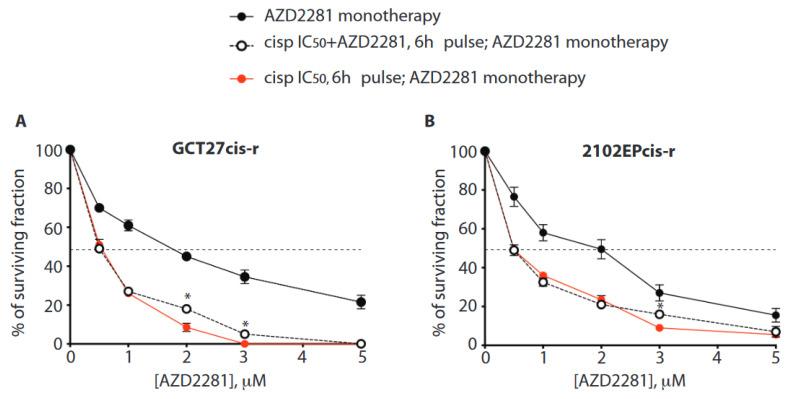
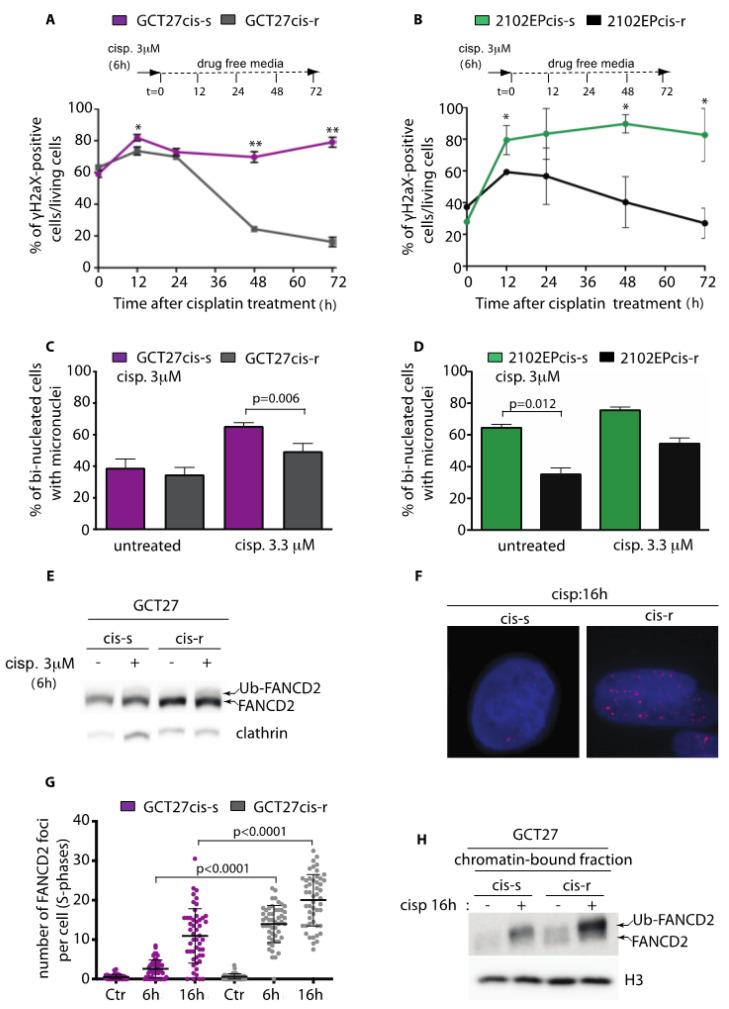
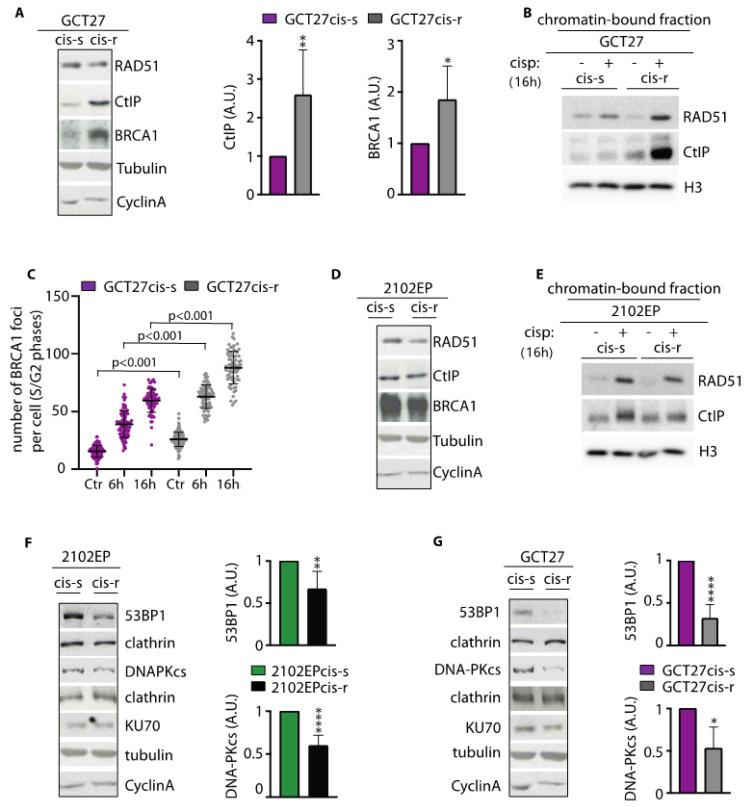
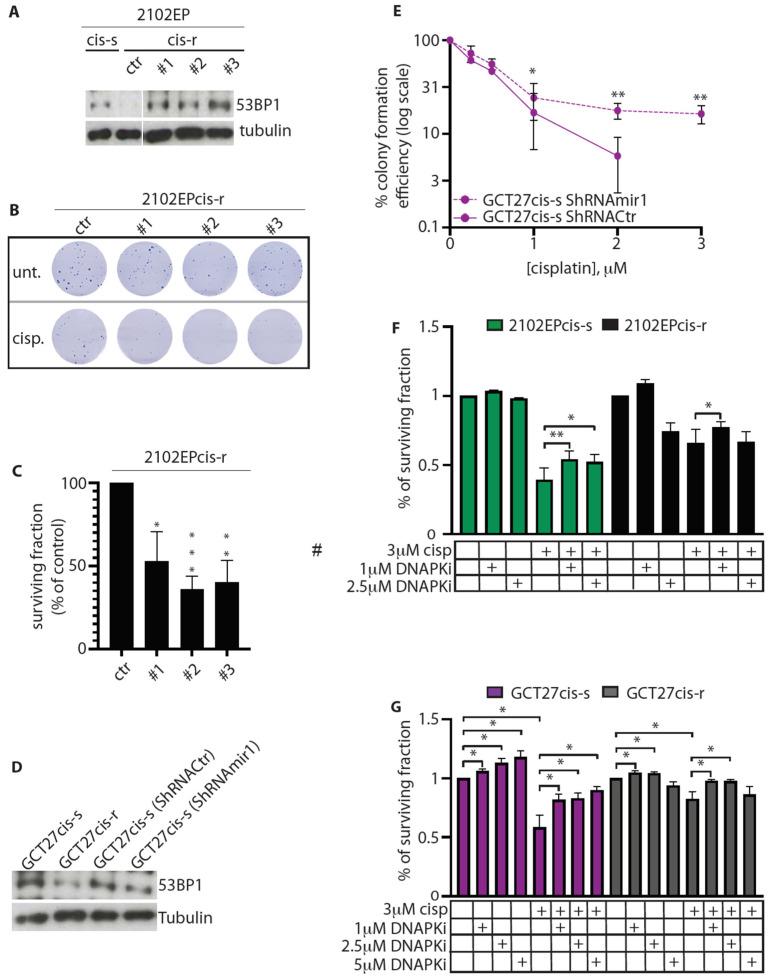
Despite germ cell tumors (GCTs) responding to cisplatin-based chemotherapy at a high rate, a subset of patients does not respond to treatment and have significantly worse prognosis. The biological mechanisms underlying the resistance remain unknown. In this study, by using two TGCT cell lines that have acquired cisplatin resistance after chronic exposure to the drug, we identified some key proteins and mechanisms of acquired resistance. We show that cisplatin-resistant cell lines had a non-homologous end-joining (NHEJ)-less phenotype. This correlated with a reduced basal expression of TP53-binding protein 1 (53BP1) and DNA-dependent protein kinase (DNA-PKcs) proteins and reduced formation of 53BP1 foci after cisplatin treatment. Consistent with these observations, modulation of 53BP1 protein expression altered the cell line's resistance to cisplatin, and inhibition of DNA-PKcs activity antagonized cisplatin cytotoxicity. Dampening of NHEJ was accompanied by a functional increase in the repair of DNA double-strand breaks (DSBs) by the homologous recombination repair pathway. As a result, cisplatin-resistant cells were more resistant to PARP inhibitor (PARPi) monotherapy. Moreover, when PARPi was given in combination with cisplatin, it exerted an additive/synergistic effect, and reduced the cisplatin dose for cytotoxicity. These results suggest that treatment of cisplatin-refractory patients may benefit from low-dose cisplatin therapy combined with PARPi.
尽管生殖细胞肿瘤(GCTs)对基于顺铂的化疗有较高的反应率,但仍有一部分患者对治疗无反应,预后明显较差。耐药的生物学机制尚不清楚。在本研究中,通过使用两种长期暴露于顺铂后获得顺铂耐药性的TGCT细胞系,我们确定了一些获得性耐药的关键蛋白和机制。我们发现顺铂耐药细胞系具有非同源末端连接(NHEJ)较少的表型。这与TP53结合蛋白1(53BP1)和DNA依赖性蛋白激酶(DNA-PKcs)蛋白的基础表达降低以及顺铂处理后53BP1灶形成减少有关。与这些观察结果一致,53BP1蛋白表达的调节改变了细胞系对顺铂的耐药性,而抑制DNA-PKcs活性则拮抗了顺铂的细胞毒性。NHEJ的减弱伴随着同源重组修复途径对DNA双链断裂(DSBs)修复功能的增加。因此,顺铂耐药细胞对PARP抑制剂(PARPi)单药治疗更具抗性。此外,当PARPi与顺铂联合使用时,它发挥了相加/协同作用,并降低了顺铂的细胞毒性剂量。这些结果表明,顺铂难治性患者的治疗可能受益于低剂量顺铂治疗联合PARPi。


 Zotero 插件