
北美出现以“零号地”为发源地的人巴贝斯虫病。
Emerging Human Babesiosis with "Ground Zero" in North America.
作者信息
Yang Yi, Christie Jevan, Köster Liza, Du Aifang, Yao Chaoqun
机构信息
Department of Veterinary Medicine, College of Animal Sciences, Zhejiang Provincial Key Laboratory of Preventive Veterinary Medicine, Zhejiang University, Hangzhou 310058, China.
The Animal Hospital, Murdoch University, 90 South Street, Murdoch, WA 6150, Australia.
出版信息
Microorganisms. 2021 Feb 20;9(2):440. doi: 10.3390/microorganisms9020440.
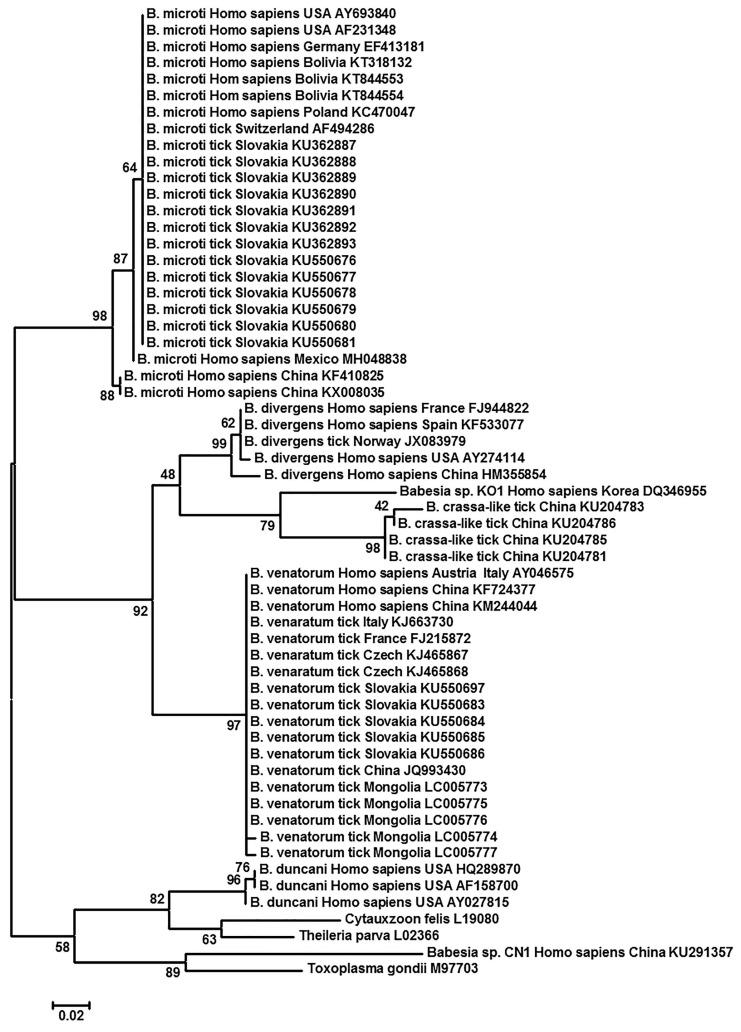
The first case of human babesiosis was reported in the literature in 1957. The clinical disease has sporadically occurred as rare case reports in North America and Europe in the subsequent decades. Since the new millennium, especially in the last decade, many more cases have apparently appeared not only in these regions but also in Asia, South America, and Africa. More than 20,000 cases of human babesiosis have been reported in North America alone. In several cross-sectional surveys, exposure to spp. has been demonstrated within urban and rural human populations with clinical babesiosis reported in both immunocompromised and immunocompetent humans. This review serves to highlight the widespread distribution of these tick-borne pathogens in humans, their tick vectors in readily accessible environments such as parks and recreational areas, and their phylogenetic relationships.
1957年,文献中首次报道了人类巴贝斯虫病病例。在随后的几十年里,这种临床疾病在北美和欧洲偶有发生,病例报告较为罕见。自新千年以来,尤其是在过去十年中,不仅在这些地区,而且在亚洲、南美洲和非洲,明显出现了更多病例。仅在北美就报告了2万多例人类巴贝斯虫病病例。在几项横断面调查中,已证明在城市和农村人群中接触到了 物种,免疫功能低下和免疫功能正常的人均报告有临床巴贝斯虫病。本综述旨在强调这些蜱传病原体在人类中的广泛分布、它们在公园和娱乐区等易于进入的环境中的蜱传播媒介以及它们的系统发育关系。

 Zotero 插件