
高通量蛋白质组学探索低温保存揭示了与冷缺血动力学相关的细胞内活跃过程。
High Throughput Proteomic Exploration of Hypothermic Preservation Reveals Active Processes within the Cell Associated with Cold Ischemia Kinetic.
机构信息
Inserm U1082, F-86000 Poitiers, France.
CHU Poitiers, Service de Biochimie, Pôle BIOSPHARM, F-86000 Poitiers, France.
出版信息
Int J Mol Sci. 2021 Feb 27;22(5):2384. doi: 10.3390/ijms22052384.
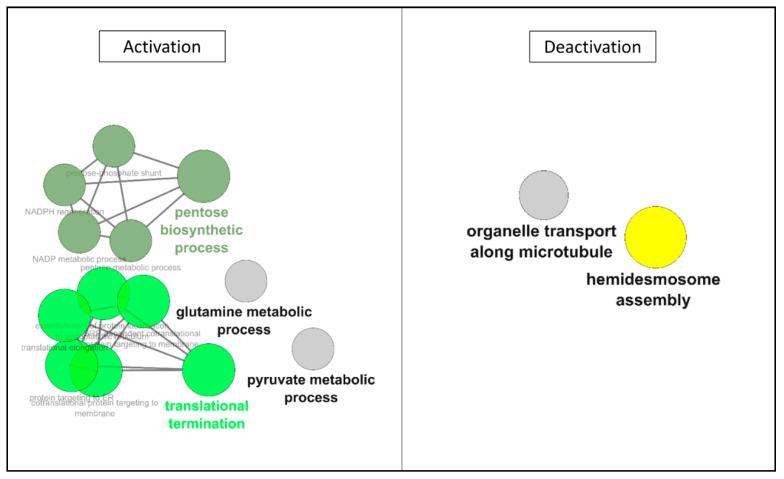
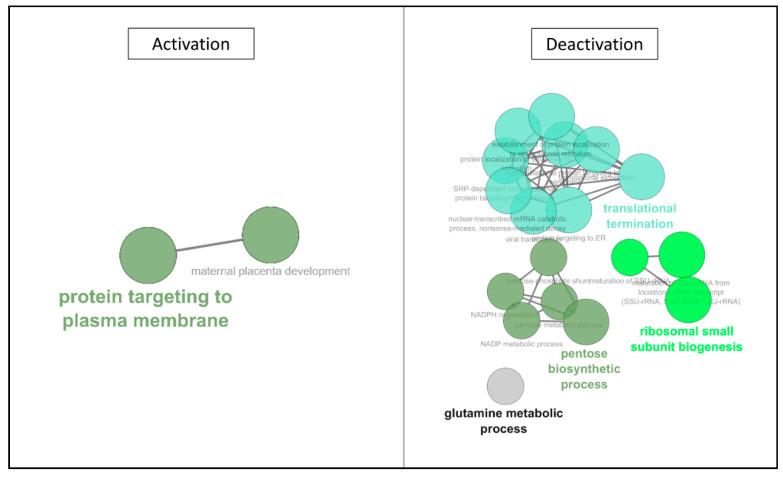
The demand for organs to be transplanted increases pressure on procurement centers, to the detriment of organ quality, increasing complications. New preservation protocols are urgently needed, requiring an in-depth understanding of ischemia-reperfusion mechanisms. We performed a proteomic analysis using LC-MS/MS-TOF data analyzed through R software and Cytoscape's ClueGO application, comparing the proteome of kidney endothelial cells, key cell type, subjected to 3, 6, 12, 19, and 24 h of cold ischemia and 6 h reperfusion. Critical pathways such as energy metabolism, cytoskeleton structure/transport system, and gene transcription/translation were modulated. Important time windows were revealed: a-during the first 3 h, central proteins were upregulated within these pathways; b-the majority of these upregulations were maintained until 12 h cold ischemia time (CIT); c-after that time, the overall decrease in protein expression was observed; d-at reperfusion, proteins expressed in response to cold ischemia were all downregulated. This shows that cold ischemia is not a simple slowing down of metabolism, as deep changes take place within the proteome on major pathways. Time-sensitive expression of key protein reveals possible quality biomarkers as well as potential targets for new strategies to maintain or optimize organ quality.
对器官移植的需求增加了采购中心的压力,这不利于器官质量,增加了并发症。迫切需要新的保存方案,这需要深入了解缺血再灌注机制。我们使用 LC-MS/MS-TOF 数据进行了蛋白质组学分析,通过 R 软件和 Cytoscape 的 ClueGO 应用程序进行分析,比较了肾脏内皮细胞的蛋白质组,这是关键的细胞类型,经过 3、6、12、19 和 24 小时冷缺血和 6 小时再灌注。能量代谢、细胞骨架结构/运输系统和基因转录/翻译等关键途径发生了调节。揭示了重要的时间窗口:a-在最初的 3 小时内,这些途径内的中心蛋白上调;b-这些上调中的大多数一直维持到 12 小时冷缺血时间(CIT);c-此后,观察到蛋白质表达的整体下降;d-在再灌注时,冷缺血反应表达的蛋白质均下调。这表明冷缺血不仅仅是代谢的简单减缓,因为蛋白质组在主要途径上发生了深刻的变化。关键蛋白的时间敏感表达揭示了可能的质量生物标志物以及维持或优化器官质量的新策略的潜在靶点。



 Zotero 插件