
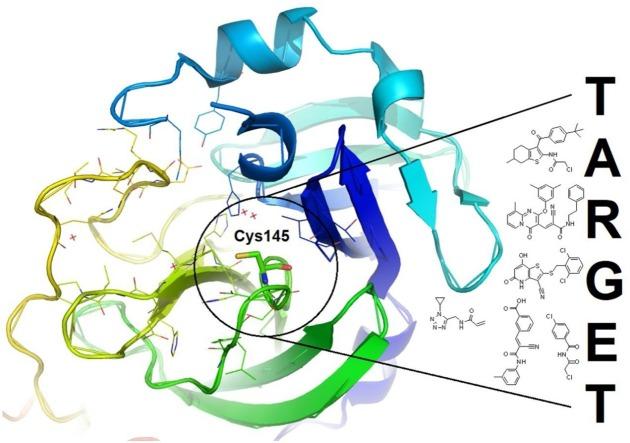
基于对接的虚拟筛选研究旨在通过靶向 SARS-CoV-2 M 的半胱氨酸 145 来实现对其共价抑制。
Docking-based virtual screening studies aiming at the covalent inhibition of SARS-CoV-2 M by targeting the cysteine 145.
机构信息
Univ Lyon, Université Claude Bernard Lyon 1, INSA Lyon, CPE Lyon, UMR 5246, CNRS, ICBMS, Institut de Chimie et de Biochimie Moléculaires et Supramoléculaires, Chimie Organique et Bioorganique, Bât. E. Lederer, 1 rue Victor Grignard, F-69622, Villeurbanne, France.
Univ Lyon, Université Claude Bernard Lyon 1, INSA Lyon, CPE Lyon, UMR 5246, CNRS, ICBMS, Institut de Chimie et de Biochimie Moléculaires et Supramoléculaires, Chimie Organique et Bioorganique, Bât. E. Lederer, 1 rue Victor Grignard, F-69622, Villeurbanne, France.
出版信息
Comput Biol Chem. 2021 Jun;92:107463. doi: 10.1016/j.compbiolchem.2021.107463. Epub 2021 Feb 20.
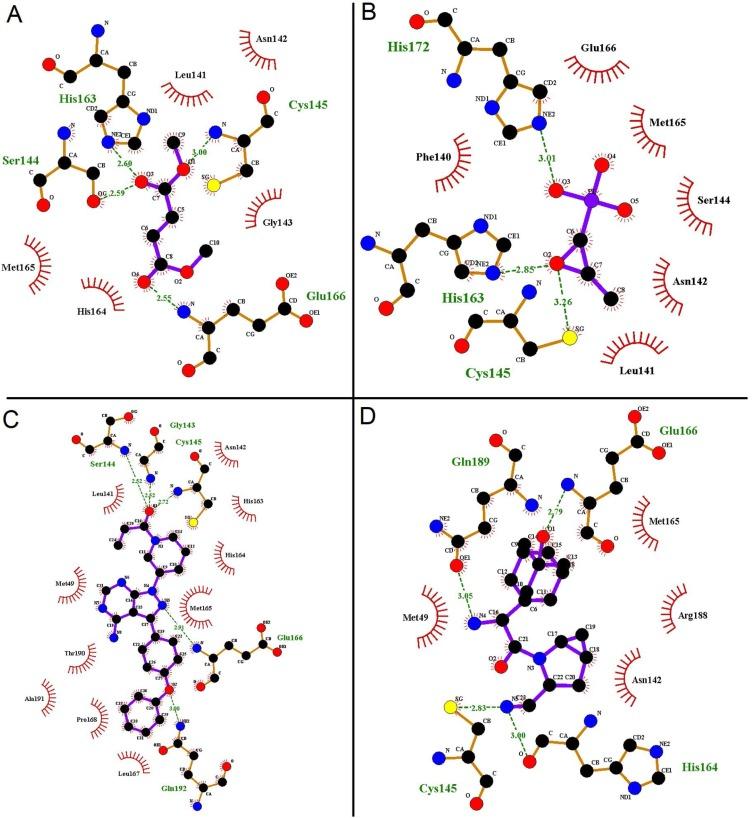
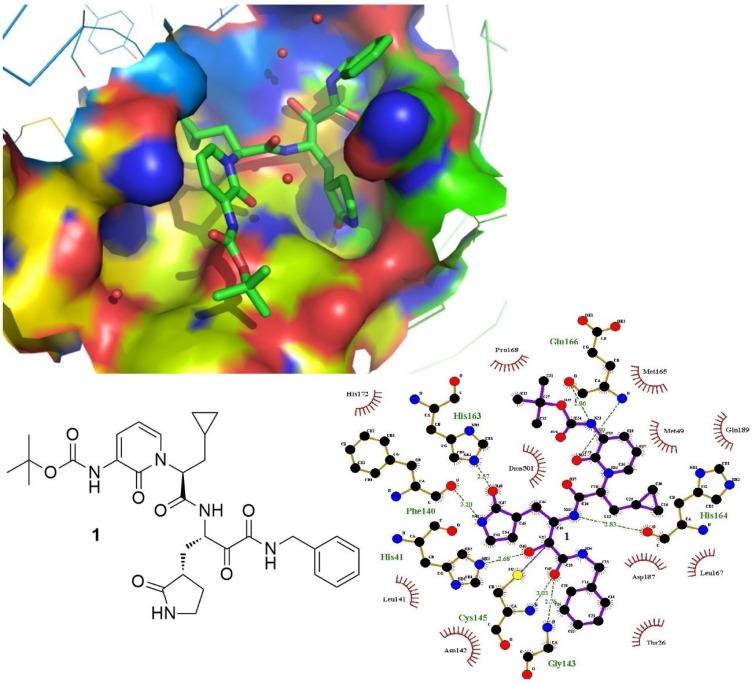
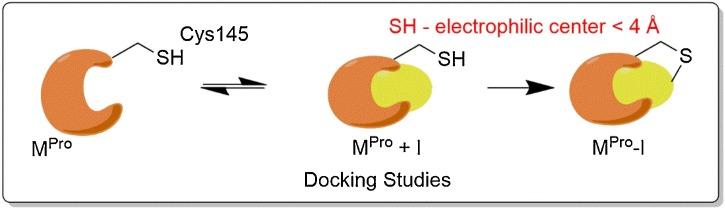
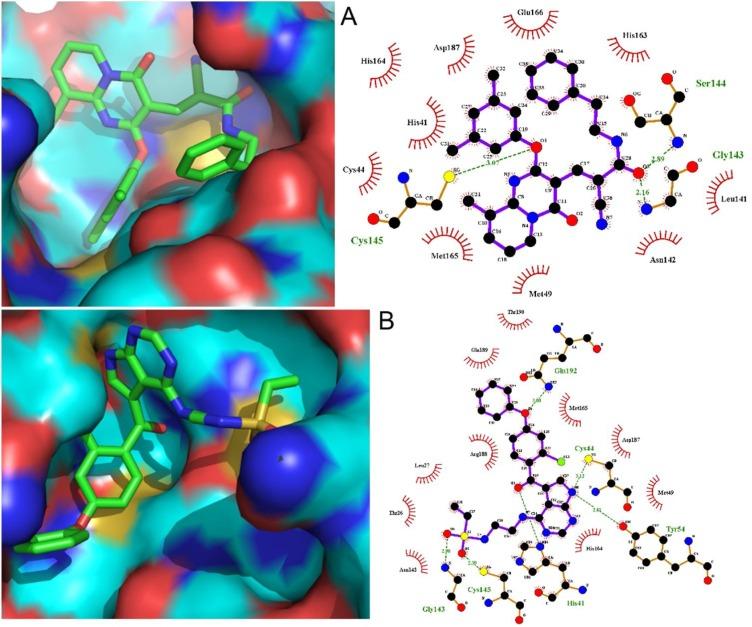
The severe acute respiratory syndrome coronavirus 2 (SARS-CoV-2) is responsible for the COVID-19 which has infected millions of people worldwide. The main protease of SARS-CoV-2 (M) has been recognized as a key target for the development of antiviral compounds. Taking advantage of the X-ray crystal complex with reversible covalent inhibitors interacting with the catalytic cysteine 145 (Cys145), we explored flexible docking studies to select alternative compounds able to target this residue as covalent inhibitors. First, docking studies of three known electrophilic compounds led to results consistent with co-crystallized data validating the method for SARS-CoV-2 M covalent inhibition. Then, libraries of soft electrophiles (overall 41 757 compounds) were submitted to docking-based virtual screening resulting in the identification of 17 molecules having their electrophilic group close to the Cys145 residue. We also investigated flexible docking studies of a focused approved covalent drugs library including 32 compounds with various electrophilic functional groups. Among them, the calculations resulted in the identification of four compounds, namely dimethylfumarate, fosfomycin, ibrutinib and saxagliptin, able first, to bind to the active site of the protein and second, to form a covalent bond with the catalytic cysteine.
严重急性呼吸综合征冠状病毒 2(SARS-CoV-2)是导致 COVID-19 的罪魁祸首,该病毒已在全球范围内感染了数百万人。SARS-CoV-2 的主要蛋白酶(M)已被认为是开发抗病毒化合物的关键靶标。利用与催化半胱氨酸 145(Cys145)相互作用的可逆共价抑制剂的 X 射线晶体复合物,我们探索了柔性对接研究,以选择能够靶向该残基作为共价抑制剂的替代化合物。首先,对三种已知亲电化合物的对接研究结果与共结晶数据一致,验证了该方法用于 SARS-CoV-2 M 共价抑制的有效性。然后,对软亲电体文库(总共 41757 种化合物)进行基于对接的虚拟筛选,鉴定出 17 种化合物,其亲电基团靠近 Cys145 残基。我们还研究了聚焦已批准共价药物文库的柔性对接,其中包括 32 种具有各种亲电官能团的化合物。其中,计算结果确定了四种化合物,即富马酸二甲酯、膦霉素、依鲁替尼和沙格列汀,它们首先能够结合到蛋白质的活性部位,其次能够与催化半胱氨酸形成共价键。


 Zotero 插件