
非酒精性脂肪性肝炎小鼠模型中疾病进展的定量、无创性磁共振成像特征分析
Quantitative, noninvasive MRI characterization of disease progression in a mouse model of non-alcoholic steatohepatitis.
作者信息
Waghorn Philip A, Ferreira Diego S, Erstad Derek J, Rotile Nicholas J, Masia Ricard, Jones Chloe M, Tu Chuantao, Sojoodi Mozhdeh, Chen Yin-Ching I, Schlerman Franklin, Wellen Jeremy, Martinez Robert V P, Tanabe Kenneth K, Fuchs Bryan C, Caravan Peter
机构信息
Department of Radiology, Massachusetts General Hospital, Athinoula A. Martinos Center for Biomedical Imaging, Institute for Innovation in Imaging, Harvard Medical School, 149 13th St., Boston, MA, 02129, USA.
School of Pharmacy, Universidade Federal de Minas Gerais, Av. Presidente Antônio Carlos, 6627, Pampulha, Belo Horizonte, Minas Gerais, Brazil.
出版信息
Sci Rep. 2021 Mar 17;11(1):6105. doi: 10.1038/s41598-021-85679-4.
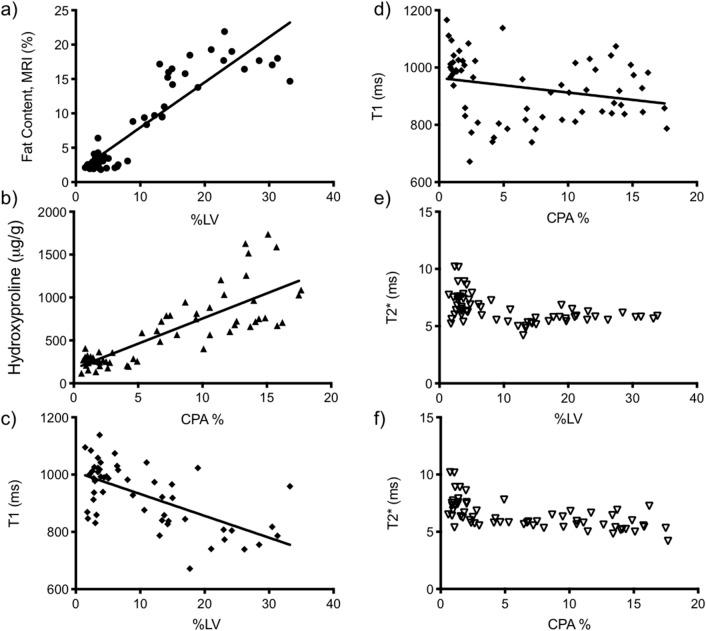
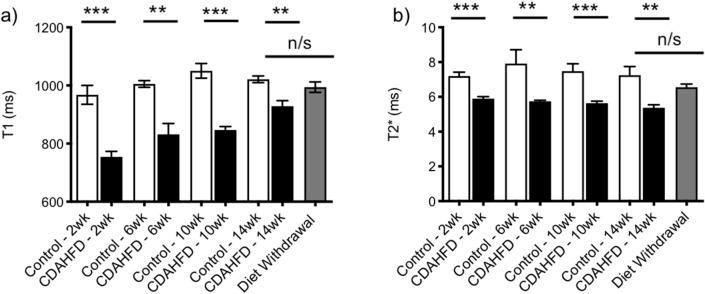
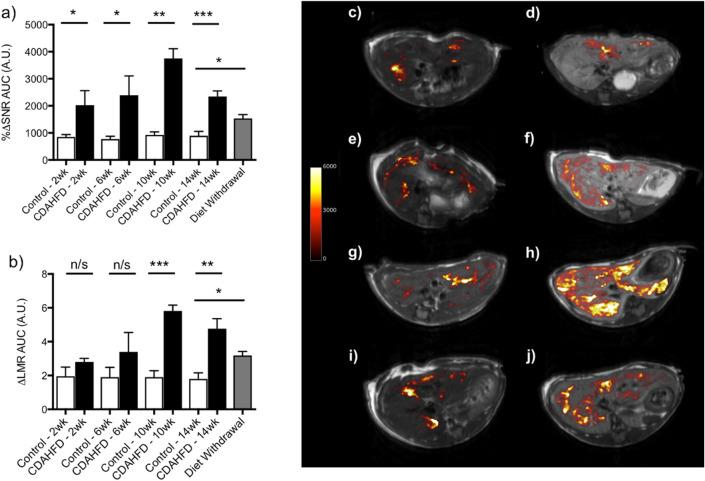
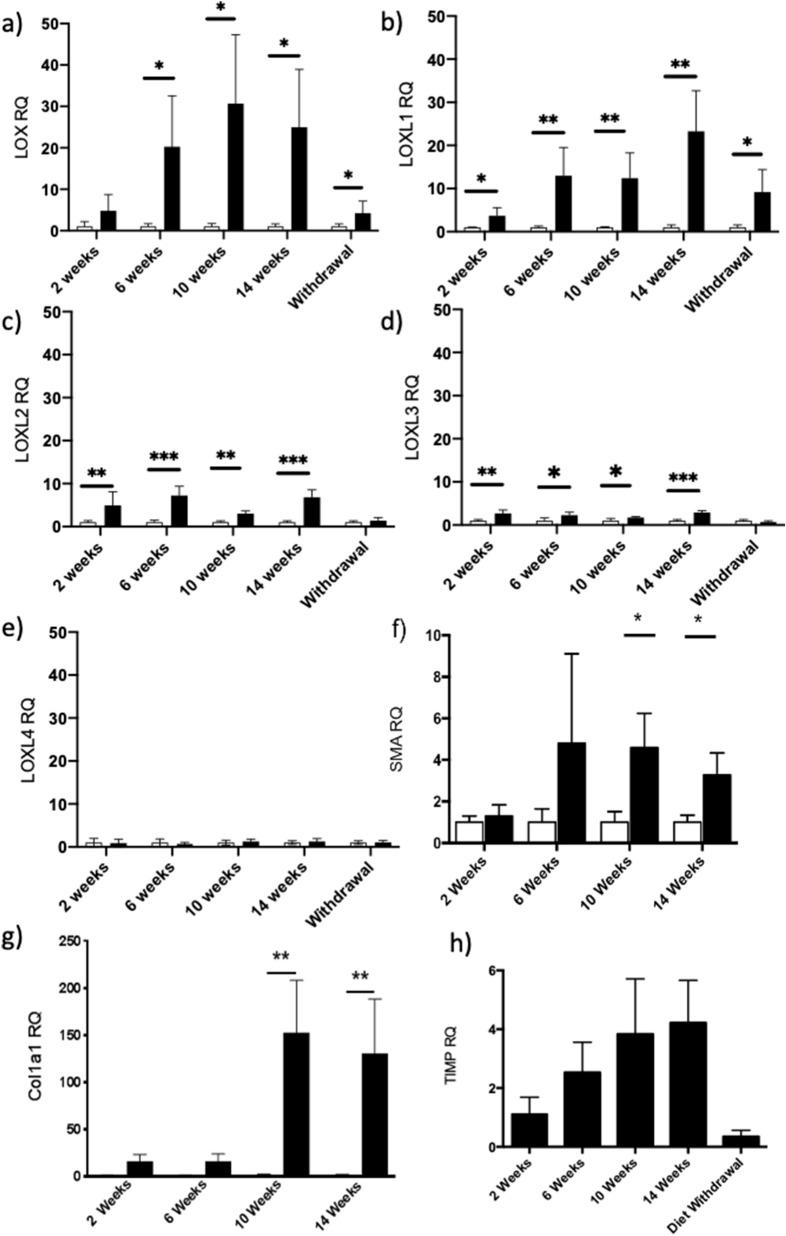
Non-alcoholic steatohepatitis (NASH) is an increasing cause of chronic liver disease characterized by steatosis, inflammation, and fibrosis which can lead to cirrhosis, hepatocellular carcinoma, and mortality. Quantitative, noninvasive methods for characterizing the pathophysiology of NASH at both the preclinical and clinical level are sorely needed. We report here a multiparametric magnetic resonance imaging (MRI) protocol with the fibrogenesis probe Gd-Hyd to characterize fibrotic disease activity and steatosis in a common mouse model of NASH. Mice were fed a choline-deficient, L-amino acid-defined, high-fat diet (CDAHFD) to induce NASH with advanced fibrosis. Mice fed normal chow and CDAHFD underwent MRI after 2, 6, 10 and 14 weeks to measure liver T1, T2*, fat fraction, and dynamic T1-weighted Gd-Hyd enhanced imaging of the liver. Steatosis, inflammation, and fibrosis were then quantified by histology. NASH and fibrosis developed quickly in CDAHFD fed mice with strong correlation between morphometric steatosis quantification and liver fat estimated by MRI (r = 0.90). Sirius red histology and collagen quantification confirmed increasing fibrosis over time (r = 0.82). Though baseline T1 and T2* measurements did not correlate with fibrosis, Gd-Hyd signal enhancement provided a measure of the extent of active fibrotic disease progression and correlated strongly with lysyl oxidase expression. Gd-Hyd MRI accurately detects fibrogenesis in a mouse model of NASH with advanced fibrosis and can be combined with other MR measures, like fat imaging, to more accurately assess disease burden.
非酒精性脂肪性肝炎(NASH)是慢性肝病日益常见的病因,其特征为脂肪变性、炎症和纤维化,可导致肝硬化、肝细胞癌和死亡。目前迫切需要在临床前和临床水平上定量、无创地表征NASH病理生理学的方法。我们在此报告一种使用纤维化探针钆-羟丙基二膦酸盐(Gd-Hyd)的多参数磁共振成像(MRI)方案,以表征NASH常见小鼠模型中的纤维化疾病活动和脂肪变性。给小鼠喂食胆碱缺乏、L-氨基酸限定的高脂饮食(CDAHFD)以诱导具有晚期纤维化的NASH。喂食正常饲料和CDAHFD的小鼠在2、6、10和14周后接受MRI检查,以测量肝脏T1、T2*、脂肪分数以及肝脏的动态T1加权Gd-Hyd增强成像。然后通过组织学对脂肪变性、炎症和纤维化进行定量分析。在喂食CDAHFD的小鼠中,NASH和纤维化迅速发展,形态学脂肪变性定量与MRI估计的肝脏脂肪之间具有很强的相关性(r = 0.90)。天狼星红组织学和胶原蛋白定量证实纤维化随时间增加(r = 0.82)。尽管基线T1和T2*测量值与纤维化无关,但Gd-Hyd信号增强提供了一种测量活动性纤维化疾病进展程度的方法,并且与赖氨酰氧化酶表达密切相关。Gd-Hyd MRI能够准确检测具有晚期纤维化的NASH小鼠模型中的纤维生成,并且可以与其他MR测量方法(如脂肪成像)相结合,以更准确地评估疾病负担。


 Zotero 插件