
基于迁移学习的集成支持向量机模型,用于使用肺部计算机断层扫描数据自动检测 COVID-19。
Transfer learning-based ensemble support vector machine model for automated COVID-19 detection using lung computerized tomography scan data.
机构信息
Computer Science and Engineering Department, Indian Institute of Technology Delhi, New Delhi, 110016, India.
Electrical Engineering Department, Indian Institute of Technology Delhi, New Delhi, 110016, India.
出版信息
Med Biol Eng Comput. 2021 Apr;59(4):825-839. doi: 10.1007/s11517-020-02299-2. Epub 2021 Mar 18.
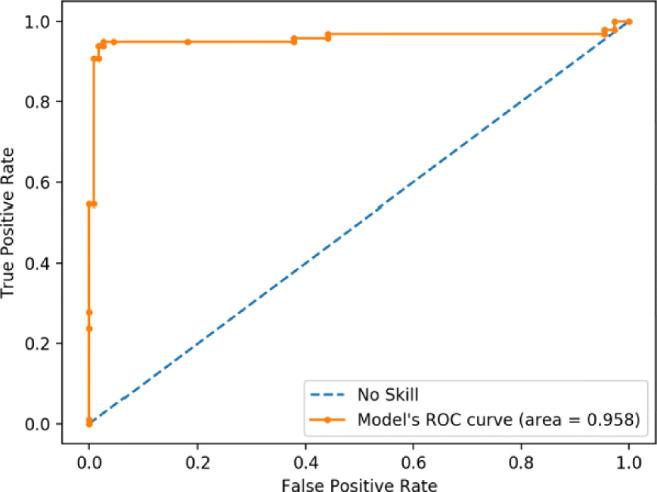
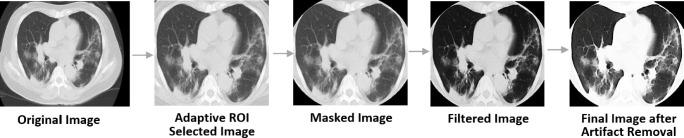
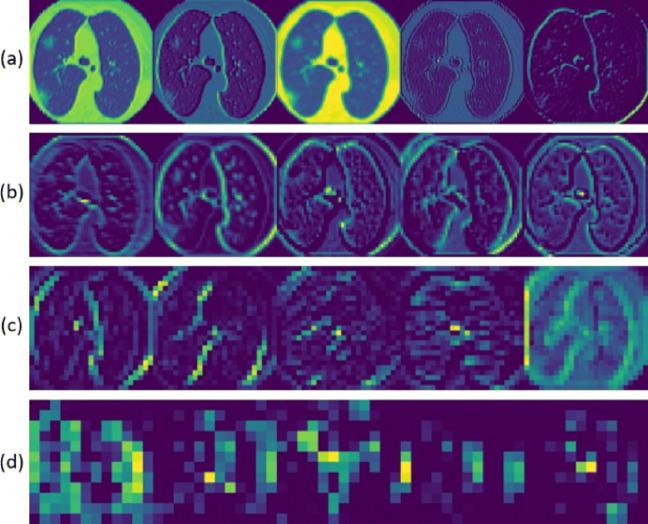
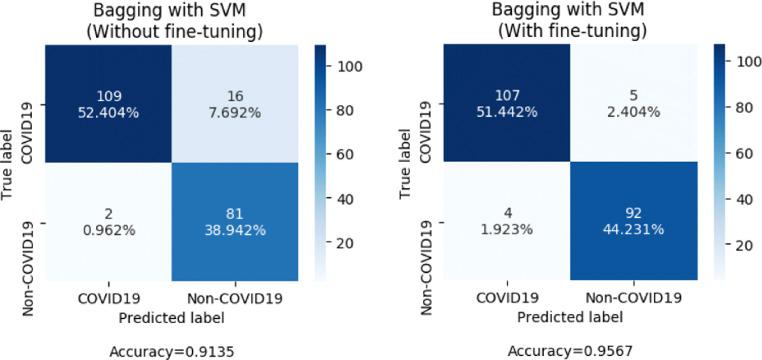
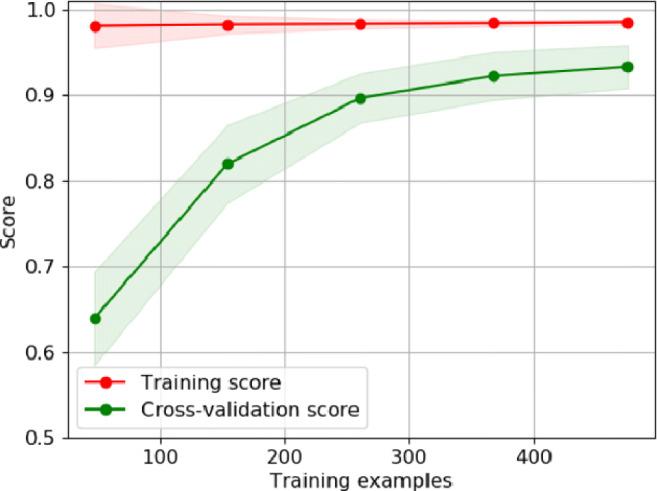
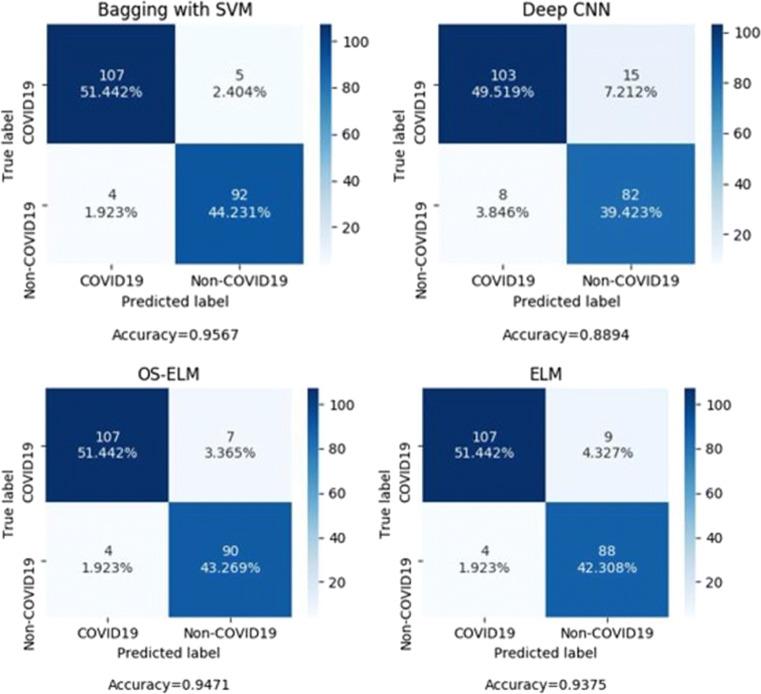
The novel discovered disease coronavirus popularly known as COVID-19 is caused due to severe acute respiratory syndrome coronavirus 2 (SARS-CoV-2) and declared a pandemic by the World Health Organization (WHO). An early-stage detection of COVID-19 is crucial for the containment of the pandemic it has caused. In this study, a transfer learning-based COVID-19 screening technique is proposed. The motivation of this study is to design an automated system that can assist medical staff especially in areas where trained staff are outnumbered. The study investigates the potential of transfer learning-based models for automatically diagnosing diseases like COVID-19 to assist the medical force, especially in times of an outbreak. In the proposed work, a deep learning model, i.e., truncated VGG16 (Visual Geometry Group from Oxford) is implemented to screen COVID-19 CT scans. The VGG16 architecture is fine-tuned and used to extract features from CT scan images. Further principal component analysis (PCA) is used for feature selection. For the final classification, four different classifiers, namely deep convolutional neural network (DCNN), extreme learning machine (ELM), online sequential ELM, and bagging ensemble with support vector machine (SVM) are compared. The best performing classifier bagging ensemble with SVM within 385 ms achieved an accuracy of 95.7%, the precision of 95.8%, area under curve (AUC) of 0.958, and an F1 score of 95.3% on 208 test images. The results obtained on diverse datasets prove the superiority and robustness of the proposed work. A pre-processing technique has also been proposed for radiological data. The study further compares pre-trained CNN architectures and classification models against the proposed technique.
新型发现的疾病冠状病毒,通常称为 COVID-19,是由严重急性呼吸系统综合症冠状病毒 2(SARS-CoV-2)引起,并被世界卫生组织(WHO)宣布为大流行。早期发现 COVID-19 对于遏制其造成的大流行至关重要。在这项研究中,提出了一种基于迁移学习的 COVID-19 筛查技术。本研究的目的是设计一种自动化系统,以协助医务人员,特别是在医务人员短缺的地区。本研究探讨了基于迁移学习的模型在自动诊断 COVID-19 等疾病方面的潜力,以协助医疗力量,特别是在疫情爆发期间。在提出的工作中,实现了一种深度学习模型,即截断的 VGG16(牛津视觉几何组),用于筛查 COVID-19 CT 扫描。微调 VGG16 架构,并用于从 CT 扫描图像中提取特征。进一步使用主成分分析(PCA)进行特征选择。对于最终分类,比较了四种不同的分类器,即深度卷积神经网络(DCNN)、极限学习机(ELM)、在线顺序 ELM 和袋装集成与支持向量机(SVM)。在 208 张测试图像上,385 毫秒内性能最佳的分类器袋装集成与 SVM 达到了 95.7%的准确率、95.8%的精度、0.958 的 AUC 和 95.3%的 F1 分数。在不同数据集上获得的结果证明了所提出的工作的优越性和鲁棒性。还提出了一种用于放射学数据的预处理技术。该研究进一步比较了预训练的 CNN 架构和分类模型与所提出的技术。



 Zotero 插件