
刺突蛋白突变和 ACE2 等位基因变异影响针对 SARS-CoV-2 的靶向治疗策略。
Mutations in spike protein and allele variations in ACE2 impact targeted therapy strategies against SARS-CoV-2.
机构信息
Department of Molecular Cell Biology & Toxicology, Center for Global Health, School of Public Health, Nanjing Medical University, Nanjing, Jiangsu 211166, China.
Jiangsu Key Laboratory for Biodiversity and Biotechnology, College of Life Sciences, Nanjing Normal University, Nanjing, Jiangsu 210023, China.
出版信息
Zool Res. 2021 Mar 18;42(2):170-181. doi: 10.24272/j.issn.2095-8137.2020.301.
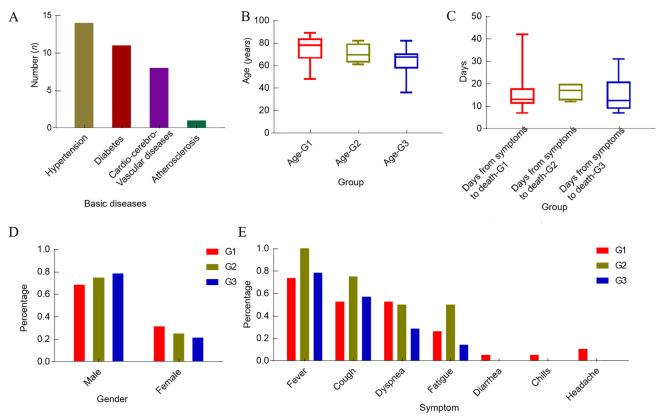
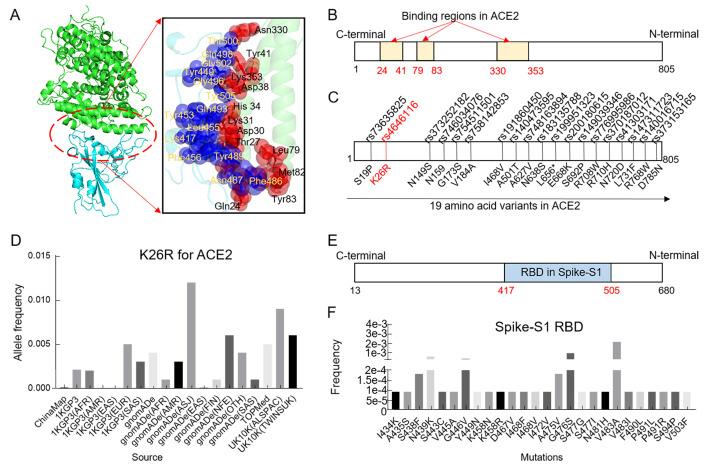
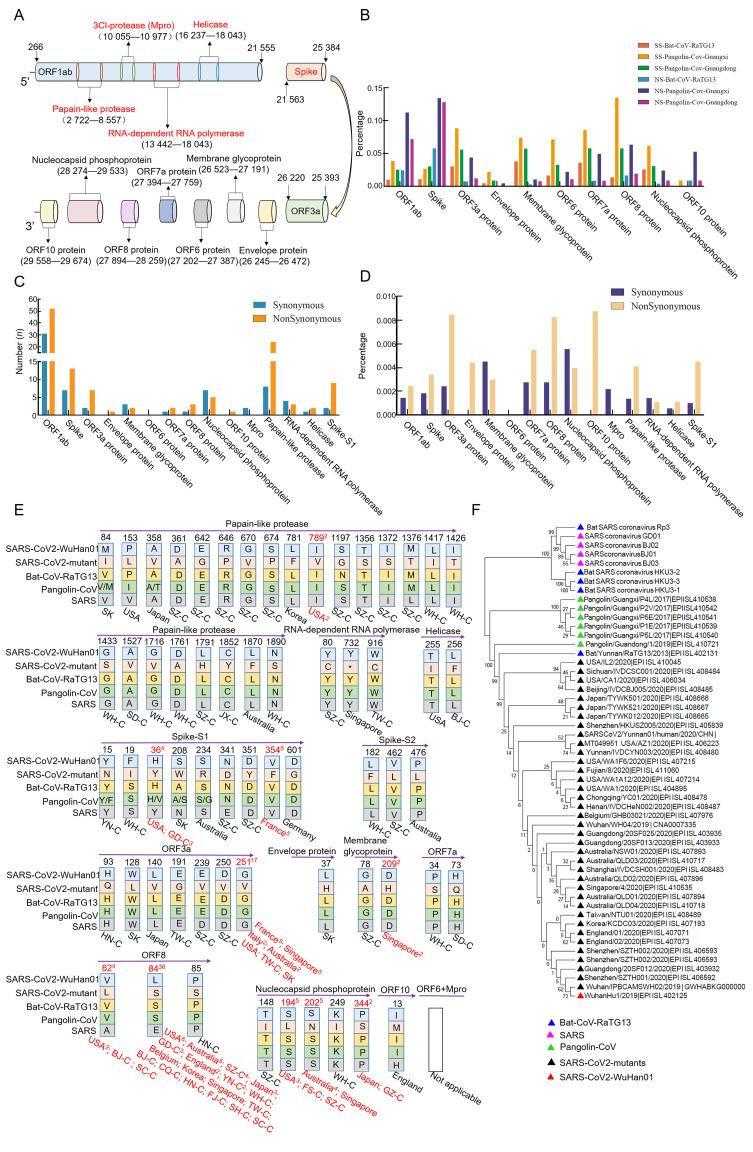
Coronavirus disease 2019 (COVID-19), which is caused by severe acute respiratory syndrome coronavirus 2 (SARS-CoV-2), has spread rapidly worldwide with high rates of transmission and substantial mortality. To date, however, no effective treatments or enough vaccines for COVID-19 are available. The roles of angiotensin converting enzyme 2 (ACE2) and spike protein in the treatment of COVID-19 are major areas of research. In this study, we explored the potential of ACE2 and spike protein as targets for the development of antiviral agents against SARS-CoV-2. We analyzed clinical data, genetic data, and receptor binding capability. Clinical data revealed that COVID-19 patients with comorbidities related to an abnormal renin-angiotensin system exhibited more early symptoms and poorer prognoses. However, the relationship between ACE2 expression and COVID-19 progression is still not clear. Furthermore, if ACE2 is not a good targetable protein, it would not be applicable across a wide range of populations. The spike-S1 receptor-binding domain that interacts with ACE2 showed various amino acid mutations based on sequence analysis. We identified two spike-S1 point mutations (V354F and V470A) by receptor-ligand docking and binding enzyme-linked immunosorbent assays. These variants enhanced the binding of the spike protein to ACE2 receptors and were potentially associated with increased infectivity. Importantly, the number of patients infected with the V354F and V470A mutants has increased with the development of the SARS-CoV-2 pandemic. These results suggest that ACE2 and spike-S1 are likely not ideal targets for the design of peptide drugs to treat COVID-19 in different populations.
新型冠状病毒病(COVID-19)由严重急性呼吸综合征冠状病毒 2(SARS-CoV-2)引起,在全球范围内迅速传播,具有高传播率和大量死亡率。然而,迄今为止,尚无针对 COVID-19 的有效治疗方法或足够的疫苗。血管紧张素转换酶 2(ACE2)和刺突蛋白在 COVID-19 治疗中的作用是主要的研究领域。在这项研究中,我们探讨了 ACE2 和刺突蛋白作为开发针对 SARS-CoV-2 的抗病毒药物的靶标的潜力。我们分析了临床数据、遗传数据和受体结合能力。临床数据显示,与异常肾素-血管紧张素系统相关的合并症的 COVID-19 患者表现出更早的症状和更差的预后。然而,ACE2 表达与 COVID-19 进展之间的关系尚不清楚。此外,如果 ACE2 不是一个好的靶向蛋白,那么它就不适用于广泛的人群。与 ACE2 相互作用的刺突-S1 受体结合域根据序列分析显示出各种氨基酸突变。我们通过受体-配体对接和结合酶联免疫吸附试验鉴定了两个刺突-S1 点突变(V354F 和 V470A)。这些变体增强了刺突蛋白与 ACE2 受体的结合,并且可能与感染性增加有关。重要的是,随着 SARS-CoV-2 大流行的发展,感染 V354F 和 V470A 突变体的患者数量有所增加。这些结果表明,ACE2 和刺突-S1 可能不是针对不同人群设计用于治疗 COVID-19 的肽类药物的理想靶标。


 Zotero 插件