
能量代谢和线粒体氧化还原状态的差异是高脂饮食喂养大鼠肥胖易感性差异的原因。
Differences in energy metabolism and mitochondrial redox status account for the differences in propensity for developing obesity in rats fed on high-fat diet.
作者信息
Lu Yipin, Li Yingrui, Sun Yongjuan, Ma Shuhua, Zhang Kai, Tang Xue, Chen Ailing
机构信息
State Key Laboratory of Food Science and Technology Jiangnan University Wuxi China.
School of Food Science and Technology Jiangnan University Wuxi China.
出版信息
Food Sci Nutr. 2021 Jan 23;9(3):1603-1613. doi: 10.1002/fsn3.2134. eCollection 2021 Mar.
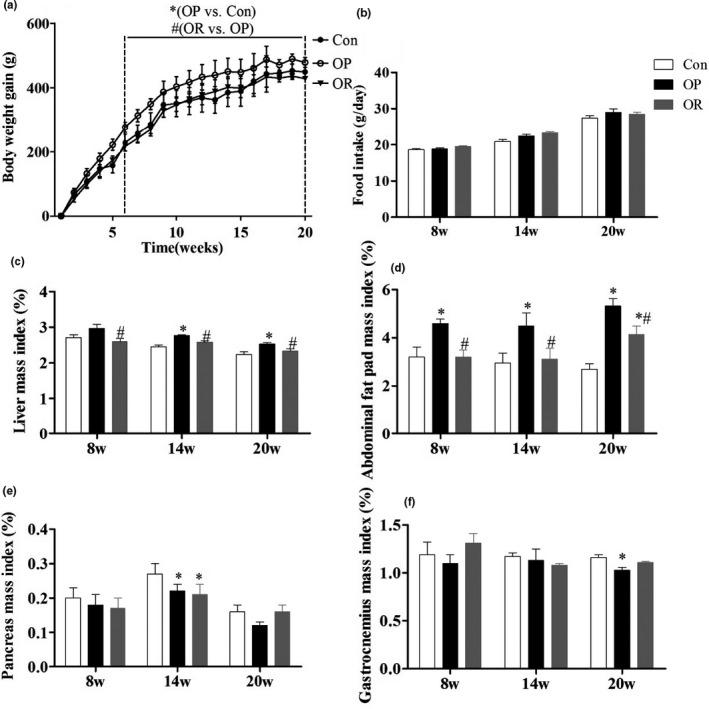
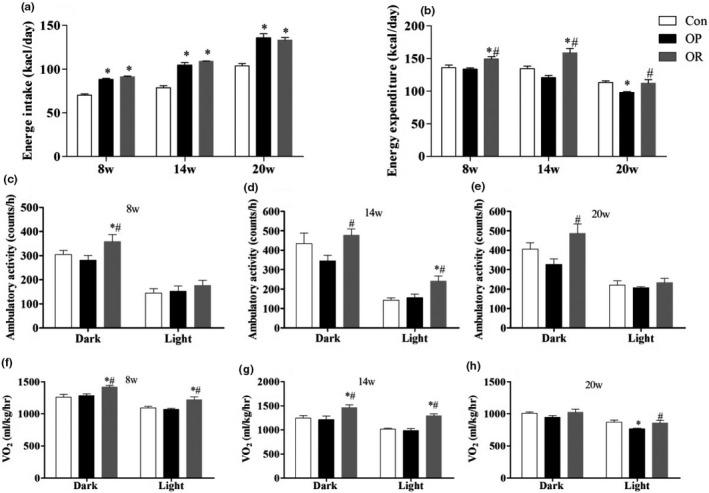
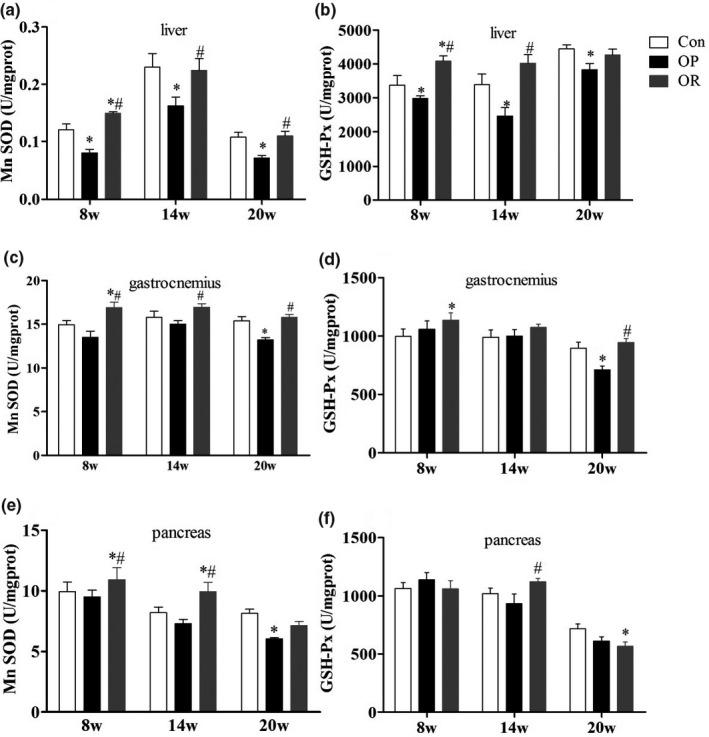
Obesity is a metabolic disease that is accompanied by oxidative stress. Mitochondrial dysfunction is closely associated with the occurrence and development of obesity. However, it is unclear if there are differences in mitochondrial redox homeostasis and energy metabolism between obesity-prone (OP) and obesity-resistant (OR) individuals and if these differences account for the different susceptibilities to developing obesity. The present study aimed to compare the regulation of energy metabolism between OP and OR rats during high-fat diet (HFD)-induced oxidative stress. Male Sprague Dawley rats were randomly divided into the control group and the HFD group. The HFD group was further divided into the OP and OR groups based on body weight gain (upper 1/3 for OP; lower 1/3 for OR) after eight weeks on HFD. Rats were sacrificed at the 8th and 20th week, and serum and organs were collected. At 8 weeks, HFD decreased mitochondrial antioxidant enzyme activity and increased the production of ROS in the OP rats, which was accompanied by unusual mitochondrial oxidative phosphorylation, reduced mitochondrial membrane potential (MMP), and decreased ATP production. When the feeding period was extended beyond the 8 weeks, the energy expenditure of the OP rats reduced further, resulting in elevated blood lipids and glucose levels and increased body weight. In contrast, the OR rats had higher mitochondrial antioxidant enzyme activity and normal redox homeostasis throughout the period, which was beneficial in energy utilization and ATP production. Thus, the increase in energy expenditure in the OR rats reduced the HFD-induced weight gain. Mitochondrial function and antioxidant defense might be involved in the different propensities for developing obesity. Consequently, the ability of OR rats to resist obesity may be attributed to their ability to maintain mitochondrial function and redox balance.
肥胖是一种伴有氧化应激的代谢性疾病。线粒体功能障碍与肥胖的发生发展密切相关。然而,尚不清楚易肥胖(OP)个体和抗肥胖(OR)个体在 mitochondrial redox homeostasis 和能量代谢方面是否存在差异,以及这些差异是否导致了对肥胖易感性的不同。本研究旨在比较高脂饮食(HFD)诱导氧化应激期间 OP 和 OR 大鼠能量代谢的调节情况。将雄性 Sprague Dawley 大鼠随机分为对照组和 HFD 组。HFD 组在高脂饮食 8 周后根据体重增加情况(OP 为上 1/3;OR 为下 1/3)进一步分为 OP 组和 OR 组。在第 8 周和第 20 周处死大鼠,收集血清和器官。在第 8 周时,HFD 降低了 OP 大鼠的线粒体抗氧化酶活性,增加了 ROS 的产生,同时伴有异常的线粒体氧化磷酸化、线粒体膜电位(MMP)降低和 ATP 产生减少。当喂养期延长至 8 周以上时,OP 大鼠的能量消耗进一步降低,导致血脂和血糖水平升高以及体重增加。相比之下,OR 大鼠在此期间线粒体抗氧化酶活性较高,氧化还原稳态正常,这有利于能量利用和 ATP 产生。因此,OR 大鼠能量消耗的增加减少了 HFD 诱导的体重增加。线粒体功能和抗氧化防御可能参与了肥胖发生的不同倾向。因此,OR 大鼠抵抗肥胖的能力可能归因于它们维持线粒体功能和氧化还原平衡的能力。

 Zotero 插件