
抗生素治疗后抗生素特异性耐药基因的扩增与持续存在。
Expansion and persistence of antibiotic-specific resistance genes following antibiotic treatment.
作者信息
Kang Kang, Imamovic Lejla, Misiakou Maria-Anna, Bornakke Sørensen Maria, Heshiki Yoshitaro, Ni Yueqiong, Zheng Tingting, Li Jun, Ellabaan Mostafa M H, Colomer-Lluch Marta, Rode Anne A, Bytzer Peter, Panagiotou Gianni, Sommer Morten O A
机构信息
Novo Nordisk Foundation Center for Biosustainability,Technical University of Denmark, Lyngby, Denmark.
Leibniz Institute for Natural Product Research and Infection Biology, Systems Biology and Bioinformatics - Hans Knoell Institute, Jena, Germany.
出版信息
Gut Microbes. 2021 Jan-Dec;13(1):1-19. doi: 10.1080/19490976.2021.1900995.
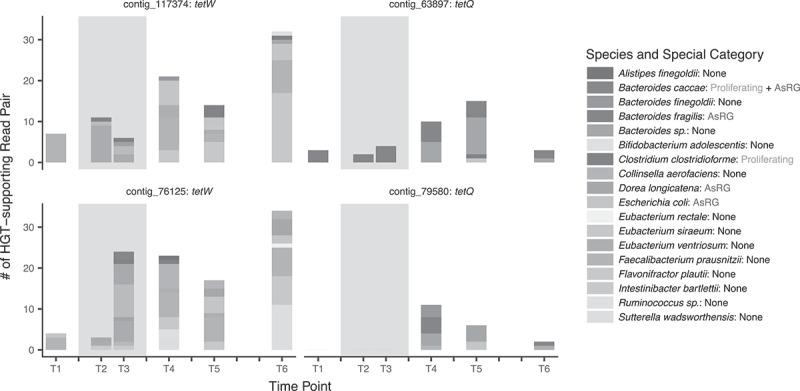
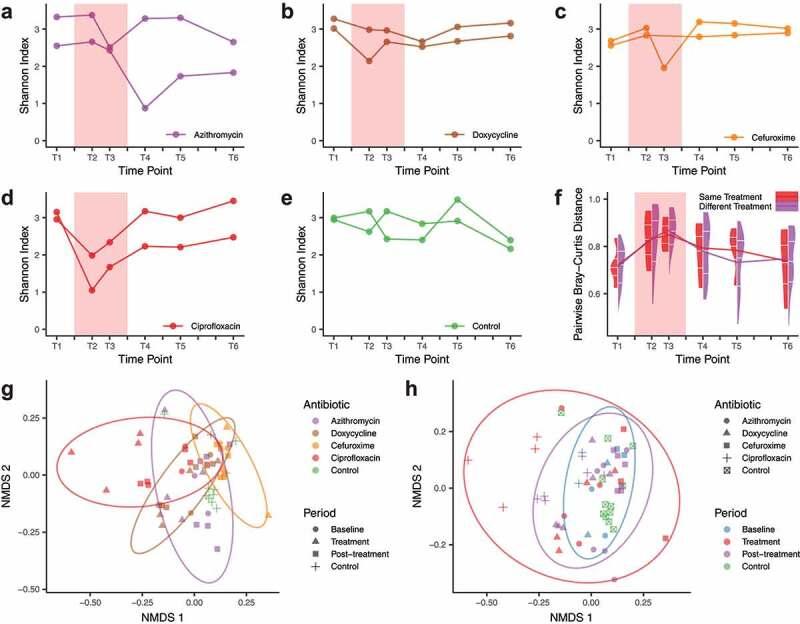
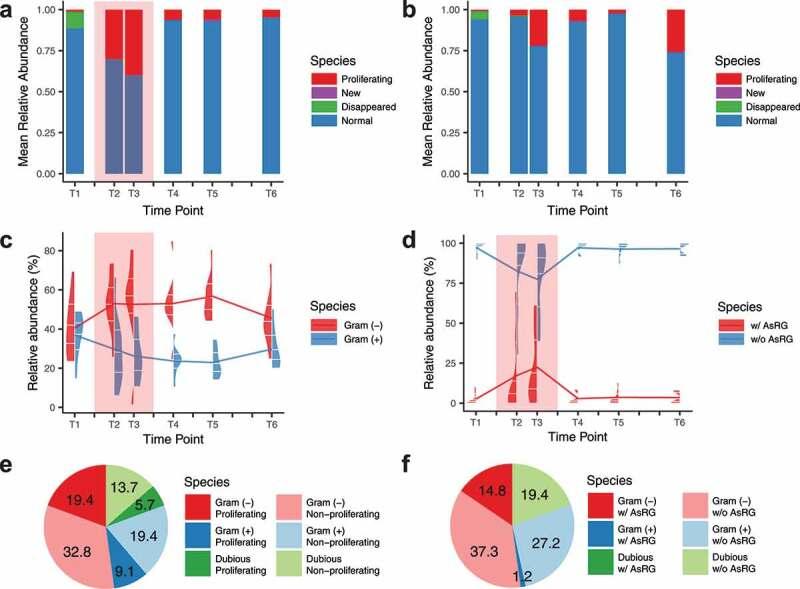
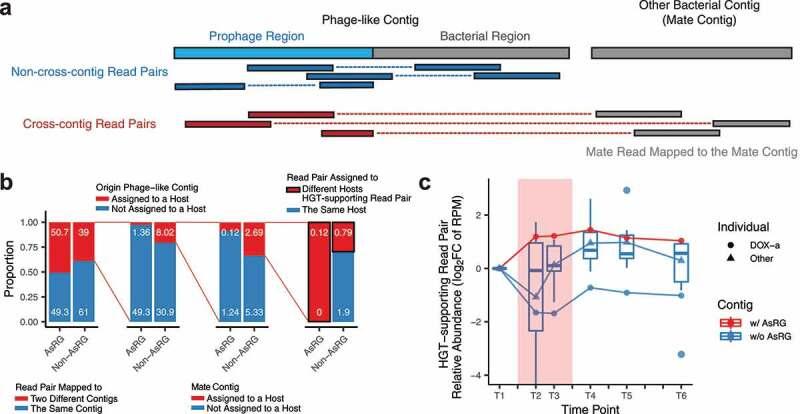
Oral antibiotics are commonly prescribed to non-hospitalized adults. However, antibiotic-induced changes in the human gut microbiome are often investigated in cohorts with preexisting health conditions and/or concomitant medication, leaving the effects of antibiotics not completely understood. We used a combination of omic approaches to comprehensively assess the effects of antibiotics on the gut microbiota and particularly the gut resistome of a small cohort of healthy adults. We observed that 3 to 19 species per individual proliferated during antibiotic treatment and Gram-negative species expanded significantly in relative abundance. While the overall relative abundance of antibiotic resistance gene homologs did not significantly change, antibiotic-specific gene homologs with presumed resistance toward the administered antibiotics were common in proliferating species and significantly increased in relative abundance. Virome sequencing and plasmid analysis showed an expansion of antibiotic-specific resistance gene homologs even 3 months after antibiotic administration, while paired-end read analysis suggested their dissemination among different species. These results suggest that antibiotic treatment can lead to a persistent expansion of antibiotic resistance genes in the human gut microbiota and provide further data in support of good antibiotic stewardship.: ARG - Antibiotic resistance gene homolog; AsRG - Antibiotic-specific resistance gene homolog; AZY - Azithromycin; CFX - Cefuroxime; CIP - Ciprofloxacin; DOX - Doxycycline; FDR - False discovery rate; GRiD - Growth rate index value; HGT - Horizontal gene transfer; NMDS - Non-metric multidimensional scaling; qPCR - Quantitative polymerase chain reaction; RPM - Reads per million mapped reads; TA - Transcriptional activity; TE - Transposable element; TPM - Transcripts per million mapped reads.
口服抗生素常用于非住院成人。然而,抗生素引起的人类肠道微生物群变化通常在已有健康状况和/或同时服用药物的队列中进行研究,因此抗生素的影响尚未完全明确。我们使用多种组学方法全面评估抗生素对一小群健康成年人肠道微生物群的影响,特别是肠道耐药基因组的影响。我们观察到,在抗生素治疗期间,每个人有3至19个物种增殖,革兰氏阴性菌的相对丰度显著增加。虽然抗生素抗性基因同源物的总体相对丰度没有显著变化,但对所用抗生素具有假定抗性的抗生素特异性基因同源物在增殖物种中很常见,且相对丰度显著增加。病毒组测序和质粒分析表明,即使在抗生素给药3个月后,抗生素特异性抗性基因同源物仍在增加,而双端读分析表明它们在不同物种之间传播。这些结果表明,抗生素治疗可导致人类肠道微生物群中抗生素抗性基因持续增加,并为合理使用抗生素提供了进一步的数据支持。:ARG - 抗生素抗性基因同源物;AsRG - 抗生素特异性抗性基因同源物;AZY - 阿奇霉素;CFX - 头孢呋辛;CIP - 环丙沙星;DOX - 多西环素;FDR - 错误发现率;GRiD - 生长率指数值;HGT - 水平基因转移;NMDS - 非度量多维标度法;qPCR - 定量聚合酶链反应;RPM - 每百万映射读数中的读数;TA - 转录活性;TE - 转座元件;TPM - 每百万映射读数中的转录本


 Zotero 插件