
靶向Pin1调节细胞运动性及癌症治疗
Targeting Pin1 for Modulation of Cell Motility and Cancer Therapy.
作者信息
Chuang Hsiang-Hao, Zhen Yen-Yi, Tsai Yu-Chen, Chuang Cheng-Hao, Huang Ming-Shyan, Hsiao Michael, Yang Chih-Jen
机构信息
Division of Pulmonary and Critical Care Medicine, Department of Internal Medicine, Kaohsiung Medical University Hospital, Kaohsiung Medical University, Kaohsiung 80708, Taiwan.
Division of Nephrology, Department of Internal Medicine, Kaohsiung Medical University Hospital, Kaohsiung Medical University, Kaohsiung 80708, Taiwan.
出版信息
Biomedicines. 2021 Mar 31;9(4):359. doi: 10.3390/biomedicines9040359.
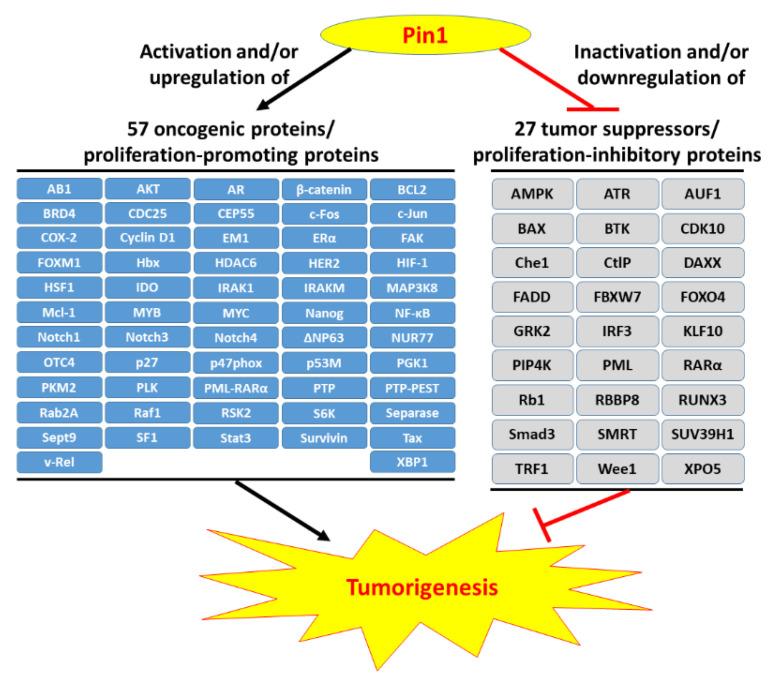
Peptidyl-prolyl isomerase NIMA-interacting 1 (Pin1) specifically binds and isomerizes the phosphorylated serine/threonine-proline (pSer/Thr-Pro) motif, which leads to changes in protein conformation and function. Pin1 is widely overexpressed in cancers and plays an important role in tumorigenesis. Mounting evidence has revealed that targeting Pin1 is a potential therapeutic approach for various cancers by inhibiting cell proliferation, reducing metastasis, and maintaining genome stability. In this review, we summarize the underlying mechanisms of Pin1-mediated upregulation of oncogenes and downregulation of tumor suppressors in cancer development. Furthermore, we also discuss the multiple roles of Pin1 in cancer hallmarks and examine Pin1 as a desirable pharmaceutical target for cancer therapy. We also summarize the recent progress of Pin1-targeted small-molecule compounds for anticancer activity.
肽基脯氨酰异构酶NIMA相互作用蛋白1(Pin1)特异性结合并异构化磷酸化的丝氨酸/苏氨酸-脯氨酸(pSer/Thr-Pro)基序,这会导致蛋白质构象和功能发生变化。Pin1在癌症中广泛过度表达,并在肿瘤发生中起重要作用。越来越多的证据表明,靶向Pin1通过抑制细胞增殖、减少转移和维持基因组稳定性,是治疗各种癌症的一种潜在方法。在这篇综述中,我们总结了Pin1介导的癌基因上调和肿瘤抑制因子下调在癌症发展中的潜在机制。此外,我们还讨论了Pin1在癌症特征中的多种作用,并将Pin1作为癌症治疗中理想的药物靶点进行研究。我们还总结了针对Pin1的小分子化合物在抗癌活性方面的最新进展。


 Zotero 插件