
cGAS-STING 通路作为炎症性疾病的治疗靶点。
The cGAS-STING pathway as a therapeutic target in inflammatory diseases.
机构信息
Global Health Institute, Swiss Federal Institute of Technology Lausanne (EPFL), Lausanne, Switzerland.
IFM Therapeutics, Boston, MA, USA.
出版信息
Nat Rev Immunol. 2021 Sep;21(9):548-569. doi: 10.1038/s41577-021-00524-z. Epub 2021 Apr 8.
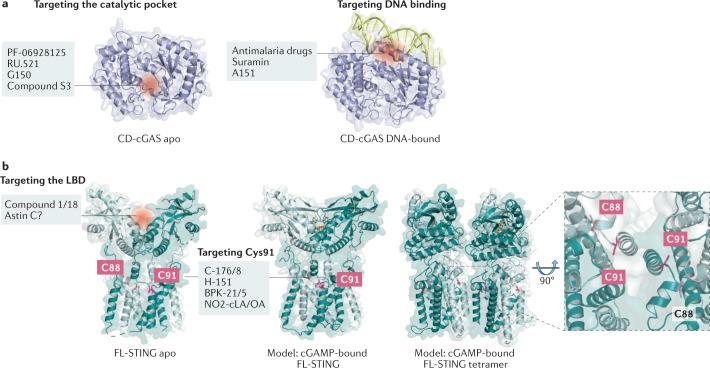
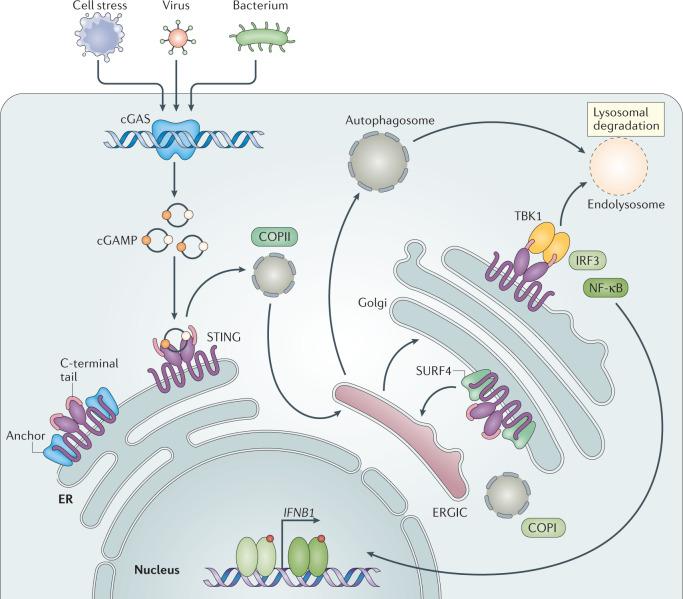
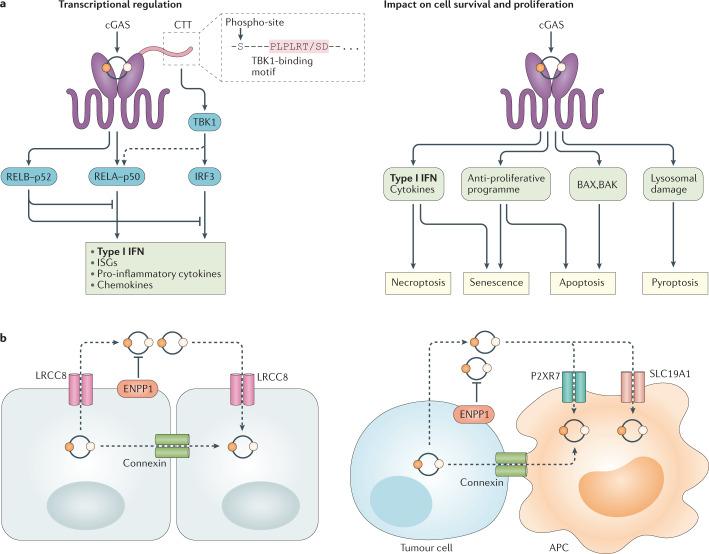
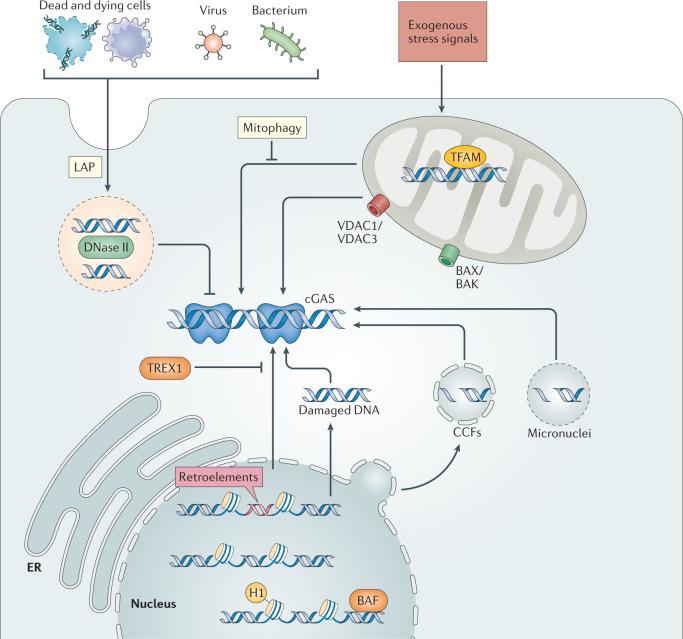
The cGAS-STING signalling pathway has emerged as a key mediator of inflammation in the settings of infection, cellular stress and tissue damage. Underlying this broad involvement of the cGAS-STING pathway is its capacity to sense and regulate the cellular response towards microbial and host-derived DNAs, which serve as ubiquitous danger-associated molecules. Insights into the structural and molecular biology of the cGAS-STING pathway have enabled the development of selective small-molecule inhibitors with the potential to target the cGAS-STING axis in a number of inflammatory diseases in humans. Here, we outline the principal elements of the cGAS-STING signalling cascade and discuss the general mechanisms underlying the association of cGAS-STING activity with various autoinflammatory, autoimmune and degenerative diseases. Finally, we outline the chemical nature of recently developed cGAS and STING antagonists and summarize their potential clinical applications.
cGAS-STING 信号通路已成为感染、细胞应激和组织损伤情况下炎症的关键介质。cGAS-STING 通路的广泛参与的基础是其感知和调节细胞对微生物和宿主来源 DNA 的反应的能力,这些 DNA 作为普遍存在的危险相关分子。对 cGAS-STING 通路的结构和分子生物学的深入了解,使得开发具有选择性的小分子抑制剂成为可能,这些抑制剂有可能针对人类多种炎症性疾病中的 cGAS-STING 轴。在这里,我们概述了 cGAS-STING 信号级联的主要组成部分,并讨论了 cGAS-STING 活性与各种自身炎症性、自身免疫性和退行性疾病相关的一般机制。最后,我们概述了最近开发的 cGAS 和 STING 拮抗剂的化学性质,并总结了它们的潜在临床应用。
 Zotero 插件