
疟疾群体基因组学的进展与机遇
Advances and opportunities in malaria population genomics.
作者信息
Neafsey Daniel E, Taylor Aimee R, MacInnis Bronwyn L
机构信息
Department of Immunology and Infectious Diseases, Harvard T.H. Chan School of Public Health, Boston, MA, USA.
Infectious Disease and Microbiome Program, Broad Institute, Cambridge, MA, USA.
出版信息
Nat Rev Genet. 2021 Aug;22(8):502-517. doi: 10.1038/s41576-021-00349-5. Epub 2021 Apr 8.
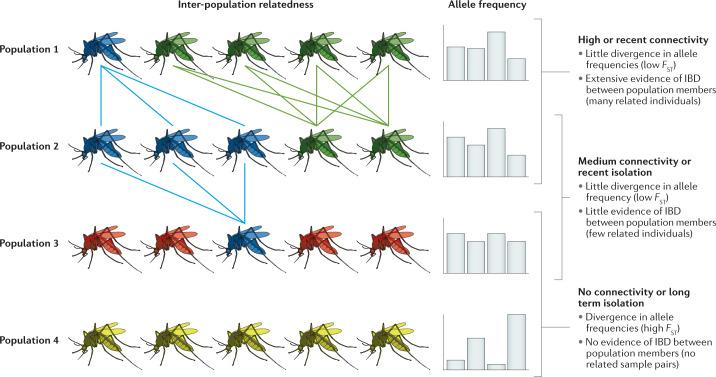
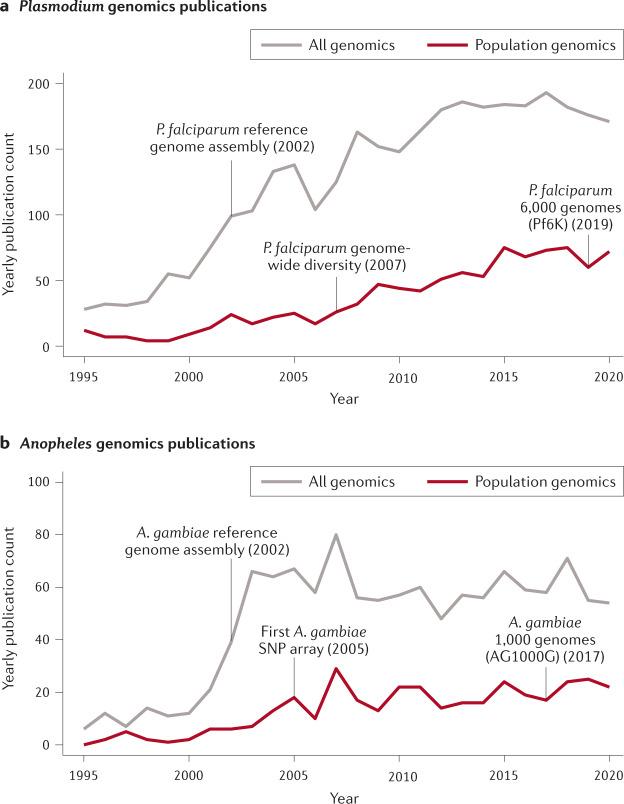
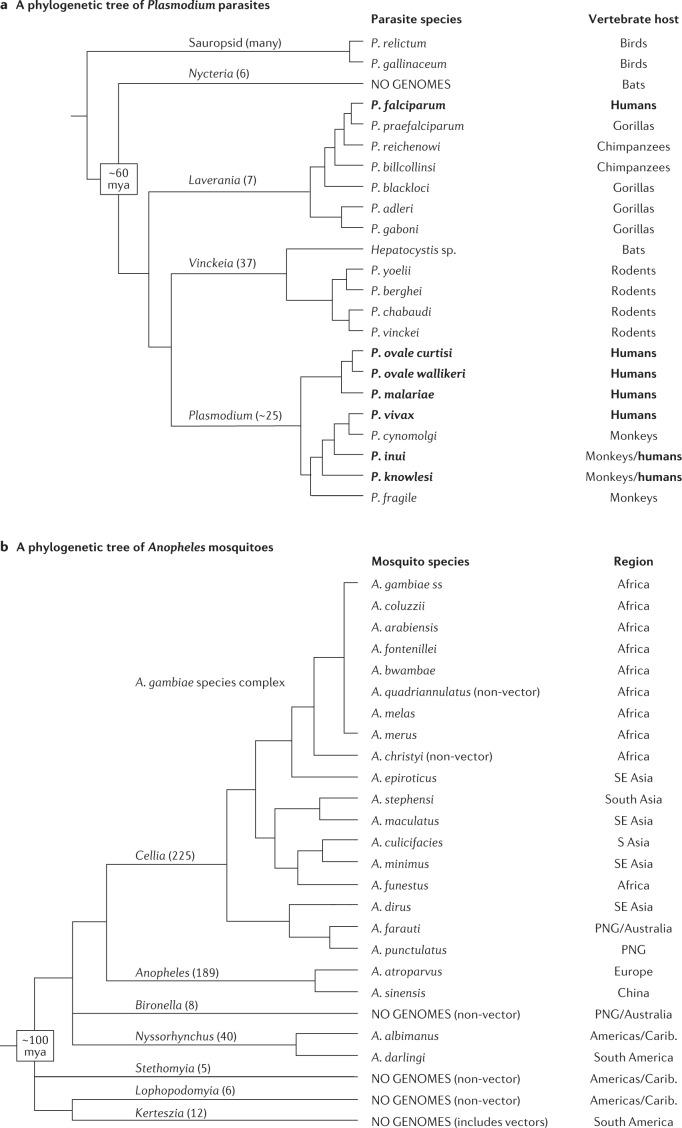
Almost 20 years have passed since the first reference genome assemblies were published for Plasmodium falciparum, the deadliest malaria parasite, and Anopheles gambiae, the most important mosquito vector of malaria in sub-Saharan Africa. Reference genomes now exist for all human malaria parasites and nearly half of the ~40 important vectors around the world. As a foundation for genetic diversity studies, these reference genomes have helped advance our understanding of basic disease biology and drug and insecticide resistance, and have informed vaccine development efforts. Population genomic data are increasingly being used to guide our understanding of malaria epidemiology, for example by assessing connectivity between populations and the efficacy of parasite and vector interventions. The potential value of these applications to malaria control strategies, together with the increasing diversity of genomic data types and contexts in which data are being generated, raise both opportunities and challenges in the field. This Review discusses advances in malaria genomics and explores how population genomic data could be harnessed to further support global disease control efforts.
自首个恶性疟原虫(最致命的疟疾寄生虫)和冈比亚按蚊(撒哈拉以南非洲最重要的疟疾传播媒介)的参考基因组组装发布以来,已过去近20年。现在,所有人类疟原虫以及全球约40种重要传播媒介中近一半的参考基因组都已存在。作为遗传多样性研究的基础,这些参考基因组有助于推进我们对基本疾病生物学、药物和杀虫剂抗性的理解,并为疫苗开发工作提供了信息。群体基因组数据越来越多地被用于指导我们对疟疾流行病学的理解,例如通过评估不同群体之间的连通性以及寄生虫和传播媒介干预措施的效果。这些应用对疟疾控制策略的潜在价值,以及基因组数据类型和产生数据的背景的日益多样化,给该领域带来了机遇和挑战。本综述讨论了疟疾基因组学的进展,并探讨了如何利用群体基因组数据进一步支持全球疾病控制工作。
 Zotero 插件