
alternol使肾癌细胞对TRAIL诱导的凋亡敏感。
Alternol Sensitizes Renal Carcinoma Cells to TRAIL-Induced Apoptosis.
作者信息
Ren Yu, Wang Xue, Huang Shuaishuai, Xu Yangkai, Weng Guobin, Yu Rui
机构信息
Department of Urologic Surgery, Ningbo Urology and Nephrology Hospital, Ningbo Yinzhou No 2. Hospital, Ningbo, China.
Department of Biochemistry and Molecular Biology, Zhejiang Provincial Key Laboratory of Pathophysiology, School of Medical, Ningbo University, Ningbo, China.
出版信息
Front Pharmacol. 2021 Mar 25;12:560903. doi: 10.3389/fphar.2021.560903. eCollection 2021.
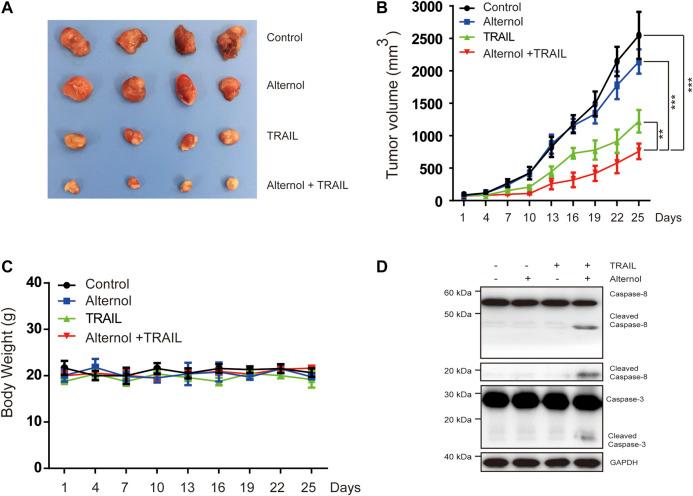
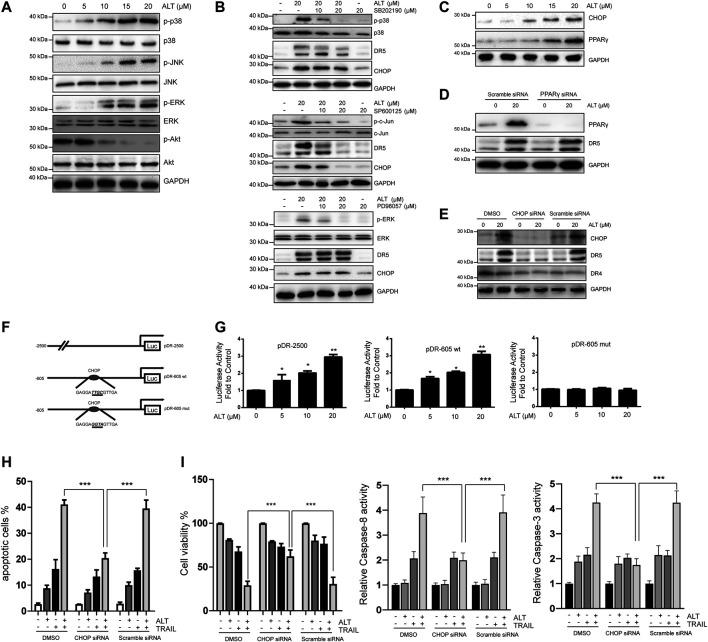
Tumor necrosis factor-related apoptosis-inducing ligand (TRAIL), a member of the TNF family, can selectively induce cancer cell death while sparing normal cells. However, the application of TRAIL-based antitumor therapies has been hindered due to drug resistance. Alternol is a new compound isolated from microbial fermentation that possesses antitumor activity in different tumors. In our research, we discovered that alternol can sensitize TRAIL-induced apoptosis in renal carcinoma cells (RCCs). Cytotoxic activity was measured by MTT assay. Apoptosis was probed using the PI/annexin V method. Real-time PCR and western blot were used to test the levels of mRNA and protein, respectively. Luciferase assay was used to investigate whether CHOP regulated the expression of death receptor (DR) 5 through transcription. A xenogeneic tumor transplantation model was used to evaluate the anticancer effects of alternol/TRAIL . When the mechanisms were investigated, we discovered that alternol increased DR5 expression. DR5 knockdown by siRNA eliminated the enhanced effect of alternol on TRAIL-mediated apoptosis. Alternol reduced the expression of antiapoptotic proteins and increased the levels of proapoptotic proteins. Moreover, alternol increased the level of CHOP, which is necessary for the enhancing effect of alternol on TRAIL-induced apoptosis, given that downregulation of CHOP abrogated the synergistic effect. DR5 upregulation induced by alternol required the production of reactive oxygen species (ROS). Removing ROS inhibited the induction of DR5 and blocked the antiapoptotic proteins induced by alternol. Taken together, our research suggested that alternol increased TRAIL-mediated apoptosis via inhibiting antiapoptotic proteins and upregulating DR5 levels via ROS generation and the CHOP pathway.
肿瘤坏死因子相关凋亡诱导配体(TRAIL)是TNF家族的一员,它能够选择性地诱导癌细胞死亡,同时使正常细胞免受损伤。然而,基于TRAIL的抗肿瘤疗法由于耐药性而受到阻碍。Alternol是一种从微生物发酵中分离出的新化合物,在不同肿瘤中具有抗肿瘤活性。在我们的研究中,我们发现alternol可以使肾癌细胞(RCC)对TRAIL诱导的凋亡敏感。通过MTT法测定细胞毒性活性。使用PI/膜联蛋白V法检测凋亡情况。分别使用实时PCR和蛋白质印迹法检测mRNA和蛋白质水平。使用荧光素酶测定法研究CHOP是否通过转录调节死亡受体(DR)5的表达。使用异种肿瘤移植模型评估alternol/TRAIL的抗癌效果。在研究其作用机制时,我们发现alternol增加了DR5的表达。通过小干扰RNA敲低DR5消除了alternol对TRAIL介导的凋亡的增强作用。Alternol降低了抗凋亡蛋白的表达并增加了促凋亡蛋白的水平。此外,alternol增加了CHOP的水平,这是alternol对TRAIL诱导的凋亡产生增强作用所必需的,因为下调CHOP消除了协同作用。Alternol诱导的DR5上调需要活性氧(ROS)的产生。去除ROS抑制了DR5的诱导并阻断了alternol诱导的抗凋亡蛋白。综上所述,我们的研究表明alternol通过抑制抗凋亡蛋白并通过ROS生成和CHOP途径上调DR5水平来增加TRAIL介导的凋亡。



 Zotero 插件