
5-脂氧合酶途径抑制对鼻病毒相关支气管上皮炎症的体外作用
In Vitro Effects of 5-Lipoxygenase Pathway Inhibition on Rhinovirus-Associated Bronchial Epithelial Inflammation.
作者信息
Spyridaki Irini, Taka Styliani, Skevaki Chrysanthi, Trochoutsou Aikaterini, Papadopoulos Nikolaos G
机构信息
Allergy Department, 2nd Pediatric Clinic, National and Kapodistrian University of Athens, Athens, Greece.
Institute of Laboratory Medicine, Philipps-Universität Marburg, Marburg, Germany.
出版信息
Pulm Ther. 2021 Jun;7(1):237-249. doi: 10.1007/s41030-021-00152-x. Epub 2021 Apr 13.
INTRODUCTION
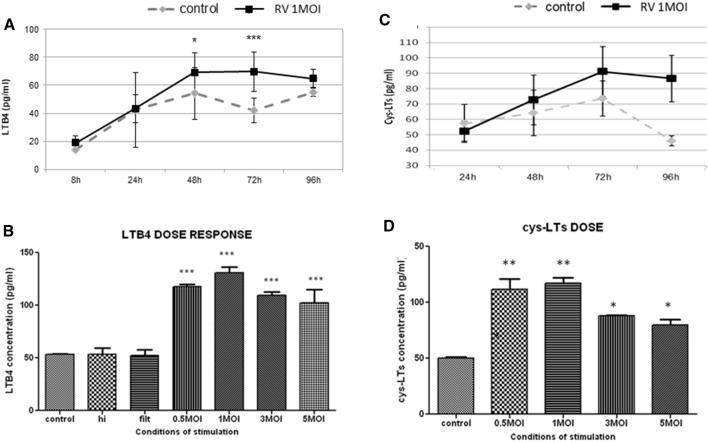
The leukotriene pathway may be implicated in the induction of virus-induced inflammation. Respiratory epithelial cells may express low levels of 5-lipoxygenase (5-LO) and release leukotrienes (LTs) C4, D4, and E4, upon exposure to viruses or other stimuli. Enhanced expression of 5-LO pathway proteins after rhinovirus (RV) infection has previously been described. We hypothesized that anti-leukotriene treatment of epithelial cells, with or without exposure to RV-infected peripheral blood mononuclear cells (PBMCs)-conditioned media, may inhibit RV-induced up-regulation of inflammatory cytokines.
METHODS
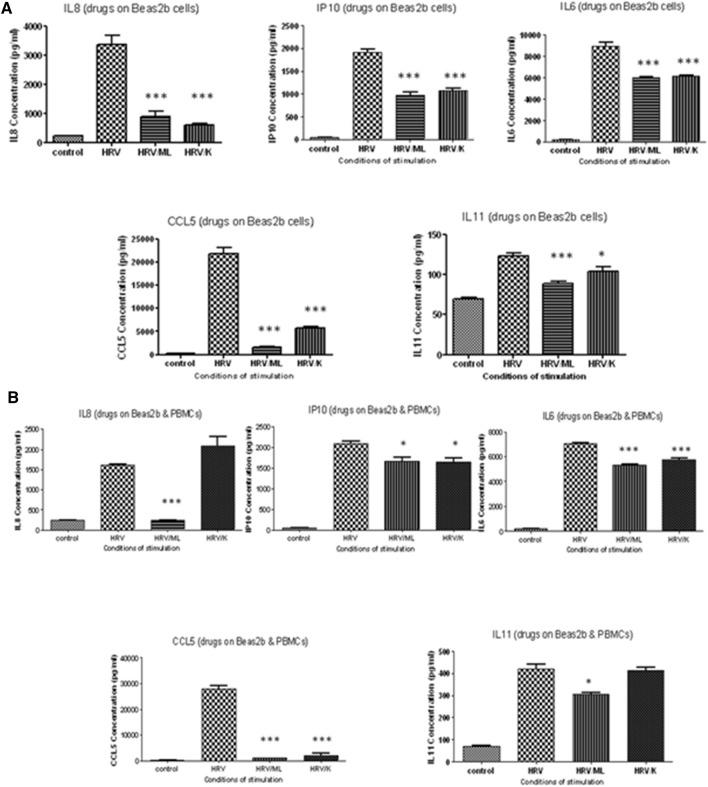
PBMCs from a healthy donor were exposed to RV1B and supernatants were harvested at 48 h post infection. BEAS-2B cells were infected with RV, with or without conditioning with the PBMC supernatant. Treatment with anti-LT agents was performed either on both PBMCs and BEAS-2B or at the bronchial epithelial level only, with varying concentrations of montelukast (CysLT receptor antagonist) or MK-886 [FLAP(5-lipoxygenase-activating-protein) inhibitor]. Evaluation of the inflammatory cytokines IL-8, RANTES, IL-11, IL-6, and IP-10 was performed using ELISA.
RESULTS
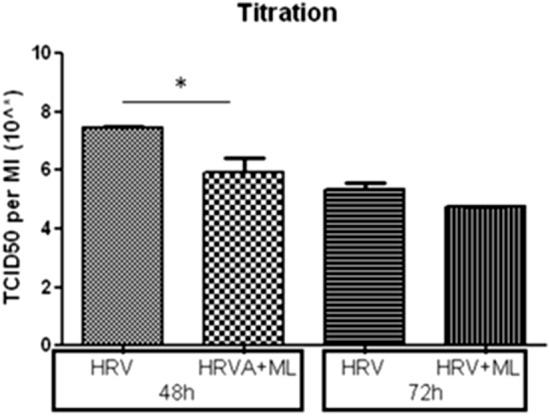
Our results show that anti-LT treatment of RV-infected bronchial epithelial cells suppresses epithelial RV-mediated cytokine production, independent of conditioning.
CONCLUSIONS
This observation may represent an indirect mode of action of the anti-leukotrienes in virus-induced asthma.
引言
白三烯途径可能与病毒诱导的炎症反应有关。呼吸道上皮细胞可能表达低水平的5-脂氧合酶(5-LO),并在接触病毒或其他刺激后释放白三烯(LTs)C4、D4和E4。先前已有报道称鼻病毒(RV)感染后5-LO途径蛋白的表达增强。我们推测,对白三烯进行治疗上皮细胞,无论是否接触经RV感染的外周血单核细胞(PBMCs)条件培养基,都可能抑制RV诱导的炎性细胞因子上调。
方法
将健康供体的PBMCs暴露于RV1B,并在感染后48小时收集上清液。BEAS-2B细胞用RV感染,无论是否用PBMC上清液预处理。使用不同浓度的孟鲁司特(半胱氨酰白三烯受体拮抗剂)或MK-886 [FLAP(5-脂氧合酶激活蛋白)抑制剂],在PBMCs和BEAS-2B上或仅在支气管上皮水平进行抗LT药物治疗。使用酶联免疫吸附测定法(ELISA)评估炎性细胞因子IL-8、调节激活正常T细胞表达和分泌因子(RANTES)、IL-11、IL-6和γ-干扰素诱导蛋白10(IP-10)。
结果
我们的结果表明,对RV感染的支气管上皮细胞进行抗LT治疗可抑制上皮细胞RV介导的细胞因子产生,与预处理无关。
结论
这一观察结果可能代表了抗白三烯在病毒诱导的哮喘中的一种间接作用模式。

 Zotero 插件