
结核病的多药耐药性防治策略。
Strategies to Combat Multi-Drug Resistance in Tuberculosis.
机构信息
Drug Discovery and Development Centre (H3D), University of Cape Town, Rondebosch 7701, South Africa.
South African Medical Research Council Drug Discovery and Development Research Unit, Department of Chemistry and Institute of Infectious Disease and Molecular Medicine, University of Cape Town, Rondebosch 7701, South Africa.
出版信息
Acc Chem Res. 2021 May 18;54(10):2361-2376. doi: 10.1021/acs.accounts.0c00878. Epub 2021 Apr 22.
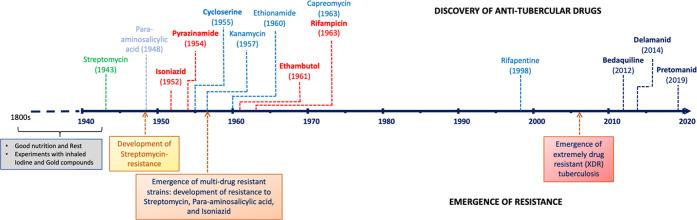
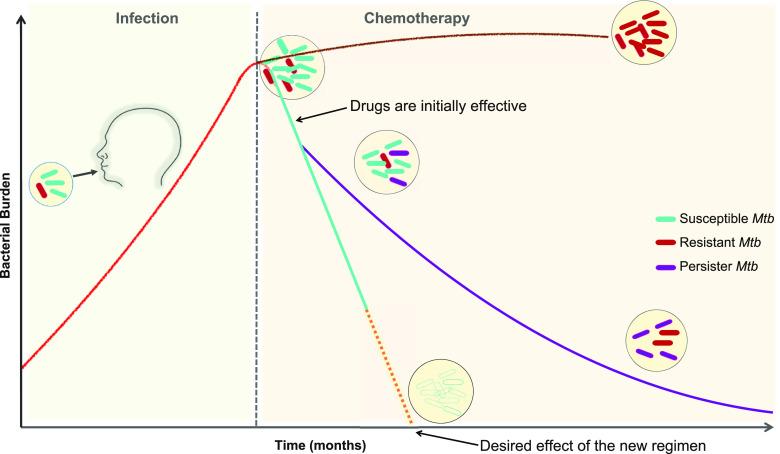
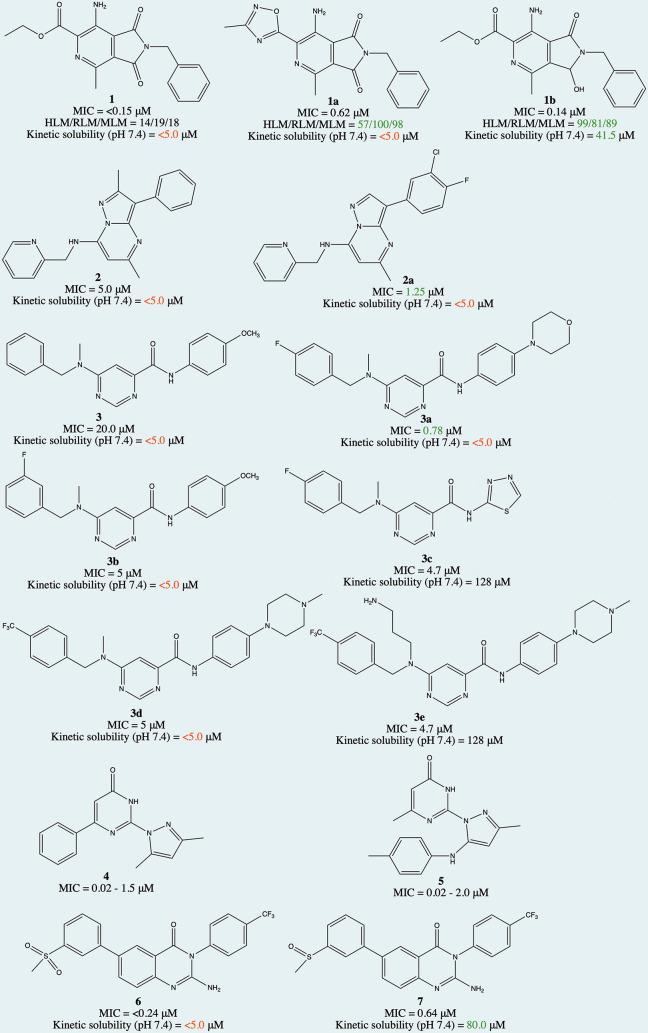
""Antimicrobial resistance (AMR), is one of the most paramount health perils that has emerged in the 21st century. The global increase in drug-resistant strains of various bacterial pathogens prompted the World Health Organization (WHO) to develop a priority list of AMR pathogens. (), an acid-fast bacillus that causes tuberculosis (TB), merits being one of the highest priority pathogens on this list since drug-resistant TB (DR-TB) accounts for ∼29% of deaths attributable to AMR. In recent years, funded collaborative efforts of researchers from academia, not-for-profit virtual R&D organizations and industry have resulted in the continuous growth of the TB drug discovery and development pipeline. This has so far led to the accelerated regulatory approval of bedaquiline and delamanid for the treatment of DR-TB. However, despite the availability of drug regimes, the current cure rate for multi-drug-resistant TB (MDR-TB) and extensively drug-resistant TB (XDR-TB) treatment regimens is 50% and 30%, respectively. It is to be noted that these regimens are administered over a long duration and have a serious side effect profile. Coupled with poor patient adherence, this has led to further acquisition of drug resistance and treatment failure. There is therefore an urgent need to develop new TB drugs with novel mechanism of actions (MoAs) and associated regimens.This Account recapitulates drug resistance in TB, existing challenges in addressing DR-TB, new drugs and regimens in development, and potential ways to treat DR-TB. We highlight our research aimed at identifying novel small molecule leads and associated targets against TB toward contributing to the global TB drug discovery and development pipeline. Our work mainly involves screening of various small molecule chemical libraries in phenotypic whole-cell based assays to identify hits for medicinal chemistry optimization, with attendant deconvolution of the MoA. We discuss the identification of small molecule chemotypes active against and subsequent structure-activity relationships (SAR) and MoA deconvolution studies. This is followed by a discussion on a chemical series identified by whole-cell cross-screening against , for which MoA deconvolution studies revealed a pathway that explained the lack of in vivo efficacy in a mouse model of TB and reiterated the importance of selecting an appropriate growth medium during phenotypic screening. We also discuss our efforts on drug repositioning toward addressing DR-TB. In the concluding section, we preview some promising future directions and the challenges inherent in advancing the drug pipeline to address DR-TB.
"抗微生物药物耐药性(AMR)是 21 世纪出现的最主要的健康危害之一。各种细菌病原体的耐药菌株在全球范围内的增加促使世界卫生组织(WHO)制定了 AMR 病原体的优先清单。(),一种导致肺结核(TB)的抗酸杆菌,值得成为该清单上最高优先级病原体之一,因为耐多药结核病(DR-TB)占 AMR 归因死亡的约 29%。近年来,学术界、非营利虚拟研发组织和工业界的研究人员的合作资助努力,导致了结核病药物发现和开发管道的持续增长。这导致了 bedaquiline 和 delamanid 的加速监管批准,用于治疗 DR-TB。然而,尽管有药物方案可用,多药耐药结核病(MDR-TB)和广泛耐药结核病(XDR-TB)治疗方案的当前治愈率分别为 50%和 30%。需要注意的是,这些方案的治疗时间很长,并且具有严重的副作用。加上患者的依从性差,这导致了进一步的耐药性和治疗失败。因此,迫切需要开发具有新作用机制(MoA)和相关方案的新型结核病药物。本账户回顾了结核病的耐药性、解决 DR-TB 存在的挑战、正在开发的新药和方案,以及治疗 DR-TB 的潜在方法。我们强调了我们旨在确定针对结核病的新型小分子先导物和相关靶标以促进全球结核病药物发现和开发管道的研究工作。我们的工作主要涉及在表型全细胞基础测定中筛选各种小分子化学文库,以识别用于药物化学优化的命中物,并随之进行 MoA 剖析。我们讨论了针对的小分子化学型的鉴定,以及随后的结构-活性关系(SAR)和 MoA 剖析研究。接下来讨论了通过全细胞交叉筛选针对鉴定的化学系列,MoA 剖析研究揭示了一条解释体内疗效缺乏的途径在结核病的小鼠模型中,并再次强调了在表型筛选过程中选择适当生长培养基的重要性。我们还讨论了我们在解决 DR-TB 方面的药物再定位工作。在结论部分,我们预览了一些有前途的未来方向和在推进药物管道以解决 DR-TB 方面所固有的挑战。"




 Zotero 插件