
自然杀伤细胞在病毒感染控制中发挥重要作用:抗病毒机制、亚群扩增及临床应用。
Natural killer cells play an important role in virus infection control: Antiviral mechanism, subset expansion and clinical application.
机构信息
Peking University People's Hospital, Peking University Institute of Hematology, National Clinical Research Center for Hematologic Disease, Beijing Key Laboratory of Hematopoietic Stem Cell Transplantation, Beijing, China.
Peking University People's Hospital, Peking University Institute of Hematology, National Clinical Research Center for Hematologic Disease, Beijing Key Laboratory of Hematopoietic Stem Cell Transplantation, Beijing, China.
出版信息
Clin Immunol. 2021 Jun;227:108727. doi: 10.1016/j.clim.2021.108727. Epub 2021 Apr 20.
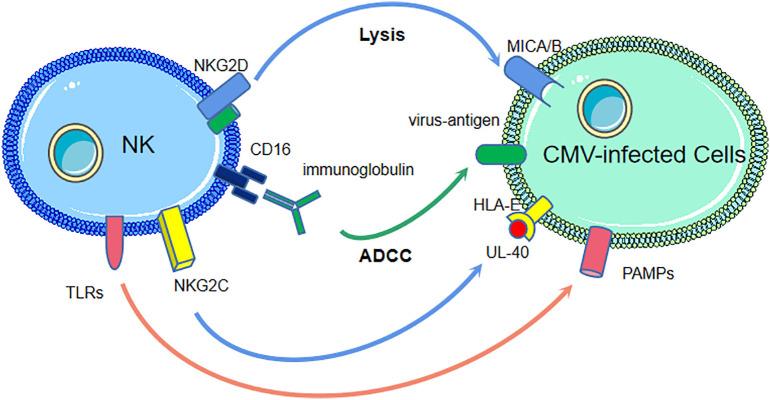
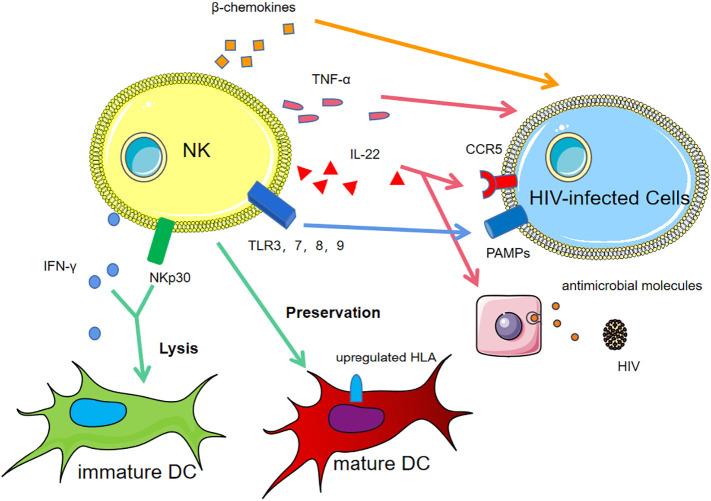
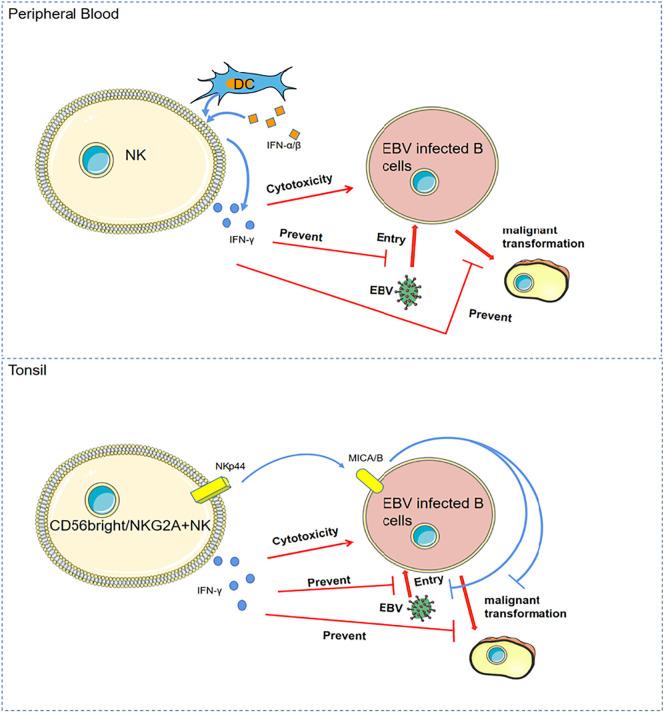
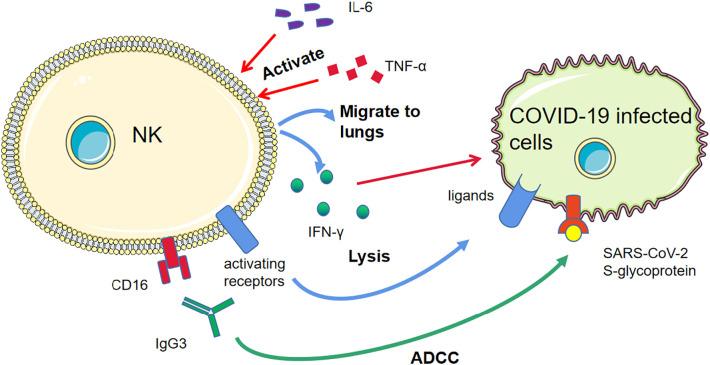
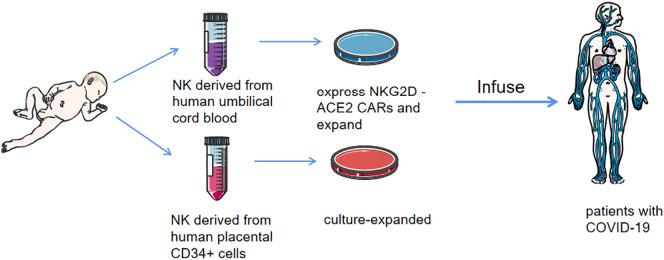
With the global spread of coronavirus disease 2019 (COVID-19), the important role of natural killer (NK) cells in the control of various viral infections attracted more interest, via non-specific activation, such as antibody-dependent cell-mediated cytotoxicity (ADCC) and activating receptors, as well as specific activation, such as memory-like NK generation. In response to different viral infections, NK cells fight viruses in different ways, and different NK subsets proliferate. For instance, cytomegalovirus (CMV) induces NKG2C + CD57 + KIR+ NK cells to expand 3-6 months after hematopoietic stem cell transplantation (HSCT), but human immunodeficiency virus (HIV) induces KIR3DS1+/KIR3DL1 NK cells to expand in the acute phase of infection. However, the similarities and differences among these processes and their molecular mechanisms have not been fully discussed. In this article, we provide a summary and comparison of antiviral mechanisms, unique subset expansion and time periods in peripheral blood and tissues under different conditions of CMV, HIV, Epstein-Barr virus (EBV), COVID-19 and hepatitis B virus (HBV) infections. Accordingly, we also discuss current clinical NK-associated antiviral applications, including cell therapy and NK-related biological agents, and we state the progress and future prospects of NK cell antiviral treatment.
随着 2019 年冠状病毒病(COVID-19)在全球的传播,自然杀伤(NK)细胞在控制各种病毒感染中的重要作用引起了更多的关注,通过非特异性激活,如抗体依赖性细胞介导的细胞毒性(ADCC)和激活受体,以及特异性激活,如记忆样 NK 细胞的产生。NK 细胞针对不同的病毒感染以不同的方式对抗病毒,不同的 NK 细胞亚群增殖。例如,巨细胞病毒(CMV)在造血干细胞移植(HSCT)后 3-6 个月诱导 NKG2C+CD57+KIR+NK 细胞扩增,但人类免疫缺陷病毒(HIV)在感染的急性期诱导 KIR3DS1+/KIR3DL1 NK 细胞扩增。然而,这些过程之间的异同及其分子机制尚未得到充分讨论。在本文中,我们对 CMV、HIV、EBV、COVID-19 和乙型肝炎病毒(HBV)感染下不同条件下的抗病毒机制、外周血和组织中独特亚群的扩增和时间进行了总结和比较。相应地,我们还讨论了当前 NK 相关的抗病毒临床应用,包括细胞治疗和 NK 相关的生物制剂,并阐述了 NK 细胞抗病毒治疗的进展和未来前景。

 Zotero 插件