
机械论理论预测了温度和湿度对 SARS-CoV-2 及其他包膜病毒失活的影响。
Mechanistic theory predicts the effects of temperature and humidity on inactivation of SARS-CoV-2 and other enveloped viruses.
机构信息
Department of Ecology and Evolutionary Biology, Princeton University, Princeton, United States.
Department of Ecology and Evolutionary Biology, University of California, Los Angeles, Los Angeles, United States.
出版信息
Elife. 2021 Jul 13;10:e65902. doi: 10.7554/eLife.65902.
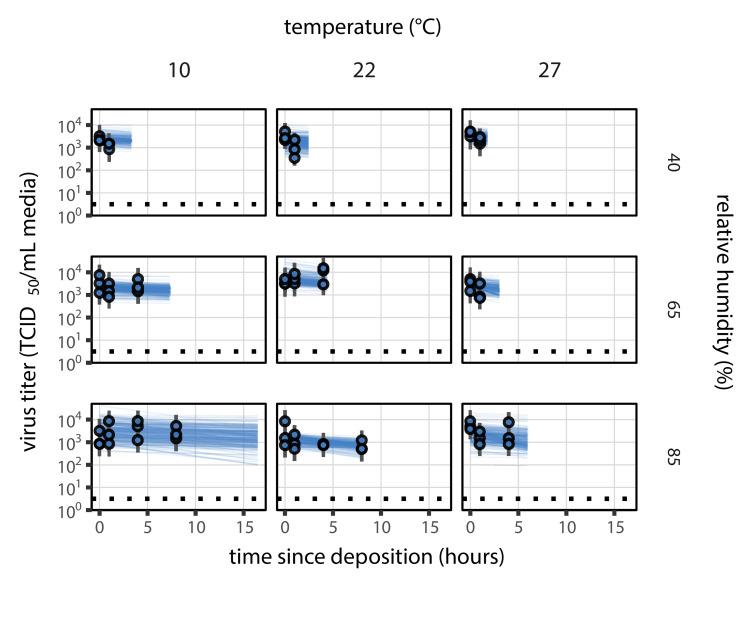
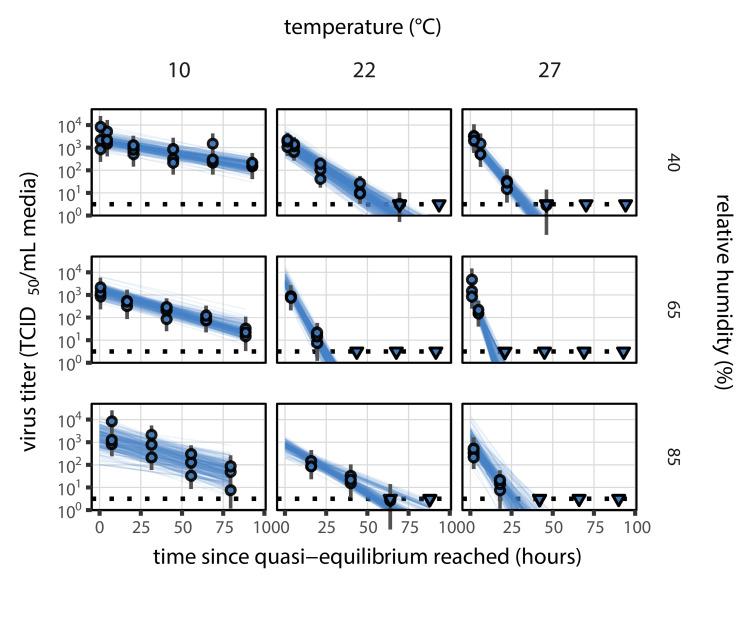
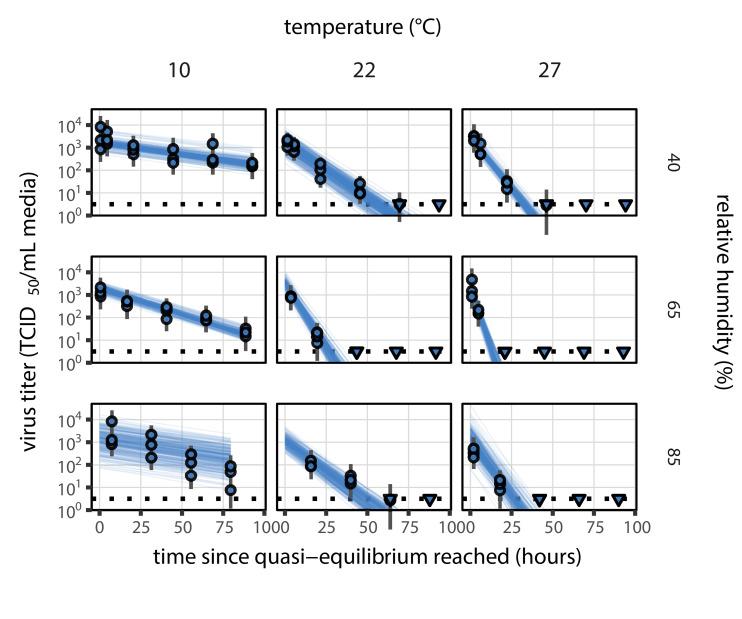
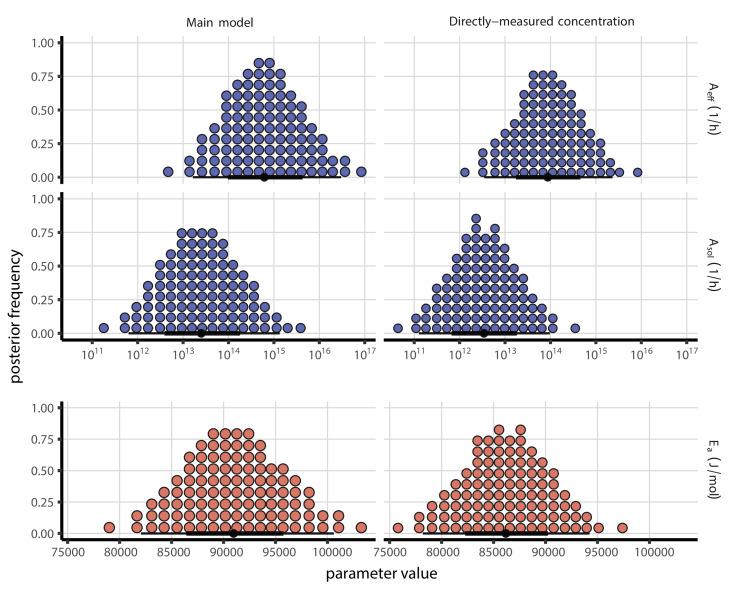
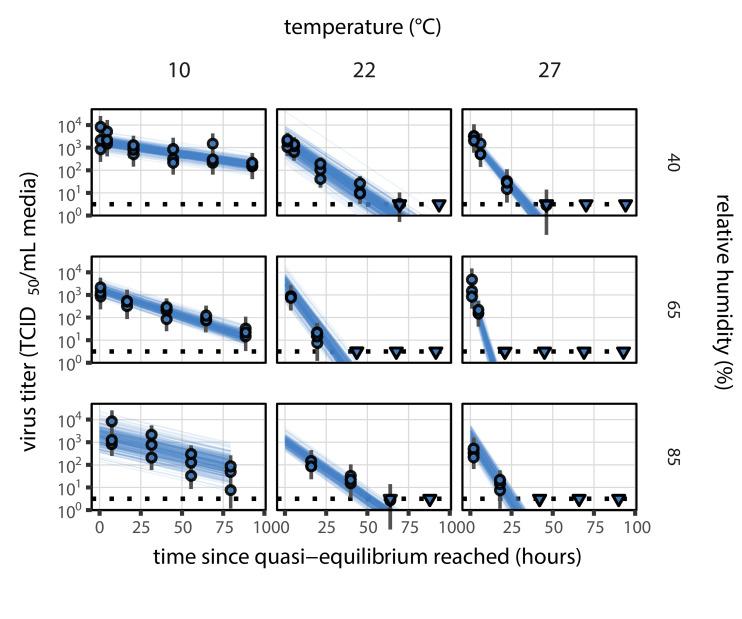
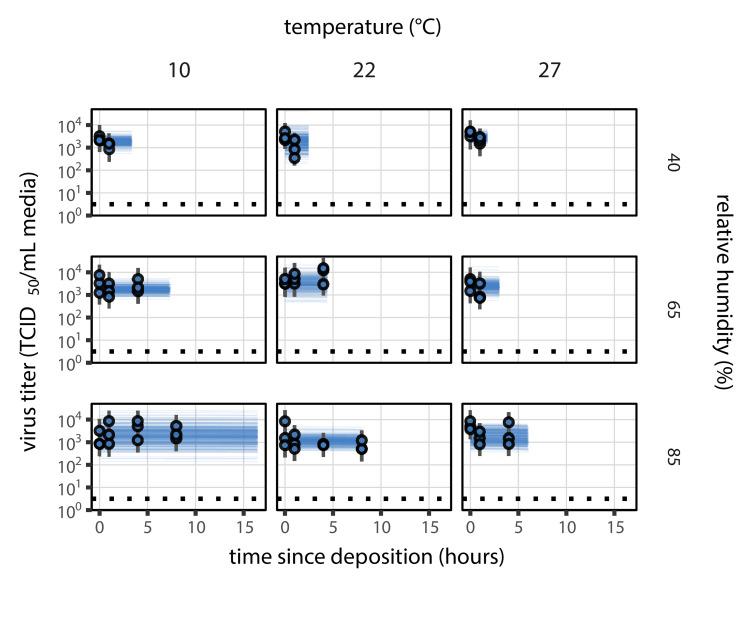
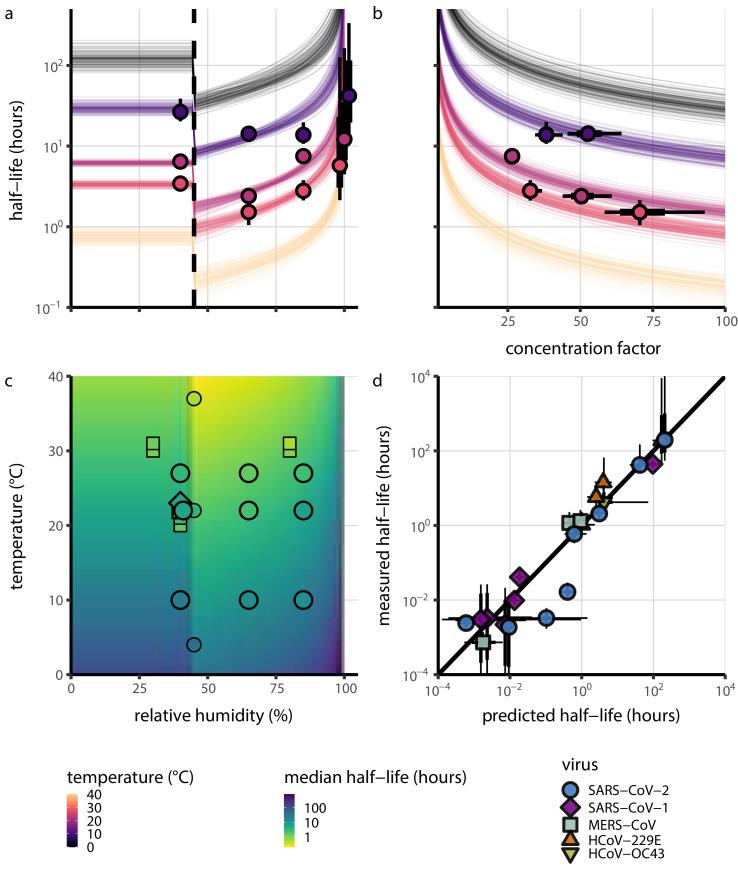
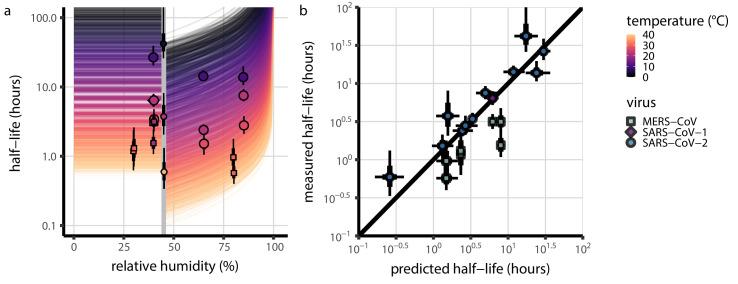
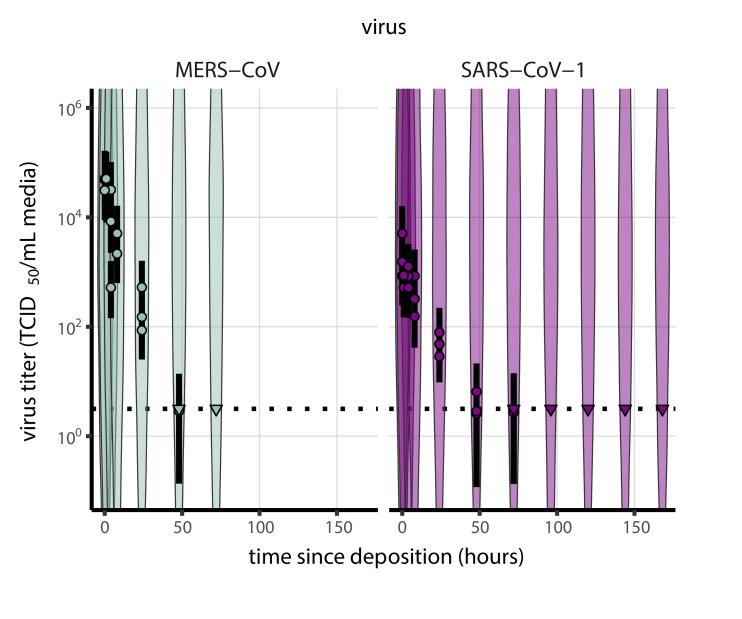
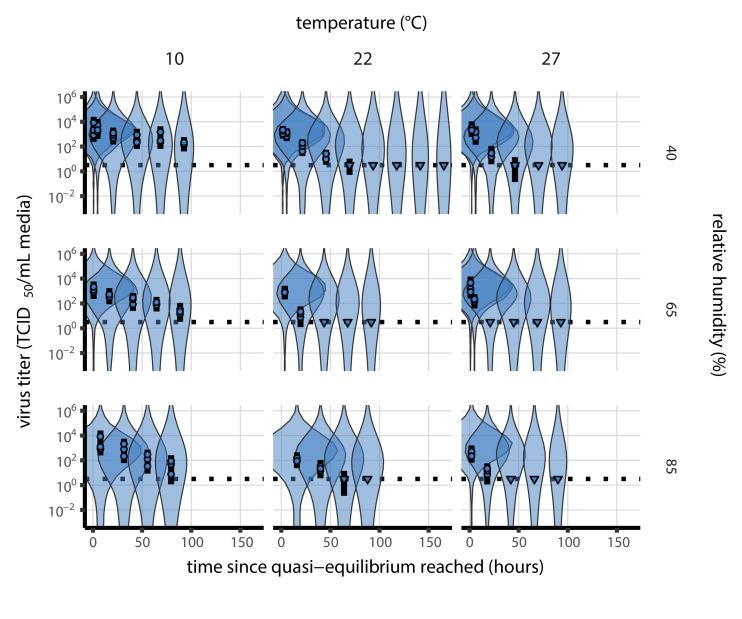
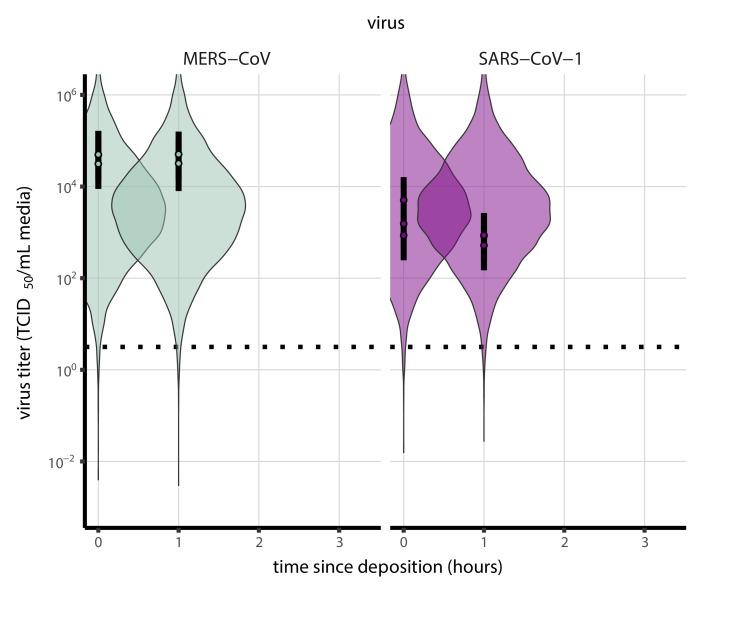
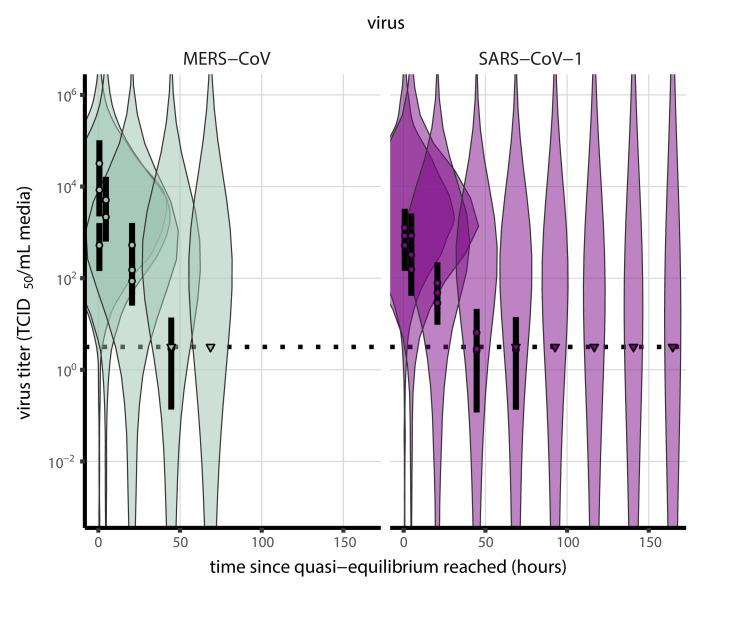
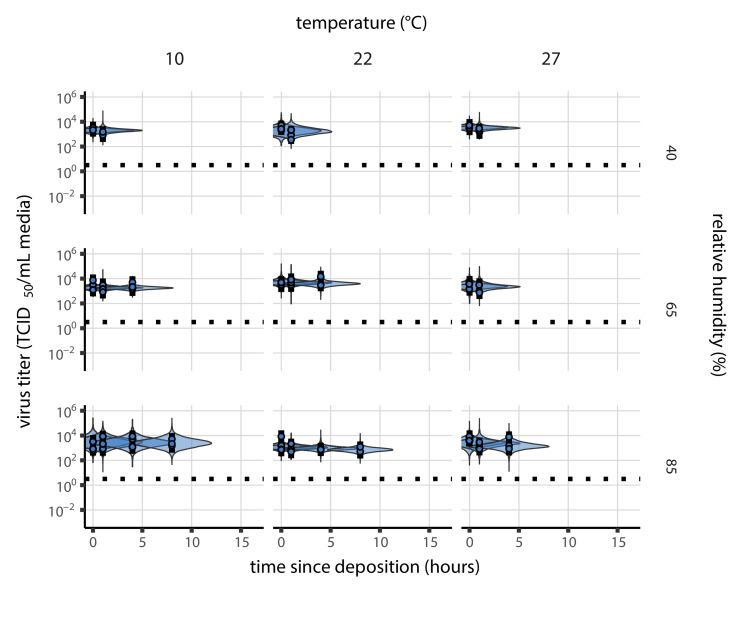
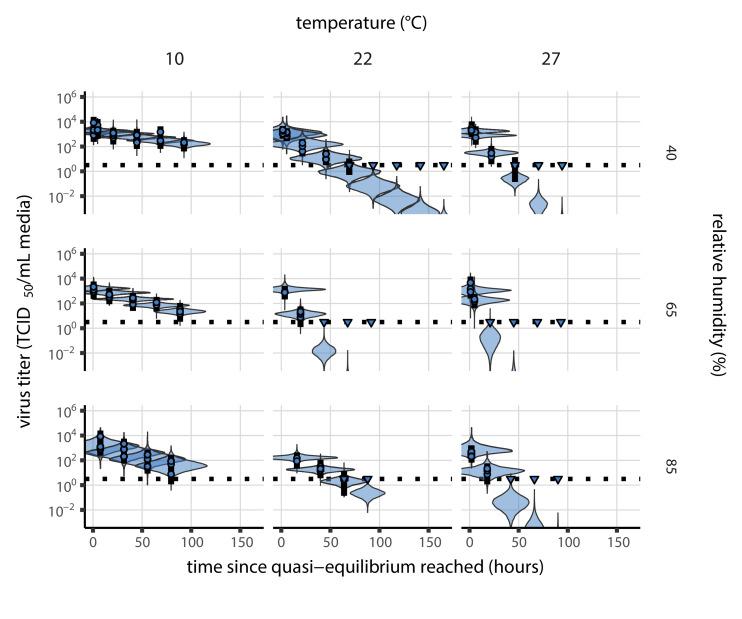
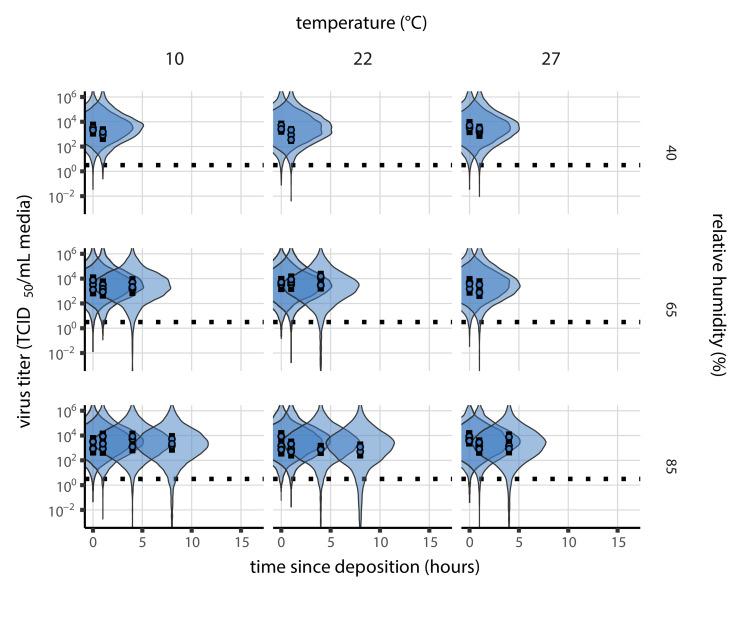
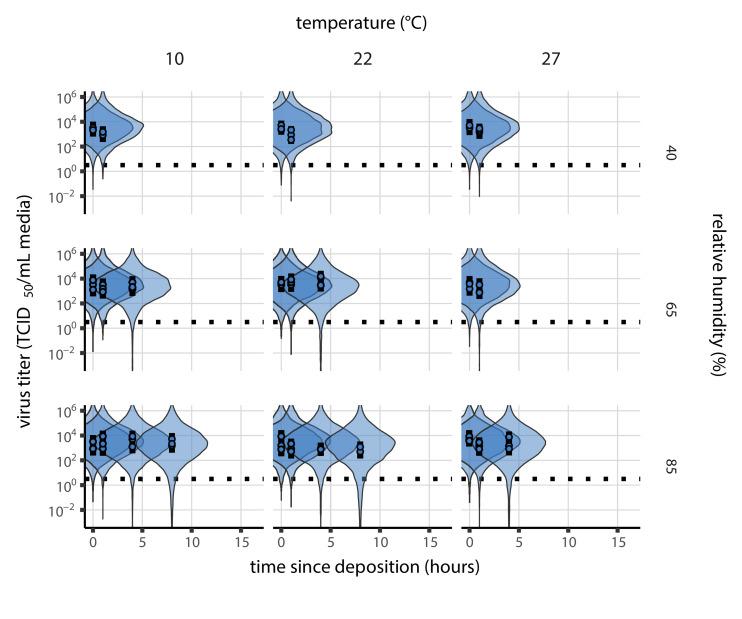
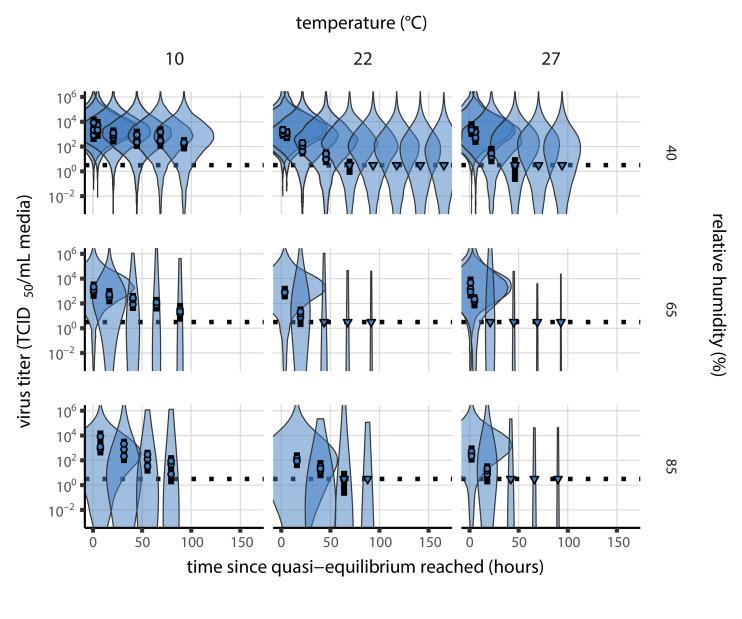
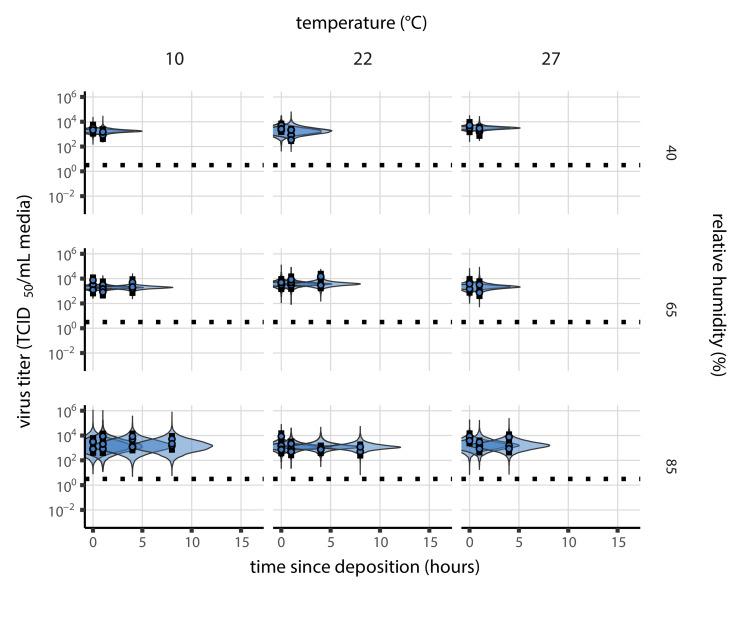
Ambient temperature and humidity strongly affect inactivation rates of enveloped viruses, but a mechanistic, quantitative theory of these effects has been elusive. We measure the stability of SARS-CoV-2 on an inert surface at nine temperature and humidity conditions and develop a mechanistic model to explain and predict how temperature and humidity alter virus inactivation. We find SARS-CoV-2 survives longest at low temperatures and extreme relative humidities (RH); median estimated virus half-life is >24 hr at 10°C and 40% RH, but ∼1.5 hr at 27°C and 65% RH. Our mechanistic model uses fundamental chemistry to explain why inactivation rate increases with increased temperature and shows a U-shaped dependence on RH. The model accurately predicts existing measurements of five different human coronaviruses, suggesting that shared mechanisms may affect stability for many viruses. The results indicate scenarios of high transmission risk, point to mitigation strategies, and advance the mechanistic study of virus transmission.
环境温度和湿度会强烈影响包膜病毒的失活动力,但人们一直未能找到解释这些影响的机制性、定量理论。我们在九种温度和湿度条件下测量了 SARS-CoV-2 在惰性表面上的稳定性,并开发了一种机制模型来解释和预测温度和湿度如何改变病毒失活。我们发现 SARS-CoV-2 在低温和极端相对湿度(RH)下存活时间最长;在 10°C 和 40%RH 下,中位估计病毒半衰期>24 小时,但在 27°C 和 65%RH 下约为 1.5 小时。我们的机制模型使用基础化学来解释为什么失活率随温度升高而增加,并显示出对 RH 的 U 形依赖性。该模型准确预测了五种不同人类冠状病毒的现有测量结果,表明可能存在共同机制会影响许多病毒的稳定性。结果表明存在高传播风险的情况,指向了缓解策略,并推进了病毒传播的机制研究。













 Zotero 插件