
机器学习方法在 COVID-19 传播预测中的比较研究。
Comparative study of machine learning methods for COVID-19 transmission forecasting.
机构信息
University of Science and Technology of Oran-Mohamed Boudiaf (USTO-MB), Computer Science department Signal, Image and Speech Laboratory (SIMPA) Laboratory, El Mnaouar, BP 1505, Bir El Djir 31000, Oran, Algeria.
King Abdullah University of Science and Technology (KAUST) Computer, Electrical and Mathematical Sciences and Engineering (CEMSE) Division, Thuwal 23955-6900, Saudi Arabia.
出版信息
J Biomed Inform. 2021 Jun;118:103791. doi: 10.1016/j.jbi.2021.103791. Epub 2021 Apr 26.
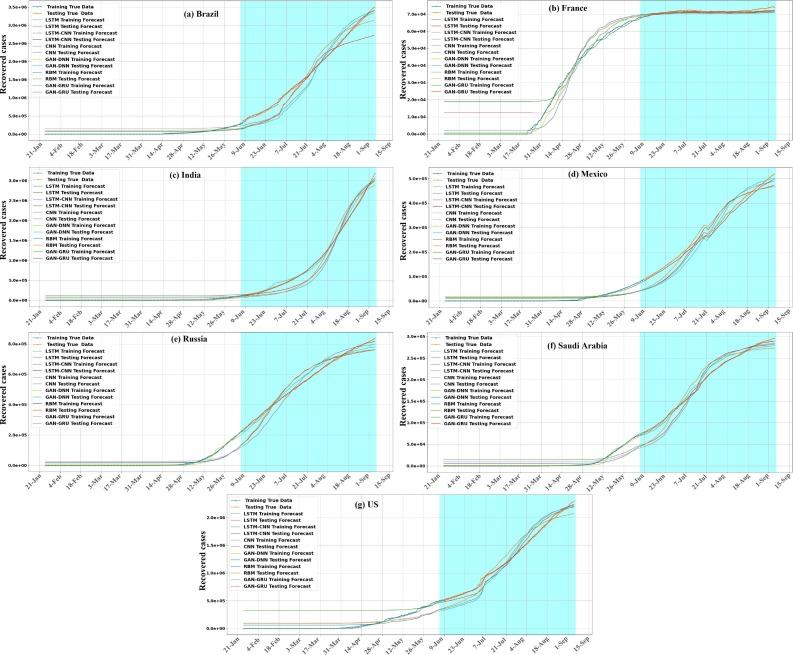
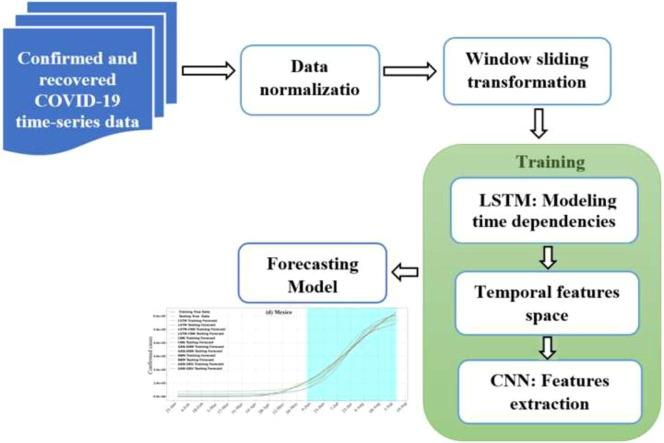
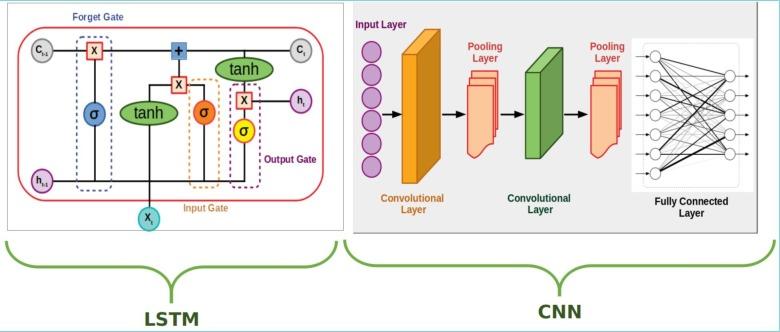
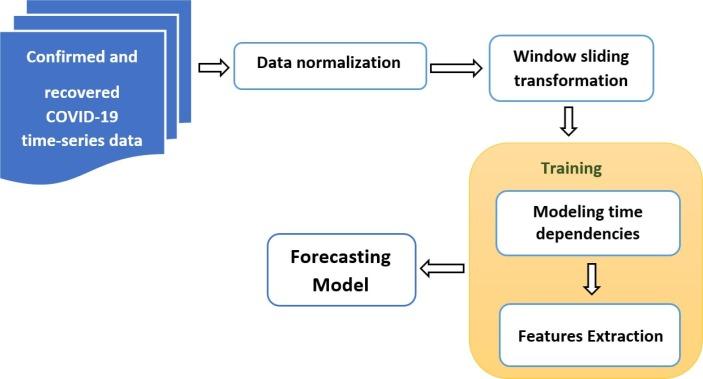
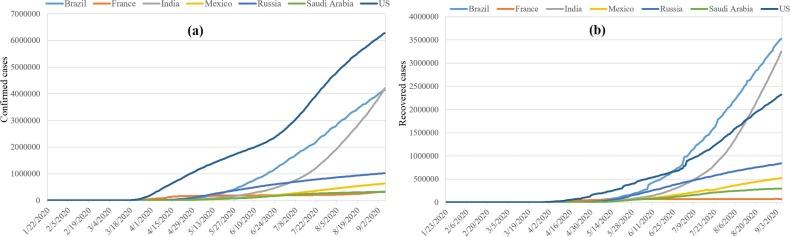
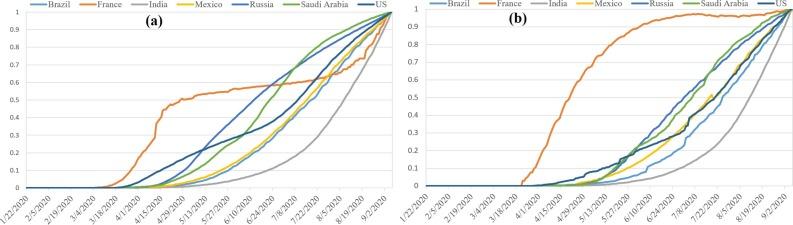
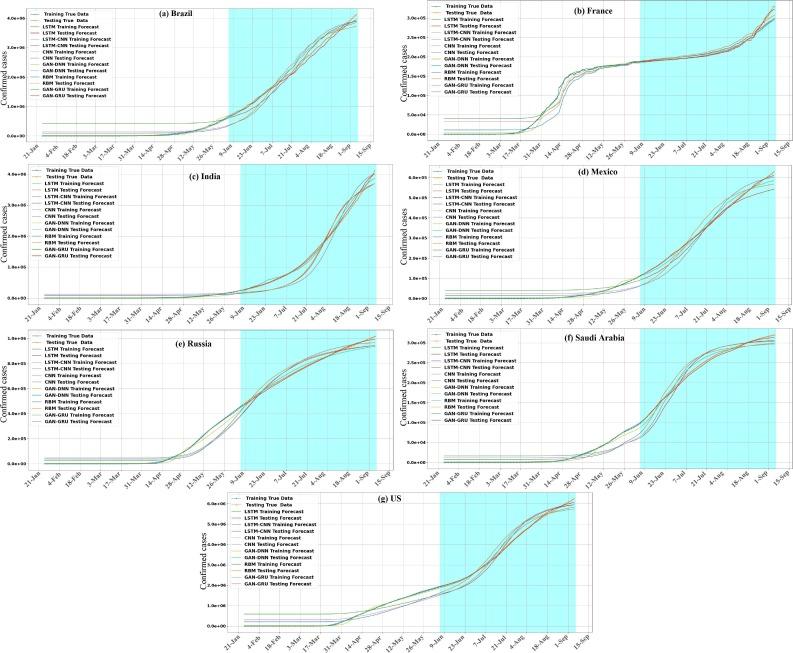
Within the recent pandemic, scientists and clinicians are engaged in seeking new technology to stop or slow down the COVID-19 pandemic. The benefit of machine learning, as an essential aspect of artificial intelligence, on past epidemics offers a new line to tackle the novel Coronavirus outbreak. Accurate short-term forecasting of COVID-19 spread plays an essential role in improving the management of the overcrowding problem in hospitals and enables appropriate optimization of the available resources (i.e., materials and staff).This paper presents a comparative study of machine learning methods for COVID-19 transmission forecasting. We investigated the performances of deep learning methods, including the hybrid convolutional neural networks-Long short-term memory (LSTM-CNN), the hybrid gated recurrent unit-convolutional neural networks (GAN-GRU), GAN, CNN, LSTM, and Restricted Boltzmann Machine (RBM), as well as baseline machine learning methods, namely logistic regression (LR) and support vector regression (SVR). The employment of hybrid models (i.e., LSTM-CNN and GAN-GRU) is expected to eventually improve the forecasting accuracy of COVID-19 future trends. The performance of the investigated deep learning and machine learning models was tested using confirmed and recovered COVID-19 cases time-series data from seven impacted countries: Brazil, France, India, Mexico, Russia, Saudi Arabia, and the US. The results reveal that hybrid deep learning models can efficiently forecast COVID-19 cases. Also, results confirmed the superior performance of deep learning models compared to the two considered baseline machine learning models. Furthermore, results showed that LSTM-CNN achieved improved performances with an averaged mean absolute percentage error of 3.718%, among others.
在最近的大流行期间,科学家和临床医生正在寻求新技术来阻止或减缓 COVID-19 大流行。机器学习作为人工智能的一个重要方面,在过去的流行病中提供了一条新的解决途径来应对新型冠状病毒爆发。准确预测 COVID-19 的短期传播对于改善医院拥挤问题的管理以及实现可用资源(即材料和人员)的合理优化至关重要。
本文对用于 COVID-19 传播预测的机器学习方法进行了比较研究。我们研究了深度学习方法的性能,包括混合卷积神经网络-长短期记忆(LSTM-CNN)、混合门控循环单元-卷积神经网络(GAN-GRU)、GAN、CNN、LSTM 和受限玻尔兹曼机(RBM),以及基线机器学习方法,即逻辑回归(LR)和支持向量回归(SVR)。混合模型(即 LSTM-CNN 和 GAN-GRU)的应用有望最终提高 COVID-19 未来趋势的预测精度。
使用来自七个受影响国家/地区(巴西、法国、印度、墨西哥、俄罗斯、沙特阿拉伯和美国)的已确诊和已康复的 COVID-19 病例时间序列数据测试了所研究的深度学习和机器学习模型的性能。结果表明,混合深度学习模型可以有效地预测 COVID-19 病例。此外,结果还证实了深度学习模型优于考虑的两个基线机器学习模型的性能。此外,结果表明 LSTM-CNN 实现了改进的性能,平均平均绝对百分比误差为 3.718%,等等。

 Zotero 插件