
纤维肌痛:发病机制、作用机制、诊断和治疗选择更新。
Fibromyalgia: Pathogenesis, Mechanisms, Diagnosis and Treatment Options Update.
机构信息
Department of Chemical, Biological, Pharmaceutical and Environmental Sciences, University of Messina, Viale Ferdinando Stagno D'Alcontres, 31, 98166 Messina, Italy.
Department of Pharmacological and Physiological Science, Saint Louis University School of Medicine, Saint Louis, MO 63104, USA.
出版信息
Int J Mol Sci. 2021 Apr 9;22(8):3891. doi: 10.3390/ijms22083891.
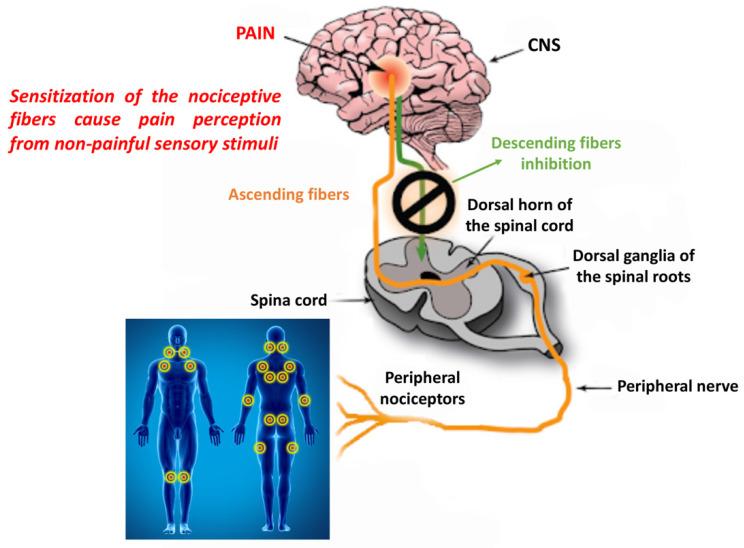
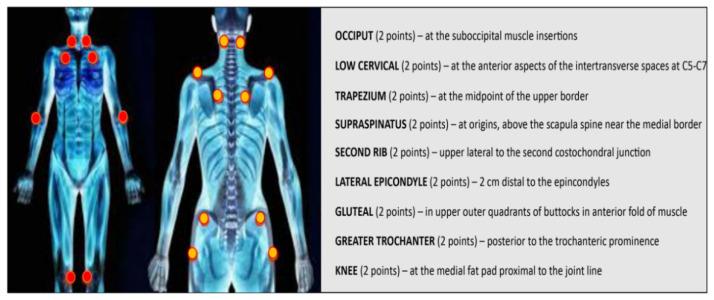
Fibromyalgia is a syndrome characterized by chronic and widespread musculoskeletal pain, often accompanied by other symptoms, such as fatigue, intestinal disorders and alterations in sleep and mood. It is estimated that two to eight percent of the world population is affected by fibromyalgia. From a medical point of view, this pathology still presents inexplicable aspects. It is known that fibromyalgia is caused by a central sensitization phenomenon characterized by the dysfunction of neuro-circuits, which involves the perception, transmission and processing of afferent nociceptive stimuli, with the prevalent manifestation of pain at the level of the locomotor system. In recent years, the pathogenesis of fibromyalgia has also been linked to other factors, such as inflammatory, immune, endocrine, genetic and psychosocial factors. A rheumatologist typically makes a diagnosis of fibromyalgia when the patient describes a history of pain spreading in all quadrants of the body for at least three months and when pain is caused by digital pressure in at least 11 out of 18 allogenic points, called tender points. Fibromyalgia does not involve organic damage, and several diagnostic approaches have been developed in recent years, including the analysis of genetic, epigenetic and serological biomarkers. Symptoms often begin after physical or emotional trauma, but in many cases, there appears to be no obvious trigger. Women are more prone to developing the disease than men. Unfortunately, the conventional medical therapies that target this pathology produce limited benefits. They remain largely pharmacological in nature and tend to treat the symptomatic aspects of various disorders reported by the patient. The statistics, however, highlight the fact that 90% of people with fibromyalgia also turn to complementary medicine to manage their symptoms.
纤维肌痛是一种以慢性和广泛的肌肉骨骼疼痛为特征的综合征,常伴有其他症状,如疲劳、肠道紊乱以及睡眠和情绪的改变。据估计,全球有 2%至 8%的人口受到纤维肌痛的影响。从医学角度来看,这种病理仍然存在一些无法解释的方面。众所周知,纤维肌痛是由中枢敏化现象引起的,其特征是神经回路功能障碍,涉及传入伤害性刺激的感知、传递和处理,表现为运动系统水平的疼痛普遍存在。近年来,纤维肌痛的发病机制也与炎症、免疫、内分泌、遗传和心理社会因素等其他因素有关。当患者描述至少三个月全身疼痛扩散的病史,且在 18 个异体点中至少有 11 个压痛点(称为压痛点)由数字压力引起时,风湿病医生通常会诊断为纤维肌痛。纤维肌痛不涉及器质性损伤,近年来已经开发出几种诊断方法,包括遗传、表观遗传和血清生物标志物的分析。症状通常在身体或情绪创伤后开始,但在许多情况下,似乎没有明显的诱因。女性比男性更容易患这种疾病。不幸的是,针对这种病理的传统医学疗法收效甚微。它们在很大程度上仍然是药理学性质的,往往只针对患者报告的各种疾病的症状方面进行治疗。然而,统计数据显示,90%的纤维肌痛患者也会转向补充医学来控制他们的症状。
 Zotero 插件